Most dual flush toilets promise big water savings, but after 3–5 years they start causing real headaches: weak flushes, constant running, leaks, stuck buttons, one button not working, frequent clogs, or water overflowing in the tank. I’ve fixed these exact issues in thousands of homes over 20+ years, and the good news is almost every dual flush toilet problem has a simple DIY solution you can do in minutes with basic tools.
This guide covers every common (and some not-so-common) dual flush toilet problem with broad, easy-to-follow instructions. You’ll learn exactly why it happens, the exact tools you need, every step in plain English, and what success looks like when the fix works. By the end you’ll handle basic repairs and even the advanced dual flush valve repair most homeowners never attempt.
They drop chemical cleaner tablets in the tank thinking it will keep everything fresh. Those tablets eat the rubber seals on the dual-flush valve in months instead of years. I see this mistake every week. Clean manually with vinegar — it’s cheaper, safer, and actually lasts.
Who it’s for: Homeowners comfortable using a screwdriver and pliers.
What it covers: All major dual flush symptoms plus advanced valve repair.
What it does NOT cover: Main sewer line clogs or cracked porcelain bowls.
When to call a pro: Water on the floor you can’t stop, or you’re uncomfortable lifting the toilet.
Tools & Materials You’ll Need for Any Repair
Keep these in one bucket so you’re ready in minutes:
- Flathead and Phillips screwdrivers
- Adjustable pliers and channel-lock pliers
- White vinegar (or 50/50 vinegar-baking soda mix)
- Toilet brush and old toothbrush
- Flashlight and small mirror
- New dual-flush valve seal kit or full canister (under $25)
- New wax ring (if base leak)
- Bucket and old towels
- Plumber’s silicone grease (optional but makes parts last longer)
Condition Map: The 8 Symptoms That Point to the Fix
Match your exact symptom below and jump straight to the broad, easy guide. Each one explains why the problem started and gives you every step in plain English.
- Weak, partial, or no flush → jets clogged or rods too short
- Keeps running or ghost flushing → leaky valve seal
- Button stuck or only partial flush → mineral buildup or cable issue
- Leaking at base or tank-to-bowl → wax ring or gasket failure
- Not filling or slow fill → clogged fill valve screen
- One button not working or both flushes feel the same → actuator rods or mechanism misalignment
- Frequent clogs → wrong flush button or jets blocked
- Tank water level too high/low or overflowing → float or refill tube issue
Dual Flush Toilet Not Flushing Properly or Weak Flush
Why this happens: Dual-flush toilets use less water on the half flush, so any tiny clog in the rim jets or short actuator rods makes the flush feel weak. Water doesn’t hit the sides hard enough to clear the bowl.
Shut off the water valve behind the toilet. Flush once to empty the tank. Pour a full 5-gallon bucket of water straight into the bowl. If it flushes strong and clears everything, the drain line is fine — the problem is in the tank or jets. If it still doesn’t clear, you have a bigger clog and should call a plumber right away.
Remove the tank lid. Use a mirror and flashlight to look under the rim — you’ll see small holes. Dip your toilet brush in white vinegar, scrub every hole you can reach, then let vinegar sit 15 minutes. Flush a few times with the bucket to rinse. You should see water shooting out evenly from every jet. This single step fixes most weak-flush complaints.
With the tank lid off, look for two thin rods or cables connected to the buttons. Loosen the small plastic nut on each rod and extend it ⅛ inch at a time. Tighten the nut and test both half and full flush. The button should travel fully and you’ll hear a solid “click” when the valve opens all the way.
Success looks like: Strong swirl, bowl clears in one flush, no need for double-flushing.
Dual Flush Toilet Keeps Running or Ghost Flushing
Why this happens: The rubber seal on the dual-flush valve gets dirty or flattened and lets water trickle past it 24/7. Dual mechanisms have two seals instead of one, so they wear faster.
Remove the tank lid. Flush, then wait 10 minutes. If you hear water trickling or see tiny ripples in the bowl, the seal is leaking.
Turn off water. Lift the entire dual-flush canister straight up — it snaps out easily. Wipe the black rubber seal and the plastic seat below it with a vinegar-soaked cloth. If the seal feels sticky, flat, or leaves black marks on your fingers, replace the whole canister or just the seal kit. Drop the new one back in — it clicks into place.
Make sure the small refill tube is clipped to the overflow pipe, not shoved inside it. If the fill valve still cycles on and off, clean its bottom screen with a toothbrush.
Success looks like: Tank stays quiet after flush, no more random refilling, water bill drops.
Dual Flush Toilet Button Stuck or Partial Flush Issues
Why this happens: Hard water minerals glue the buttons or cable in place. The dual-flush button assembly has more moving parts than a single lever.
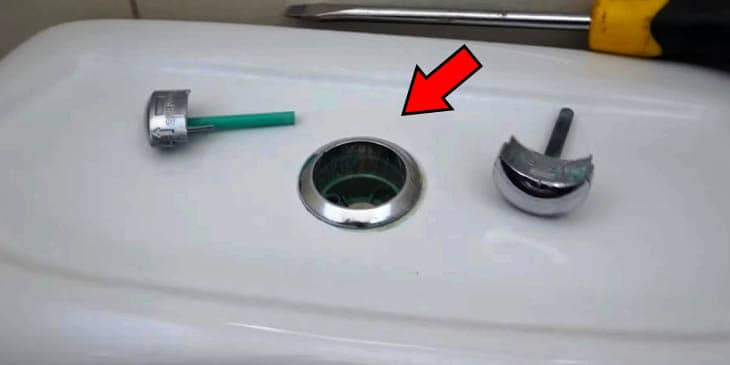
From inside the tank, push the button housing and pull it back. Unscrew the lock nut on the outside of the tank (it’s reverse-threaded — turn left to loosen).
Soak everything in vinegar 10 minutes. Scrub white scale off the cable and buttons with an old toothbrush. Dry completely, then put one tiny drop of plumber’s silicone grease on the moving parts.
Put it back together. Both buttons should pop up instantly and give full travel when pressed.
Dual Flush Toilet Leaking at Base or Tank-to-Bowl
Why this happens: The wax ring under the toilet dries out and cracks, or tank bolts loosen over time.
Dry the floor. Flush and watch. Water only at base after flush = wax ring. Slow drip from tank bottom = tank-to-bowl gasket.
Shut off water, empty tank, disconnect supply line, remove tank bolts, lift toilet straight up. Scrape old wax completely. Set new wax ring centered on the flange, lower toilet straight down, tighten bolts evenly (hand-tight plus ¼ turn with wrench). Never over-tighten.
Remove tank, replace the large rubber gasket between tank and bowl, reinstall with new bolts and washers.
Dual Flush Toilet Not Filling or Slow Fill
Why this happens: The small screen at the bottom of the fill valve clogs with debris, starving the tank of water.
Turn off water. Unscrew the supply line, pull out the small screen at the inlet, scrub with toothbrush and vinegar, rinse, reinstall.
If flow is still weak, unscrew the old fill valve from inside the tank and drop in a new universal model. Adjust the float so the water stops exactly at the marked line on the overflow tube.
One Button Not Working or Both Flushes Feel the Same
Why this happens: The actuator rods or cables are misaligned or the mechanism inside the valve isn’t dropping properly, so the toilet can’t tell the difference between half and full flush.
Remove tank lid. Press each button while watching the rods. The short rod (half flush) should only lift partway; the long rod (full flush) should lift fully. If either rod doesn’t move or both move the same, they need adjustment.
Loosen the plastic nuts on both rods and extend or shorten them until the half-flush rod lifts only halfway and the full-flush rod lifts all the way. If the entire canister mechanism doesn’t drop back down after flush, gently twist and push it down until it seats properly.
Flush half then full. You should clearly see and hear the difference in water volume.
Success looks like: Half button uses noticeably less water; full button empties the bowl completely.
Frequent Clogs or Harder-to-Clean Bowl
Why this happens: Dual-flush toilets use less water on the half flush, so solids or paper don’t clear as easily and jets get blocked faster.
Use the full-flush button for anything solid or toilet paper. Reserve half-flush only for liquid waste.
Follow the weak-flush jet cleaning steps above every month. This prevents buildup that causes clogs.
Use a flange plunger. Fill the bowl with water first, then plunge vigorously 10–15 times. If it still clogs often, the trapway may need professional snaking.
Success looks like: Bowl clears cleanly with one flush and stays cleaner longer.
Tank Water Level Too High/Low or Overflowing
Why this happens: The float or refill tube is out of adjustment, causing the tank to overfill (water goes down overflow tube) or underfill (weak flushes).
Remove tank lid. Water should stop exactly at the line marked on the overflow tube.
Turn the screw on top of the fill valve clockwise to lower the water level or counterclockwise to raise it. Make sure the refill tube clips to the outside of the overflow tube and points down into it.
Flush and watch. Water should stop quietly at the marked line with no overflow.
Success looks like: Tank fills to the correct level, no water wasting down the overflow tube, stronger flushes.
Advanced Dual Flush Valve Repair — When Basic Cleaning Isn’t Enough
Why you need this: If you’ve cleaned the seal twice and it still leaks or the mechanism won’t reset, the entire valve canister is worn. This is the advanced repair most plumbers charge $150+ for, but you can do it in 25 minutes.
Turn off water. Flush to empty tank. Grip the entire black or white tower in the middle of the tank and pull straight up — it unsnaps from the bottom.
Pop off the top cap of the canister. Remove the two rubber seals (one large, one small) and any o-rings. Wipe every surface with vinegar. Install the new seals from a universal dual-flush repair kit. Lightly grease the o-rings with silicone.
Snap the new or rebuilt canister back into the tank bottom. Turn water on. Adjust the float rod or screw so the tank fills to the line marked on the overflow tube. Test both half and full flush — you should hear a crisp, strong flush with no leaking.
Success looks like: Tank fills quietly, both flushes work perfectly, no more running water.
Red Flags — Stop and Call a Plumber
Decision Matrix: Match Your Symptom to the Fix
| Symptom | Most Likely Cause | Difficulty | Best First Fix | Why It Works |
|---|---|---|---|---|
| Weak/partial flush | Clogged jets or short rods | Easy | Clean jets + adjust rods | Restores full water flow instantly |
| Keeps running | Worn valve seal | Easy | Replace seal | Stops the trickle leak that wastes gallons |
| Button stuck | Mineral buildup | Easy | Clean & lubricate buttons | Frees movement in 10 minutes |
| Base leak | Failed wax ring | Medium | Replace wax ring | Seals the connection to the floor |
| Slow fill | Clogged screen | Easy | Clean or replace fill valve | Gives the tank the water it needs |
| One button not working | Rod misalignment | Easy | Adjust actuator rods | Restores proper half/full flush difference |
| Frequent clogs | Wrong button or blocked jets | Easy | Use full flush + clean jets | Prevents buildup before it clogs |
| Tank overflowing | Float or refill tube wrong | Easy | Adjust float & tube | Stops water waste down overflow |
FAQ — Dual Flush Toilet Problems
Q1: What are the most common dual flush toilet problems?
The top issues I see every week are weak flushes, constant running from a leaky valve seal, stuck buttons, one button not working, frequent clogs, and tank water level problems. They usually start after 3–5 years because dual-flush valves have more moving parts that collect scale faster than single-flush toilets. Most can be fixed in under 30 minutes once you know which part to target.
Q2: How do you fix a dual flush toilet that is not flushing properly?
Do the bucket test first to rule out a drain clog. Then clean every rim jet with vinegar and adjust the actuator rods to full length. These two steps restore strong flushes for most homeowners without buying parts.
Q3: Why does my dual flush toilet keep running after flush?
The rubber seal inside the valve is worn or dirty. Lift out the canister, clean or replace the seal, and the running stops immediately. This single repair saves hundreds of gallons a month.
Q4: How to fix dual flush toilet leaking at base?
The wax ring has failed. You must lift the toilet, scrape the old wax, install a new ring, and reseat the toilet straight down. Tighten bolts evenly to avoid cracking the base.
Q5: Why does one button on my dual flush toilet not work?
The actuator rods are misaligned. Adjust the short and long rods so each button lifts the valve the correct amount. This simple tweak makes the half and full flush work properly again.
Q6: How often should you maintain a dual flush toilet?
Every 6 months: lift the canister, clean the seal, scrub jets, and check buttons. In hard-water areas do it every 4 months. This routine keeps your toilet reliable for years.
If your toilet is under 8 years old and you only have one symptom → follow the exact easy steps in the matching section.
If you’ve already replaced the valve twice and problems keep returning → do the advanced valve repair or replace the whole toilet.
If you see water on the floor or hear running 24/7 → shut off the water valve immediately and call a plumber before damage spreads.
Dual Flush Toilet Maintenance Tips That Actually Work
Prevention is everything. Skip in-tank cleaner tablets. Once a month pour a cup of white vinegar into the overflow tube and let it sit overnight. Every quarter pull the canister and wipe the seal. These habits keep most dual flush toilets working perfectly for over a decade. For the latest reliable models see our best dual flush toilet guide.
Dual Flush vs Single Flush Toilet Reliability Issues
Dual flush toilets save water when they work, but the extra seals and rods mean they need a little more attention than single-flush models. If you hate maintenance, a high-efficiency single-flush toilet with a simple flapper can be more reliable long-term. Full comparison is in our one-piece vs two-piece toilet guide.
When to Replace Your Dual Flush Toilet Instead of Repairing
If the same problem returns after two repairs, the bowl has cracks, or your water bill stays high, stop patching. A new modern dual-flush or single-flush model will save you money and headaches. Check our best dual flush toilet reviews for the ones that actually deliver on the water-saving promise without the usual issues.
Still stuck with a dual flush toilet problem? Drop the exact symptom below or head to our best toilet fill valve guide for the latest replacement options.
