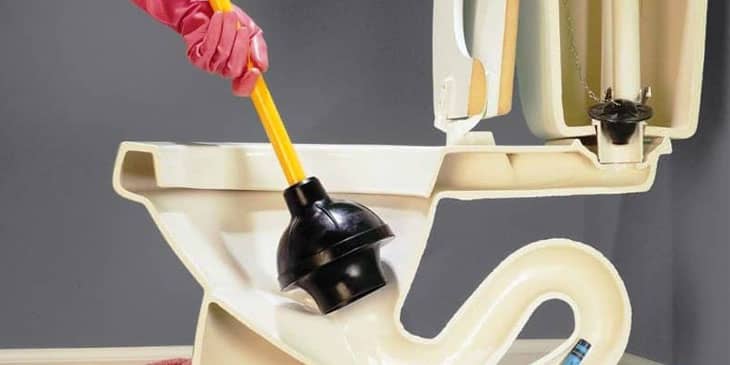
A toilet clogged with poop is one of the most urgent plumbing problems a homeowner faces — and the clock starts ticking the moment the bowl begins to rise. The instinct most people follow is to flush again. That instinct floods the bathroom floor within seconds. Most of the methods in this guide work precisely because they do the opposite: they slow down, dissolve, and dislodge rather than force.
This guide covers six field-proven methods in order of severity — starting with the least invasive and moving through plunger technique, enzyme treatments, and mechanical augering. It also covers the one section almost no guide includes: the specific conditions that mean you should stop, put the tools down, and call a licensed plumber before the situation becomes a category of damage that no DIY method will fix.
📋 Scope of This Guide
Who this is for: Homeowners dealing with a toilet clogged by feces, partial or complete blockage, where water has stopped draining or drains very slowly.
Tools assumed: Access to hot water, dish soap, and ideally a cup plunger or flange plunger. A toilet auger is covered in Method 5 but not required.
What this guide does NOT cover: Sewer line blockages below the floor, venting issues causing slow drainage across multiple fixtures, or septic system failures.
When to hire instead: If two or more toilets are backing up simultaneously, or if sewage is coming up through a floor drain or tub — stop immediately. That is a main line issue requiring a professional with a power snake or hydro-jet.
⚠️ The Most Common Mistake — And Why It Makes Everything Worse
The single most common mistake is flushing a second time immediately after the first flush fails to clear. A second flush on a blocked toilet adds 1.28–1.6 gallons of water to a bowl that has nowhere to drain — and most residential toilet bowls will overflow onto the floor within 20–30 seconds.
The first rule of a poop clog: do not flush again until you have confirmed the drain path is open. Every method in this guide must be attempted with the water supply valve turned off or the tank float held up to prevent accidental refilling.
Why a Toilet Clogs with Poop — and Why Most DIY Attempts Fail
A toilet clog caused by feces behaves differently from a paper or wipe clog. Human waste is largely water-soluble organic matter, which means the right approach can dissolve or soften the blockage rather than physically breaking it up. The problem is that most waste clogs don’t occur because of the waste itself — they occur because waste combines with toilet paper and lodges in the trapway or the drain line immediately below the floor.
The trapway in a standard residential toilet has an internal diameter of 2–2.375 inches. When a large stool — or a combination of stool and toilet paper — exceeds that diameter or creates a dense mass, the flush volume (typically 1.28 GPF in modern low-flow toilets) doesn’t generate enough pressure to push it through. The water backs up into the bowl.
Most DIY attempts fail for two reasons. First, people use a plunger incorrectly — pushing air down rather than creating a proper seal and pull. Second, people reach for caustic chemical drain cleaners immediately, which in many cases does nothing to organic waste but does accelerate degradation of the rubber flush seal and wax ring over time.
What You Need Before You Start
Gather these items before attempting any method. Working without them increases the chance of making the problem worse:
- Rubber gloves — nitrile or latex, elbow-length preferred
- Old towels or newspaper — place around the base of the toilet before any method
- A bucket — for bailing excess water from the bowl if it’s too full
- Dish soap — standard liquid dish soap, not antibacterial gel
- Hot (not boiling) water — from the tap, as hot as it runs; never pour boiling water into a porcelain toilet
- Baking soda + white vinegar — for Method 3
- Flange plunger — the type with a rubber flap that folds out from inside, not a flat cup plunger
- Toilet auger — optional; needed only for Method 5
⛔ Water Level Warning: If the bowl is filled close to the rim, bail out water using a small cup and bucket until the level drops to about half-bowl before attempting any method. Adding more liquid to an overfilled bowl causes overflow. Bail first — every time.
Method 1: Dish Soap and Hot Water
Best for: Fresh clogs where the waste is still soft. Works on most poop clogs when applied correctly. This is always the first method to try.
Step 1 — Shut Off the Water Supply
Turn the shut-off valve on the wall behind the toilet clockwise until it stops. This prevents any accidental flush from refilling the bowl. Confirm the valve is closed before proceeding.
Step 2 — Add Dish Soap
Squirt 2–3 tablespoons of liquid dish soap directly into the bowl water. Dish soap is a surfactant — it reduces surface tension and lubricates the trapway walls, helping the mass slide through. Do not use hand soap or shampoo; their foam-to-lubrication ratio is lower than dish soap.
Step 3 — Add Hot Water
Fill a bucket with the hottest tap water available — typically 120–140°F from a residential water heater. Do not use boiling water; temperatures above 200°F can crack the porcelain glaze. Pour the bucket from waist height in a slow, steady stream directly into the bowl. The height creates additional pressure. Pour until the bowl is about three-quarters full.
⚠️ Never boiling: Boiling water on cold porcelain causes thermal shock cracking. Hot tap water is the correct temperature — not water from a kettle.
Step 4 — Wait 20–30 Minutes
Let the soap and hot water work. The heat softens organic waste. The soap lubricates the passage. In 20–30 minutes, the clog often loosens enough to drain on its own. After waiting, slowly turn the water supply valve back on and allow the tank to refill. Then flush once, watching carefully. If water drains normally, the clog is cleared. If not, proceed to Method 2.
Method 2: The Correct Plunger Technique
Best for: Clogs that didn’t respond to Method 1. The plunger is the most effective tool for poop clogs when used correctly. Most people use it wrong, which is why it often fails.
⚠️ Plunger Type Matters: A flat cup plunger (the red rubber disc) is designed for flat drains like sinks. A toilet requires a flange plunger — it has a soft rubber flap that folds into the cup and inserts into the toilet drain opening to create a true seal. Using a flat cup plunger on a toilet reduces suction efficiency by roughly 60%.
Step 1 — Ensure Enough Water in the Bowl
The plunger must be fully submerged to create suction. If the bowl is too empty, add water from a bucket until the plunger cup will be covered. If it’s too full, bail some out first.
Step 2 — Seat the Plunger Properly
Insert the flange into the drain opening. The rubber flap should fold outward as it enters the drain, creating a seal between the plunger cup and the drain opening. Tilt the plunger handle slightly toward you so the cup forms an airtight seal. Press gently to expel air bubbles from inside the cup before beginning the pumping motion.
Step 3 — Push Down Slowly, Pull Up Fast
The common mistake is pushing hard and fast in both directions. The clearing action comes primarily from the pull stroke — the upward suction that draws the clog back and loosens it. Push down slowly and steadily to build pressure, then pull up sharply. Repeat 10–15 times without breaking the seal. The goal is rhythmic pressure cycling, not force. After 15 strokes, slowly lift the plunger away from the drain. If the water level drops quickly, the clog has cleared.
Step 4 — Test and Repeat If Needed
Turn the water supply back on slowly and allow the tank to fill. Flush once, watching the drain. If it’s slow but draining, repeat the plunger sequence 2–3 more rounds. If after 3–4 full rounds of plunging the toilet still won’t drain, move to Method 3 before returning to the plunger.
Method 3: Baking Soda and Vinegar for a Toilet Poop Clog
Best for: Partial clogs where water drains slowly rather than not at all. Baking soda and vinegar is a natural way to unclog a toilet clogged with poop — it generates carbon dioxide gas that helps break up and dislodge soft organic matter. It is less effective on dense clogs but causes zero damage to plumbing or seals.
Step 1 — Reduce Bowl Water to Half-Full
Bail out bowl water until the level is at the midpoint. This prevents the vinegar-soda reaction from overflowing, and ensures the reaction concentrates near the clog rather than diluting throughout a full bowl.
Step 2 — Add Baking Soda
Pour 1 cup of baking soda directly into the bowl water. Let it settle for 2–3 minutes before adding the vinegar. Pouring both simultaneously causes the reaction to happen above the water surface rather than in the drain where it’s useful.
Step 3 — Add White Vinegar Slowly
Pour 2 cups of white vinegar slowly into the bowl — pour along the side of the bowl to slow the fizzing reaction. The CO₂ bubbles generated work through the clog and help break up the blockage. If the reaction foams up toward the rim, stop pouring and wait.
Step 4 — Wait 30 Minutes, Then Flush
Let the mixture sit for at least 30 minutes. For stubborn partial clogs, leave it for up to 1 hour. Turn the water supply back on, refill the tank, and flush. If the clog clears, you’re done. If not, follow Method 3 with a plunger session (Method 2) immediately after — the baking soda treatment softens the clog, and a plunger applied right after is significantly more effective than either method alone.
Method 4: Enzyme-Based Drain Cleaner
Best for: Overnight treatment of stubborn organic clogs. Enzyme-based cleaners are the safest chemical option for what dissolves poop in a clogged toilet. They use naturally occurring bacteria and enzymes that digest organic waste — the same biological process used in septic systems. They do not damage rubber seals, wax rings, or PVC pipes.
How to Apply
Pour the manufacturer’s recommended dose (typically 8–16 oz for a toilet clog) directly into the bowl water. Do not flush for at least 6–8 hours — overnight use is ideal. The enzymes require time to colonize and digest the organic mass. In the morning, turn the water supply on, fill the tank, and flush. If the drain runs freely, the clog has dissolved. If slow-draining, follow with a plunger session.
Note on timing: Enzyme cleaners work slowly by design. They are not an immediate fix. If your situation requires the toilet to be usable within the hour, move to Method 5 instead. Enzyme cleaners are best reserved for clogs that are partial — draining slowly rather than not at all — or as a preventive treatment after a clog is cleared.
Method 5: A Toilet Auger (Closet Snake)
Best for: Hard clogs that didn’t respond to soap, plunging, or chemical treatment. A toilet auger — also called a closet snake — is a plumber’s alternative for a severe poop clog. It has a rubber-coated cable that reaches 3–6 feet into the drain, past the trapway, and physically breaks up or retrieves the blockage. It is not the same as a standard drain snake, which lacks the protective rubber sleeve and will scratch porcelain.
⛔ Do not use a standard drain snake on a toilet. A metal drain snake without the rubber sleeve will gouge the porcelain trapway surface. Once the porcelain is scratched, waste and bacteria accumulate in the grooves permanently. Only a toilet-specific auger with a rubber sleeve at the bowl entry point is safe.
Step 1 — Insert the Auger
Place the rubber elbow of the auger into the drain opening. Hold the handle with your non-dominant hand and crank the handle clockwise with your dominant hand. Feed the cable slowly into the drain — do not force it. Let the cable find the path through the trapway naturally.
Step 2 — Work the Clog
When you feel resistance, you’ve reached the clog. Continue cranking clockwise — the auger tip will either break up the mass or hook into it. If the cable stops advancing, crank backward (counter-clockwise) a few turns, then forward again. Work through the resistance with steady rotation rather than pushing force.
Step 3 — Retract and Test
Crank counter-clockwise slowly to retract the cable. If the auger has retrieved any material, it will come out with the cable — have a bucket and extra gloves ready. After retraction, flush to test drainage. If the toilet drains normally, the clog is cleared. Sanitize the auger cable with a bleach solution before storing.
Method 6: Dish Soap + Hot Water + Plunger Combined (Severe Clogs)
Best for: Clogs that resisted individual methods. When dish soap, hot water, and plunging are combined in sequence rather than used independently, the success rate increases substantially. The soap-and-hot-water soak softens and lubricates the blockage; the plunger then has a far easier task of dislodging it.
Combined Sequence
Apply 2–3 tablespoons of dish soap and pour hot tap water into the bowl. Wait 20 minutes. Do not wait longer — the water will cool and lose effectiveness. Immediately after the soak period, apply the flange plunger using the correct technique from Method 2.
The combination of lubricated drain walls and loosened organic material means that 10–15 strokes will often clear clogs that 60+ strokes alone could not move. This combined approach is the best home remedy for a poop-clogged toilet that has resisted individual treatments.
🛑 Red Flags — Stop and Call a Plumber
There are specific conditions under which continuing to attempt DIY methods moves from “probably will fix it” to “likely to make it significantly worse.” These are not edge cases — they come up regularly in residential plumbing service calls.
🔴 Red Flag 1 — Multiple Fixtures Backing Up Simultaneously
If your toilet is clogged AND your bathtub drain is gurgling or backing up at the same time, the blockage is not in the toilet — it’s in the shared drain line or main stack. No amount of plunging or augering a single toilet will clear a main line blockage. A plumber with a power auger or hydro-jet is required. Continuing to push water through the system can force sewage into areas where it causes structural water damage.
🔴 Red Flag 2 — Sewage Smell From Floor Drain or Tub
A strong sewage odor coming from a floor drain, tub, or sink while the toilet is backed up indicates that sewage gas or liquid is being forced backward through the drain system. This signals a main line issue or a blocked cleanout. Stop all water use in the home immediately and call a licensed plumber. Ignoring this can result in sewage discharge inside living spaces.
🔴 Red Flag 3 — Clog Returns Within 24–48 Hours of Clearing
If a toilet clog clears and then recurs within a day or two — especially if it keeps happening with normal use — there is a structural issue in the drain line. Possible causes include a partial root intrusion, a pipe offset from settling, or a buildup of mineral deposits narrowing the pipe internal diameter. A plumber can run a drain camera to diagnose the exact cause. Repeated DIY clearing of a recurring clog simply puts off the inevitable while the underlying problem worsens.
🔴 Red Flag 4 — Toilet Auger Meets Hard, Immovable Resistance
If you insert a toilet auger and encounter resistance that doesn’t respond to rotation in either direction — and the cable clearly isn’t simply looping in the bowl — there may be a foreign object lodged in the trapway (a child’s toy, a sanitary product, or a broken piece of porcelain). Foreign object clogs require professional extraction. Forcing an auger against a hard, stationary object can crack the trapway from the inside, turning a $150 service call into a toilet replacement.
The Truth About Chemical Drain Cleaners on Poop Clogs
Chemical drain cleaners are the most common first instinct after a toilet clog — and for poop clogs specifically, they’re also one of the least effective options. Understanding why requires knowing what these chemicals are actually designed to do.
Standard caustic drain cleaners (sodium hydroxide / lye-based products like Drano or Liquid-Plumr) work by generating heat through a chemical reaction that dissolves or softens hair, soap scum, and grease — primarily in sink and shower drains. Human feces is a fundamentally different material. Its organic composition is partly water-soluble, partly fibrous, and partly comprised of undigested fats. Lye-based products have minimal effect on this composition compared to their effect on hair or soap.
Chemical vs. Natural Uncloggers — Key Comparison
| Factor | Caustic Chemical (Drano / Lye) | Natural Methods (Soap / Enzyme) |
|---|---|---|
| Effectiveness on poop | Low — minimal effect on organic fecal matter | Moderate to high — designed for organic matter |
| Rubber seal safety | Degrades rubber seals and wax ring over time | No degradation — safe for all seal types |
| Time to work | 30–60 minutes (but often not effective) | 20–30 min (soap) / 6–8 hrs (enzyme) |
| Septic system safe | No — kills beneficial bacteria | Yes — enzyme cleaners support septic function |
| Cost | $6–$12 per bottle | $0–$2 (dish soap) / $10–$20 (enzyme cleaner) |
When the Answer Flips — When to Skip DIY Entirely
DIY unclogging is the right call for a single toilet that is completely blocked, with no other fixtures affected, where the clog occurred with normal bathroom use. The answer flips — and DIY becomes the wrong call — under three specific conditions.
First: the toilet is in a home on a slab foundation with no cleanout access — a misapplied auger can crack internal pipe joints that are inaccessible without saw-cutting concrete. Second: the home has cast iron drain pipes older than 40 years, which corrode from the inside and can fracture under augering pressure.
Third: the occupant has a mobility limitation that prevents safe body positioning during plunging — improper leverage has caused falls and shoulder injuries. In all three conditions, a $150–$250 plumber service call is the correct first move, not the last resort.
Frequently Asked Questions — How to Unclog a Toilet with Poop in It
Q1: How do you unclog a toilet with poop in it when nothing is working?
When a toilet clogged with poop doesn’t respond to individual methods, the correct approach is the combined sequence from Method 6: dish soap + hot water soak for 20 minutes, followed immediately by correct flange plunger technique. If that still fails, move to a toilet auger (Method 5). If the auger meets unmovable resistance or if multiple fixtures are backing up, stop DIY attempts and call a licensed plumber — you have either a foreign object clog or a main line issue.
Q2: What dissolves poop in a clogged toilet fastest?
Dish soap combined with hot tap water (120–140°F) dissolves and lubricates fecal matter faster than any other home remedy — typically within 20–30 minutes for a soft clog. Enzyme-based drain cleaners dissolve organic waste more thoroughly but require 6–8 hours. Chemical caustic cleaners (Drano, lye-based) are the least effective option for poop clogs specifically, as their chemistry is designed for hair and soap scum rather than organic fecal matter.
Q3: How do you unclog a toilet with poop without a plunger?
Without a plunger, the most effective approach is the dish soap and hot water method (Method 1): 2–3 tablespoons of dish soap, followed by a slow pour of the hottest tap water available, then a 30-minute soak. If that doesn’t clear it, apply the baking soda and vinegar treatment (Method 3) and wait another 30 minutes before flushing.
Enzyme-based drain cleaner applied overnight is a strong option for partial clogs when you’re not in a hurry. A toilet auger is also an effective plunger alternative for dense clogs.
Q4: Is it safe to use baking soda and vinegar in a toilet?
Yes — baking soda and vinegar are safe for all toilet components including porcelain, rubber seals, wax rings, and PVC drain lines. The chemical reaction produces water, carbon dioxide gas, and sodium acetate — none of which cause plumbing damage.
The limitation is effectiveness: this method works best on partial or soft clogs and is less effective on dense blockages. It’s a genuinely useful natural way to unclog a toilet clogged with poop but shouldn’t be the first line of treatment for a completely blocked toilet.
Q5: Can I use Drano or Liquid-Plumr on a toilet poop clog?
It’s not recommended. Caustic drain cleaners are ineffective on fecal matter and carry two risks in a toilet: first, if the clog doesn’t clear, you now have a bowl full of caustic chemical that you can’t safely plunge or auger without chemical splash risk; second, repeated use accelerates degradation of the rubber flush valve seal and wax ring seal at the floor. Enzyme-based cleaners are the safer chemical option — they’re slower but actually effective on organic waste and cause zero plumbing damage.
Q6: How do I prevent toilet clogs from excessive poop?
The most practical prevention measure is a double flush: flush once before finishing, then flush again after wiping. This keeps the waste volume per flush below what the trapway needs to handle at once. Avoid flushing large amounts of toilet paper with dense stools — break paper use into two or three smaller flushes.
If clogs recur despite normal use, the toilet may have a weak flush — check its MaP (Maximum Performance) score. Toilets scoring below 600g on the MaP test struggle with dense waste. Replacing a low-MaP toilet with one scoring 1,000g+ eliminates most repeat clogging problems permanently. For guidance on high-performance options, see our guide to the best flushing toilets.
✅ Professional Summary — Which Method to Use
- If the clog is fresh and the bowl isn’t overflowing: Start with dish soap + hot water (Method 1). Wait 20–30 minutes. This alone clears the majority of residential poop clogs.
- If Method 1 didn’t clear it: Apply the combined Method 6 sequence — soap soak followed immediately by correct flange plunger technique. This is the most effective DIY approach for a toilet full of poop that won’t flush.
- If plunging fails after 3–4 rounds: Enzyme cleaner overnight for soft clogs, or a toilet auger for dense or persistent blockages.
- If multiple fixtures back up, sewage odor appears, or the auger meets hard immovable resistance: Stop all DIY. Call a plumber. These are main line or structural issues that no household tool will fix safely.
- Avoid: A second flush without confirming drainage. Boiling water in porcelain. Standard drain snakes without a rubber sleeve. Caustic chemical cleaners as a first approach.
For a toilet that clogs repeatedly with normal use despite correct technique, the underlying issue is almost always an under-performing flush system. Explore high-performance toilets rated for 1,000g+ MaP scores or review our complete toilet buying guide for lasting solutions.
How to Unclog a Toilet with Poop Without a Plunger
A plunger is the most commonly recommended tool for a poop clog — but it’s not the only option, and for households that don’t own one, knowing how to unclog a toilet with poop without a plunger is genuinely useful. The dish soap and hot water method (Method 1) is the most accessible plunger-free option: the lubricating action of dish soap combined with the softening effect of hot tap water clears a large proportion of fresh organic clogs without any physical manipulation at all.
Baking soda and vinegar (Method 3) is the next best plunger alternative for natural ways to unclog a toilet clogged with poop. The CO₂ gas generated by the reaction applies pressure to the clog from above, similar in principle to what a plunger does mechanically — just more gradually. Allow 30–60 minutes for the reaction to work through the blockage before testing drainage.
A toilet auger (Method 5) is a mechanical plunger alternative that is often more effective for dense clogs because it physically reaches past the trapway. At $20–$35 for a basic residential model, it’s worth owning even as a backup.
If none of these work without a plunger and the toilet remains completely blocked, the safest next step is calling a plumber rather than continuing attempts that risk overflow. Check our detailed breakdown of high-flush-performance toilets if recurring clogs without plungers are a pattern in your household.
What Dissolves Poop in a Clogged Toilet — Complete Breakdown
Human feces is primarily composed of water (75%), bacteria, undigested fiber, fats, and proteins. Understanding this composition helps clarify what actually dissolves poop in a clogged toilet versus what simply doesn’t work on its chemistry. Heat is the most important factor — hot water (120–140°F) softens the organic material and liquefies the fat component, which is what allows the mass to pass through a 2–2.375 inch trapway opening.
Dish soap works by reducing the surface tension between the fecal mass and the porcelain trapway walls — it’s not dissolving the material so much as removing friction. Enzyme-based cleaners are the only product that genuinely dissolves poop in a clogged toilet by digesting the organic matter at a bacterial level, but they require 6–8 hours of contact time. This makes them excellent for partial, slow-drain clogs and terrible for emergency situations.
What doesn’t dissolve poop: lye-based chemical cleaners. Despite being marketed as drain solutions, sodium hydroxide products have minimal chemical interaction with fecal matter and no meaningful dissolving effect on the fibrous and fatty organic components.
They’re also dangerous to have sitting in a bowl if you then need to plunge — caustic splash is a real injury risk. For a toilet backing up because of a consistently poor flush, replacing an outdated toilet is the most permanent solution; see our guide to the best two-piece toilets for durable, high-flush options.
How to Prevent Toilet Clogs from Excessive Poop
Preventing toilet clogs from excessive poop is largely a combination of behavior adjustment and equipment. On the behavioral side, the single most effective change is the double-flush habit: flush before wiping to send the waste down the drain while it’s freshest and most water-saturated, then flush again after wiping. This splits one large flush event into two smaller ones, and most modern 1.28 GPF toilets handle each smaller event more reliably than a single large combined load.
Limit toilet paper per flush — particularly when paired with a large stool. Dense waste plus a large volume of paper is the most common cause of a toilet full of poop that won’t flush, even in toilets with otherwise good flush performance. Flushing paper in a separate, smaller flush immediately after the first one eliminates this combination problem entirely.
On the equipment side, MaP (Maximum Performance) rating is the key metric. The MaP test measures how many grams of waste a toilet can flush in a single cycle — the minimum acceptable score for a residential toilet used by adults is 600g, and the most clog-resistant models score 1,000g or higher.
If your household deals with recurring poop clogs despite behavioral adjustments, check your toilet’s MaP score. If it scores below 500g, the toilet itself is the root cause. Replacing it with a high-performance flushing model eliminates the problem permanently without relying on repeated unclogging efforts. For specific product guidance by household size and budget, visit our complete toilet buying guide.

Thanks guy. Your article has shown some choices to unclog toilet with poop. I always scared when see that and don’t know how to do. Now I can solve this problem easily thank for your posting.
Glad to hear that you liked my toilet unclogging tips. You may also explore blog section of this website to solve your unknown toilet issues. A BIG Thanks to you, Jessica!
It may not be the most ideal and exciting task but you don’t have a choice. How to unclog a toilet with poop still in it? Most of the things that you’ll need are in your kitchen or other parts of your home. Baking soda, vinegar, dish soap, bleach, shampoo, and cola will help you make a solution that can unclog a toilet full of poop and water.