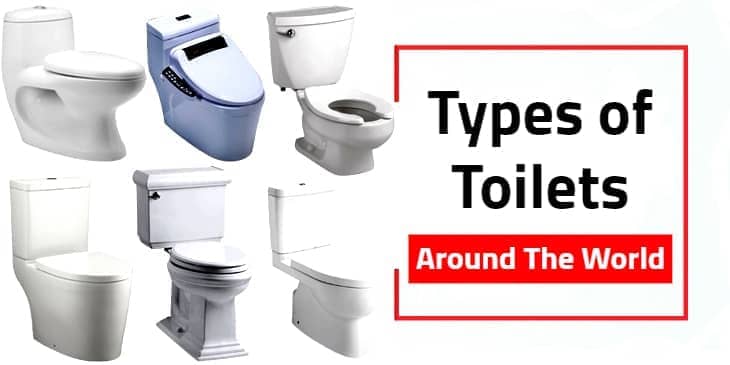
Most people assume a toilet is a toilet. You walk into a bathroom, you know how to use it, and that’s the end of the story — until you travel to Japan and encounter a control panel full of buttons you’ve never seen before. Or visit rural Southeast Asia and find a floor-level pan with nowhere to sit. Or try to add a bathroom to your basement and discover that gravity is working against you.
The reality is that dozens of distinct toilet types are in use around the world today, each designed around a specific set of needs — flushing power, water conservation, installation constraints, cultural practice, off-grid living, or pure luxury. I’ve spent 20 years working with toilets across every type of residential and commercial setting, and this guide covers every single type I’ve encountered.
Whether you’re buying a new toilet, renovating a bathroom, traveling internationally, or simply curious, this is the most complete reference you’ll find on the subject.
How to Think About Toilet Types
Before going through each type individually, it helps to understand that “toilet type” isn’t a single classification — it’s several overlapping ones. A toilet can be described by its flush system, its physical structure, its bowl shape, its height, its trapway design, its technology level, its waste handling method, and its cultural origin. Most toilets belong to multiple categories simultaneously. A one-piece, comfort-height, elongated, skirted, gravity-flush toilet covers five different dimensions at once.
This guide works through each dimension — flush systems first, then structure, then design, then technology, then waste handling, and finally global and cultural types. Understanding how these categories overlap is what separates a genuinely informed toilet purchase from a lucky guess at the showroom.
Section 1: Toilet Types by Flush System
The flush system is the most consequential characteristic of any toilet. It determines how powerfully waste is cleared, how much water is used, how noisy the flush is, what maintenance the toilet will require over its lifetime, and how reliably it performs under heavy use. Every other toilet decision flows from this one.
1. Gravity Flush Toilets
Gravity flush is the dominant toilet technology in North America and across most of Europe. The mechanism works through simple physics: you press the handle, a flush valve opens at the bottom of the tank, and stored water drops into the bowl under the force of gravity. That rushing water fills the S-shaped trapway faster than the narrow passage can drain, creating a siphon — a sustained vacuum that pulls all the waste cleanly through the drain in one continuous action. When the siphon breaks, clean water refills the bowl and the tank begins filling again automatically.
The elegance of this mechanism lies in its simplicity. There are essentially three moving parts: the flush valve (usually a flapper or tower canister), the fill valve, and the handle. When something goes wrong, it’s almost always one of these three components, and every hardware store in North America carries replacements for all of them. A capable DIYer can diagnose and fix most gravity flush problems in under half an hour with $5 to $15 in parts.
Modern gravity flush toilets certified under the EPA’s WaterSense program operate at 1.28 GPF — down from the 3.5 to 7 GPF of toilets made before 1994. Despite using dramatically less water, the best modern gravity flush designs achieve a perfect 1,000g MaP score, meaning they clear the full maximum test load in a single flush. The key engineering variable is flush valve size. Toilets with 3-inch or 4-inch flush valves — like the American Standard Champion 4 — release water faster and with more force than those with standard 2-inch valves, producing a more powerful result at the same gallons-per-flush rating.
For a household that wants quiet operation, simple maintenance, genuine reliability, and a toilet that will last 25 years without drama, a well-chosen gravity flush model is the right answer for the vast majority of situations. See my full rankings of the top performers: best flushing toilets.
2. Washdown Flush Toilets
The washdown flush is the global counterpart to the North American gravity siphonic system. It’s the dominant toilet type across Europe, Australia, Asia (outside Japan), and most of the rest of the world, yet it’s rarely seen in American homes. Understanding the difference matters for anyone renovating with European fixtures, purchasing imported toilets, or simply trying to make sense of what they’re encountering abroad.
In a washdown toilet, waste is pushed out of the bowl by the direct force of water flowing in from the tank — there is no siphon effect. The trapway is short, wide, and V-shaped rather than the long, narrow S-shape of a siphonic design. Water pours in, waste gets pushed directly over the weir and into the drain. The entire action is faster and more direct than siphoning.
The advantages are real. Because there’s no siphon to establish, washdown toilets are much less prone to clogging — the wide trapway simply doesn’t catch debris the way a narrow siphonic trapway does. They also use less water per flush than traditional siphonic designs. The trade-off is that washdown bowls hold a smaller water surface area, which means less standing water in the bowl, more potential for streaking, and somewhat less effective odor control compared to the large water pool maintained in a siphonic bowl.
Most premium European brands — Duravit, Villeroy & Boch, Geberit — manufacture washdown toilets. If you’re installing one in a North American home, be aware that the drain outlet position and rough-in requirements can differ from standard North American specifications. See my guide: siphonic vs washdown toilets.
3. Pressure-Assisted Toilets
Pressure-assisted toilets look like ordinary tank toilets from the outside, but inside the ceramic tank sits a sealed plastic pressure vessel. As the tank fills with water, the incoming water compresses air trapped inside that vessel. When you flush, the compressed air forces water into the bowl with far more velocity than gravity alone can generate. The result is a powerful blast of water — described as a “push” rather than the “pull” of siphonic action — and it is substantially stronger than any gravity flush toilet.
This flushing power explains why pressure-assisted toilets dominate commercial settings. Office buildings, restaurants, schools, airports, stadiums, and hospitals all rely on them because they handle heavy use without clogging. In residential applications, they’re the right choice for large families, older homes with partially obstructed plumbing, or any household where reaching for the plunger has become an unfortunate routine.
The unavoidable trade-off is noise. The compressed air release produces a sharp, loud blast on every flush — perfectly acceptable in a commercial restroom, but disruptive in a residential bathroom that shares a wall with a bedroom. Manufacturers have reduced this somewhat in modern designs, but the fundamental character of the flush remains. Maintenance is also more specialized: when the pressure vessel fails, it must be replaced as a sealed unit rather than repaired with generic parts, making it a plumber’s job rather than a DIY fix.
4. Dual Flush Toilets
Dual flush toilets provide two distinct flush volumes through a two-button mechanism — typically a small button for a partial flush of approximately 0.8 GPF for liquid waste, and a larger button for a full flush of 1.28 GPF for solid waste. The mechanism uses a tower-style canister valve rather than the traditional flapper, which is why the controls sit on top of the tank rather than on the side. Australia’s Caroma company introduced this concept in 1980, and it has since become one of the most widely adopted toilet technologies in the world.
The water savings from consistent dual flush use are genuinely significant over time. A household of four that routinely uses the partial flush for liquid waste can save 5,000 to 8,000 gallons per year compared to a standard single-flush toilet — a meaningful reduction in both utility bills and environmental impact across the toilet’s lifespan.
The critical caveat is performance. Too many budget dual flush toilets have weak partial flush mechanisms that leave residue and require a second flush, which completely negates the water savings and adds cleaning work. Before buying any dual flush toilet, specifically check buyer feedback on the partial flush performance — not just the full flush. My guide covers only verified performers: best dual flush toilets. For the full efficiency comparison: dual flush vs single flush.
5. Double Cyclone Flush Toilets
TOTO introduced the double cyclone system as a direct response to one of the most persistent failure modes in conventional toilet design: the gradual clogging of rim holes. Every traditional toilet bowl has dozens of small holes ringing the inside of the rim through which water is distributed during each flush. Over months and years, mineral deposits from hard water accumulate in and around these holes, progressively narrowing them and reducing flush effectiveness. A toilet that performed powerfully when new begins to deteriorate noticeably after five years of hard water use, regardless of how diligently it’s cleaned.
TOTO’s solution was to eliminate the rim holes entirely, replacing them with two precisely aimed nozzles that generate a centrifugal washing action covering the entire bowl surface. These nozzles don’t clog with mineral scale the way small rim holes do, so flush performance remains consistent throughout the full life of the toilet. The bowl coverage is also more thorough — two powerful jets positioned for maximum spread clean areas that dozens of small rim holes regularly miss.
6. Tornado Flush Toilets
The Tornado Flush represents TOTO’s further evolution of the cyclone concept. Where the double cyclone system uses two nozzles to create centrifugal coverage, the Tornado Flush positions its nozzles to generate a continuous swirling action — a genuine spiral wash that covers the entire bowl surface from rim to drain in a single motion, like a slow-motion tornado unwinding down the inside of the bowl.
Operating at 0.8 to 1.28 GPF, the Tornado Flush is among the most water-efficient residential flush systems available anywhere in the world. Combined with TOTO’s CeFiONtect ceramic glaze — which creates an ion-barrier surface that actively prevents waste, mineral scale, and bacteria from bonding to the porcelain — a Tornado Flush toilet maintains a remarkably clean bowl with minimal effort. The TOTO Drake II, Ultramax II, and several other TOTO flagship models all use this technology, and homeowners who switch from a conventional design consistently notice the difference within the first few weeks.
7. Single Flush Toilets
Single flush is the traditional design: one button or lever, one flush volume, every time. This describes the majority of toilets installed in North American homes over the past century, and it remains the most straightforward option on the market today. Modern single flush toilets operate at the federally mandated maximum of 1.6 GPF, or 1.28 GPF with WaterSense certification. There are no choices to make at flush time, no added mechanism complexity, and no variation in performance. For households that prioritize simplicity above all else, single flush covers the need cleanly and reliably.
8. Touchless Flush Toilets
Touchless flush toilets detect when a user is done and trigger the flush automatically — no handle to touch, no button to press. Commercial touchless systems use hardwired infrared sensors and are the standard in public restrooms worldwide, driven by hygiene requirements in high-traffic spaces. In residential settings, touchless functionality is more commonly added as an aftermarket retrofit: battery-powered sensor modules that mount to the outside of the tank and replace the flush handle with a motion-sensitive trigger. Wave your hand, flush. Some models can also be activated via a smartphone app.
The residential market for touchless flush has grown steadily, driven by hygiene-conscious households, parents of young children who rarely remember to flush, and homeowners updating bathrooms for aging family members who have difficulty with traditional handles. The technology is reliable, inexpensive relative to most bathroom upgrades, and compatible with virtually any existing tank toilet.
9. Flushometer Toilets
Flushometer toilets carry no tank. Instead of storing water and releasing it by gravity, they connect directly to the building’s pressurized water supply line. When the flush valve opens, building pressure drives water into the bowl at high velocity for a precisely calibrated duration, then the valve closes and the toilet is immediately ready for the next flush — no waiting for a tank to refill.
This instant reset and high-velocity flush capability is what makes flushometer systems the universal standard in commercial buildings, stadiums, airports, and any facility where multiple users cycle through quickly. William Sloan invented the commercial flushometer in 1906, and the design has remained largely unchanged ever since because it works exceptionally well for the purpose it was built for.
In residential settings, flushometer toilets are uncommon for a simple practical reason: they require the higher sustained water pressure of commercial supply lines, which residential plumbing rarely provides consistently. They also require supply pipes of a larger diameter than standard residential installations include. For homeowners who want the clean, tankless aesthetic at home, that look is more practically achieved through the electric pump technology used in modern smart toilet designs.
10. Vacuum Flush Toilets
Vacuum flush toilets use stored vacuum pressure — maintained by a pump between uses — to evacuate the bowl contents when the flush is triggered. Instead of water pressure or gravity pushing waste out, the vacuum pulls it through the system at high velocity with minimal water use: as little as 0.1 to 0.3 gallons per flush, which is among the lowest water consumption of any flush toilet type in existence.
If you’ve ever flown on a commercial aircraft, you’ve used a vacuum flush toilet. Airplane lavatories have relied on vacuum flush since the 1970s for two compelling reasons: the holding tanks can be located anywhere in the aircraft regardless of gravity orientation, and the minimal water use is critical in the weight-sensitive aviation environment. The same advantages make vacuum flush systems popular on boats and premium RVs, where water supply is limited and waste holding tanks must be flexibly positioned.
Sealand’s VacuFlush system is the best-known vacuum toilet brand in the residential and marine market. The system requires a vacuum generator — a pump and accumulator tank — in addition to the toilet itself, making installation more complex than a standard toilet. But for marine applications and premium off-grid builds where water conservation is critical, the extreme efficiency and flexibility of vacuum flushing makes it a compelling option.
11. Pour Flush Toilets
Pour flush toilets have no cistern, no tank, and no connection to a pressurized water supply. Flushing is accomplished by pouring a bucket or vessel of water directly into the bowl — typically 2 to 3 liters — which is sufficient to initiate the siphonic or washdown action and clear the waste. The toilet remains connected to a drain line (often a pit latrine or simple drain), and the water used for flushing can be greywater, rainwater, or any available source.
Pour flush toilets are common across South Asia, Southeast Asia, and parts of Africa, where they represent a meaningful intermediate step between open defecation and fully plumbed sanitation. They provide genuine hygiene benefits — a water seal that prevents sewer gases and insects from entering the bathroom — at very low infrastructure cost. For rural communities and areas with intermittent or absent water pressure, they represent a practical sanitation upgrade that requires no water supply system whatsoever.
Section 2: Toilet Types by Physical Structure and Mounting
12. One-Piece Toilets
A one-piece toilet is manufactured with the tank and bowl as a single, continuous ceramic unit — kiln-fired together as one piece rather than assembled from separately made components. There is no joint between tank and bowl, no gasket that degrades over time, and no seam where mineral scale, mold, and bacteria accumulate. The surface from the top of the tank to the base of the bowl is one uninterrupted ceramic shell.
This seamless construction delivers two primary practical benefits. Cleaning is faster and more thorough — there are no crevices to navigate, no tank-bowl connection to scrub around, and no exposed hardware at the joint. The silhouette is also noticeably cleaner and more modern than two-piece designs, particularly when paired with a skirted trapway. One-piece toilets typically weigh 80 to 100 pounds, which means two people are needed for installation. They cost more than comparable two-piece models. And if the tank ever cracks, the entire unit must be replaced rather than just the damaged component.
For primary bathrooms where aesthetics and ease of cleaning matter over the long term, the one-piece design justifies its premium. Full comparison: one-piece vs two-piece toilets. Top picks: best one-piece toilets.
13. Two-Piece Toilets
The two-piece toilet — a separate tank bolted to a separate bowl — has been the standard residential toilet structure in North America for over a century. The tank and bowl are manufactured, shipped, and often sold separately, then assembled during installation. Each piece weighs 30 to 50 pounds on its own, which makes navigating narrow hallways, stairs, and tight bathroom spaces considerably more manageable than lugging an 80-pound one-piece unit.
The modular design is its defining advantage. The tank and bowl can be replaced independently. Every moving component inside — flapper, fill valve, flush handle, tank bolts, wax ring — is a generic part available at any hardware store without special ordering. The tank-bowl seam is the one maintenance consideration to stay on top of: the rubber gasket at the joint degrades over the years and the seam itself accumulates mineral deposits that require regular cleaning to prevent mold. These are minor, inexpensive realities compared to the overall durability and repairability the design provides across 20 or more years of ownership. Full selection: best two-piece toilets.
14. Wall-Mounted Toilets
Wall-mounted — or wall-hung — toilets attach the bowl to a carrier frame concealed inside the wall, with the tank hidden behind the finished wall surface. The result is a toilet with no floor footprint under the bowl and no visible tank — just a bowl floating against the wall with a flush plate mounted above it. The floor around the toilet is completely unobstructed, which makes cleaning far simpler and creates a visual sense of space that no floor-standing toilet can match.
The practical space saving is 10 to 12 inches of floor depth compared to a standard floor-standing model — significant in any bathroom, and potentially decisive in a small one. Bowl height is adjustable during installation anywhere between 15 and 19 inches, allowing precise customization for the household’s primary users.
Installation requires a licensed plumber to install the in-wall carrier frame, which must be secured to structural framing and plumbed before the wall surface is finished. This is not a retrofit job for most existing bathrooms without significant wall work. Accessing the concealed tank for future maintenance requires opening the access panel built into the finished wall. For these reasons, wall-mounted toilets are most practical in new construction or major renovation projects. Full guide and top picks: best wall-mounted toilets.
15. Back-to-Wall Toilets
Back-to-wall toilets sit on the floor in the conventional way, but the tank is concealed inside a vanity unit or false wall built behind the toilet rather than sitting exposed on top of the bowl. The finished result — a bowl against a seamless wall with a flush plate above and no visible tank — closely resembles a wall-hung toilet without requiring the complex in-wall carrier frame installation. The bowl is simply secured to the floor in the standard way.
This design is particularly common in European bathroom planning, where concealed cisterns integrated into custom furniture units are a standard feature of premium bathroom design. Back-to-wall toilets offer the visual appeal of a tankless installation with considerably less complexity, making them a practical option for renovations where the clean look of a wall-hung toilet is desired but the structural wall work isn’t feasible.
16. Corner Toilets
Corner toilets are specifically engineered to occupy corner space — they feature a triangular tank that sits flat against both walls meeting at the corner, with the bowl projecting at a 45-degree angle into the room. This geometry makes use of what is otherwise dead space in a rectangular bathroom layout, which in particularly tight bathrooms can be the difference between a workable and an unworkable floor plan.
Corner toilets are a niche product with a narrower selection than standard toilet styles, and not every major manufacturer produces one. But for the specific installation challenge they’re designed to solve — fitting a full toilet into a bathroom where standard orientation simply doesn’t work — they’re exactly the right answer. My full guide: best corner toilets.
17. Upflush Toilets (Macerating Toilets)
Upflush, or macerating, toilets solve the single most common problem in below-grade bathroom additions: waste must travel downward to reach the drain, but in a basement the drain is above the toilet. Standard gravity-dependent toilets simply cannot be installed below the sewer line.
A macerating toilet places a pump unit beside or behind the toilet bowl. When flushed, the macerator grinds waste into a fine slurry and pumps it upward through a small-diameter pipe until it reaches the main drain line at the correct elevation. The system requires a power outlet and a water supply connection, but no floor drain directly below the toilet. A complete bathroom — toilet, sink, and shower — can be added to a basement space with no existing floor drain, as long as power and water supply are available.
Saniflo is the most established brand in this category in North America, with a proven residential track record. The macerator pump is an additional mechanical component that requires its own periodic maintenance and eventual replacement, and it is more sensitive to non-flushable items than a gravity toilet. But for the specific problem of adding sanitation below the sewer line — which is otherwise nearly impossible — macerating toilets are the practical solution. Full breakdown: Saniflo macerating toilets.
18. High-Tank Pull-Chain Toilets
High-tank pull-chain toilets are the Victorian-era design that preceded the modern close-coupled toilet. The tank is mounted high on the wall — typically around six feet above the bowl — and connected to the bowl by a flush pipe. Pulling the chain opens the flush valve, and the elevated tank delivers a gravity flush with more force than a close-coupled tank can provide, simply because of the greater height differential.
These toilets are no longer manufactured for practical residential use, but period-reproduction versions remain popular in historically styled bathrooms, Victorian-era renovations, and farmhouse-aesthetic designs. Their visual character is unmistakable — the high wall-mounted tank with its hanging chain creates a period atmosphere that no modern toilet can replicate. They function as genuine working toilets, but their antique valve mechanisms require some familiarity to maintain, and replacement parts typically require specialty sourcing.
Section 3: Toilet Types by Bowl Shape and Size
19. Elongated Bowl Toilets
Elongated bowls are oval in shape and measure approximately 18.5 inches from the mounting bolt holes to the front of the rim. They are the dominant bowl shape in new residential toilet installations across North America, and the standard shape for comfort-height and ADA-compliant designs. Most adults find the elongated shape noticeably more comfortable for everyday use — it provides more seating area and a more natural fit for adult body proportions. The trade-off is 2 extra inches of floor depth compared to a round bowl, which matters in compact bathrooms.
20. Round Bowl Toilets
Round bowls are circular and measure approximately 16.5 inches from the mounting bolt holes to the front of the rim — about 2 inches shorter than an elongated bowl. That 2-inch difference is often decisive in small bathrooms, powder rooms, and tight installations where every inch of clearance in front of the toilet counts. Round bowl toilets are also typically priced slightly lower than elongated versions of the same model, and they feel more appropriately proportioned in children’s bathrooms where adult-sized elongated bowls aren’t necessary.
21. Compact Elongated Bowl Toilets
Compact elongated is a bowl geometry that delivers elongated-style seating comfort — the oval shape and larger surface area — in a shorter overall package. The bowl is shaped like a full elongated bowl, but the depth is reduced to match or nearly match the footprint of a round bowl. This design is particularly valuable in small bathrooms where an occupant wants the comfort of an elongated seat but can’t accommodate the extra depth. The HOROW HWMT-8733 is one of the best-known examples — it measures just 25 inches in overall depth versus the 27 to 29 inches typical of standard models, while still delivering full elongated-bowl seating comfort. Full guide: best small toilets.
22. Square Bowl Toilets
Square toilets feature a rectangular or angular bowl shape rather than the traditional oval or round. The decision to choose a square toilet is almost entirely aesthetic — there is no functional advantage over an elongated bowl in terms of flush performance or seating comfort. But in contemporary and minimalist bathrooms built around geometric design principles — angular fixtures, straight-edged tile, frameless glass — a traditional oval toilet can look out of place in a way that a square bowl simply doesn’t. My full selection: best square toilets.
Section 4: Toilet Types by Height
23. Standard Height Toilets
Standard height toilets measure 14.5 to 16 inches from the finished floor to the top of the toilet seat. This has been the conventional residential toilet height throughout the 20th century, and it remains common across all styles, structures, and price points. The lower seat height creates a knee angle that some researchers argue is more physiologically natural for bowel function, approximating a partial squatting position that may facilitate easier elimination. Standard height generally suits children and shorter adults best, and it’s often the less expensive option compared to comfort-height versions of the same model.
24. Comfort Height Toilets (ADA / Chair Height)
Comfort height toilets — also labeled ADA-compliant, chair height, or right height depending on the manufacturer — measure 17 to 19 inches from the finished floor to the top of the seat. This puts the seat at approximately the same height as a standard dining chair, which significantly reduces the knee and hip flexion required to sit down and stand up. For most adults over 5’4″, this is a noticeable improvement in everyday comfort. For seniors, taller individuals, and anyone with knee, hip, or lower back limitations, it can make a meaningful functional difference every single time the bathroom is used.
ADA standards for accessible restrooms require toilet seat heights between 17 and 19 inches, which is why these models are often labeled ADA-compliant. However, a comfort-height toilet alone does not make a bathroom ADA-compliant — that designation also requires clear floor space, grab bar placement, appropriate door width, and turning radius requirements. Full comparison: comfort height vs standard height. Top picks: best comfort height toilets.
25. Short Height Toilets
Short height toilets measure below 14 inches from floor to rim. They’re manufactured primarily for children’s bathrooms, for adults who are notably shorter than average, and for households where a lower sitting position is genuinely preferred. This is a limited-selection niche — far fewer models are available compared to standard or comfort height options — and it’s rarely the right choice for an adult primary bathroom.
Section 5: Toilet Types by Trapway Design
The trapway is the S-shaped or P-shaped passage at the base of the toilet bowl through which waste exits into the drain. Its exterior design — specifically, how much of it is visible on the outside of the toilet — significantly affects both the daily cleaning experience and the overall visual character of the toilet.
26. Exposed Trapway Toilets
An exposed trapway leaves the curved passage fully visible on the outside of the toilet base. The S-curve sits between the exterior wall of the bowl and the floor, with all its contours on display. This is the traditional design found on most basic two-piece toilets and has been the default for residential toilets throughout most of the 20th century. The exposed curves create ledges, crevices, and hard-to-reach surfaces that collect dust, grime, and mineral deposits — areas that require a narrow brush or cloth to clean properly. Manageable with consistent cleaning habits, but noticeably more time-consuming than cleaning a concealed or skirted design.
27. Concealed Trapway Toilets
A concealed trapway covers the S-curve with a smooth porcelain panel attached to the outside of the bowl base, presenting a cleaner profile without exposing the curves. The trapway still exists and functions identically, but the exterior surface appears as a smooth wall rather than an exposed pipe curve. This eliminates most of the hard-to-reach cleaning areas while giving the toilet a more finished and modern appearance. Concealed trapway designs are common on one-piece toilets and on higher-end two-piece models.
28. Skirted Trapway Toilets
A skirted trapway takes concealment to its logical conclusion — the entire base of the toilet from the bowl rim to the floor is enclosed in a continuous smooth porcelain skirt. There are no visible curves, no exposed hardware, and no crevices of any kind on the exterior of the toilet. The result is a completely flat, vertical side surface that wipes clean in seconds. Skirted toilets look architecturally distinct from traditional designs — more sculptural and intentional, with a quality that suits contemporary and minimalist bathrooms particularly well. Most wall-mounted toilets are inherently skirted by design. In floor-standing models, skirted trapways add some installation complexity because the mounting bolts are concealed behind the skirt and require specific access techniques during installation.
Section 6: Toilet Types by Technology Level
29. Smart Toilets
Smart toilets integrate the toilet, bidet, and an electronic control system into a single fixture — and they represent the most significant functional evolution in residential toilet design in over a century. A mainstream smart toilet in 2026 — something like the HOROW T38 at approximately $999 — includes an approach-sensor-activated automatic lid, automatic flushing when you stand, a heated seat with adjustable temperature settings, an integrated bidet with both front and rear wash modes, adjustable water temperature and pressure, a warm air dryer, ambient mood lighting, and a built-in deodorizer. This isn’t a luxury accessory — it’s a complete reimagining of what a toilet can do.
Premium smart toilets from TOTO’s Neorest line add UV sterilization between uses, electrolyzed water pre-misting that coats the bowl before each use to prevent waste adhesion, personalized user profiles that remember each household member’s preferences, and an overall experience level that is genuinely difficult to describe without having lived with one. The TOTO Neorest NX2 — the category benchmark — runs approximately $17,000 installed and represents the output of four decades of continuous engineering refinement.
Every smart toilet requires a GFCI-protected electrical outlet within reach of the toilet location. Modern bathrooms often have one; older bathrooms may require an electrician to install one, which should be included in the total project budget. Smart toilets also require more maintenance than conventional models — nozzles need periodic cleaning, filters need replacement, and electronic components carry the possibility of failure that a purely mechanical toilet doesn’t. Most manufacturers provide a one-year warranty on the electronics and separate coverage on the porcelain. The global smart toilet market was valued at approximately $9.75 billion in 2025 and is growing at over 12% annually, reflecting how rapidly mainstream adoption is accelerating. My full guide: best toilets to buy in 2026.
30. Bidet Toilet Seat Combinations (Washlet-Style)
Bidet toilet seat combinations — sometimes called washlet-style after TOTO’s foundational brand name for the concept — integrate bidet washing functionality into a replacement toilet seat rather than into the toilet fixture itself. The bidet seat attaches to any existing toilet, connects to the water supply line via a T-valve, and adds warm water cleansing, adjustable spray pressure and direction, a heated seat, and warm air drying — all without requiring the toilet to be replaced. For homeowners who want bidet functionality but are otherwise satisfied with an existing toilet, this is the most practical and least expensive upgrade path available. TOTO’s Washlet line, Kohler’s bidet seats, Brondell, BioBidet, and Alpha Bidet all produce well-regarded options across a wide range of price points.
31. Tankless Toilets
Tankless toilets have no conventional holding tank. They draw water directly from the supply line using either building pressure (flushometer style, standard in commercial settings) or an internal electric pump (common in luxury and smart toilet residential designs). Without a tank to fill, there’s no waiting between flushes, the toilet resets instantly, and the visual profile is exceptionally clean — just a bowl with a compact housing for the electronics, with no tank rising behind it. In residential smart toilet applications, the electric pump approach ensures consistent flush performance independent of building water pressure, which is important because residential pressure can vary significantly and the direct pressure dependency of a flushometer system isn’t reliably available in most homes.
32. Raised Toilet Seats and Commodes
Raised toilet seats are accessories that fit over an existing toilet seat and increase the sitting height by 2 to 6 inches — effectively converting a standard-height toilet to comfort height or higher without replacing the toilet. They’re used primarily during post-surgical recovery, for elderly users with limited mobility who need a higher seat position to sit and stand safely, and in accessible bathrooms where the existing toilet can’t be changed. Toilet commodes are freestanding versions designed for bedroom or bedside use for people who cannot safely reach a bathroom at all. My guide to the best options: best raised toilet seats.
Section 7: Toilet Types by Waste Handling Method
33. Sewer-Connected Flush Toilets
The vast majority of residential toilets in developed urban and suburban areas connect to a municipal sewer system. Waste exits the toilet through household drainpipes, travels to the municipal collection system, and is processed at a wastewater treatment plant. From the homeowner’s perspective, this requires no management beyond the toilet itself — the infrastructure handles everything downstream. This is the default sanitation solution wherever municipal systems are available, and it’s what the toilet buying recommendations throughout this site assume.
34. Septic-Connected Flush Toilets
In rural areas without access to municipal sewer infrastructure, flush toilets connect to an on-site septic system. The septic tank buried in the yard receives all household waste, allows solids to settle and partially decompose, and releases treated effluent into a drain field where it percolates through the soil. Septic systems work well with standard gravity flush toilets and actually benefit from high-efficiency 1.28 GPF models, which reduce the hydraulic load compared to older 3.5 or 5 GPF toilets. Septic tanks require professional pumping every 3 to 5 years under normal household usage, and certain items — wipes, feminine hygiene products, medications — should never be flushed into a septic system.
35. Composting Toilets
Composting toilets manage waste entirely on-site through aerobic biological decomposition — the same process as a garden compost pile — without using any water. Most designs separate liquid and solid waste at the point of collection using a urine diverter, directing liquid to an evaporation chamber or external drain while managing solids in a composting chamber with carbon-rich bulking material like wood chips, coconut coir, or peat moss. When managed correctly — with the right carbon-to-nitrogen balance and adequate aeration — the decomposition process converts solid waste into stable, pathogen-reduced compost over several months.
Zero water consumption makes composting toilets the definitive sanitation solution for off-grid cabins, boats, tiny homes, and remote structures where plumbing infrastructure isn’t available. Modern self-contained units from Nature’s Head, Sun-Mar, and Air Head have addressed the odor concerns that plagued earlier designs — proper ventilation through a small exhaust fan and consistent carbon material addition keeps most well-maintained units genuinely odor-free. The maintenance commitment is real: carbon material must be added consistently after each use, the liquid diverter requires regular management, and the composting chamber must be emptied on a schedule that varies with usage. Local regulatory requirements around composting toilet installation and end-material use vary significantly by municipality and should be verified before purchase.
36. Incinerating Toilets
Incinerating toilets burn waste to ash using electric heating elements or propane, reducing it to a small quantity of sterile, pathogen-free ash that can be disposed of in regular household waste. They use no water beyond a small amount for bowl rinsing, require no connection to a sewer or septic system, and need only a power or gas supply and a small exhaust vent through an exterior wall or roof. The primary applications are remote mountain cabins, off-grid structures where composting isn’t permitted or practical, construction site trailers, and locations where extreme cold makes composting systems difficult to manage.
The cost realities are significant: purchase prices range from $1,500 to $4,000, and each incineration cycle consumes 1 to 2 kWh of electricity or a meaningful volume of propane. For a remote cabin used occasionally, this may be perfectly acceptable. As a primary bathroom fixture for a full-time household, the ongoing energy cost is prohibitive for most budgets.
37. Chemical Toilets (Portable Toilets)
Chemical toilets are self-contained waste collection units that use deodorizing and waste-neutralizing chemical solutions to manage odor and reduce pathogen risk — no water flushing, no composting. The consumer-grade versions designed for camping, boating, and outdoor use are compact, lightweight, and entirely self-contained: set up anywhere, flush with a small hand pump, and carry away without any installation or infrastructure required. Commercial porta-potties operate on the same principle at a much larger scale, deployed by rental companies at construction sites, outdoor events, and emergency situations where permanent facilities aren’t available.
Modern chemical formulations — typically formaldehyde-free biocidal solutions — suppress odor and inhibit bacterial growth, though they don’t neutralize waste. The holding tank must be emptied at an appropriate disposal facility when full. For camping, outdoor recreation, temporary construction use, and short-term emergencies, portable chemical toilets provide practical sanitation convenience. They are not suitable as a permanent home fixture under any circumstances.
38. Pit Latrines
A pit latrine is a hole excavated in the ground — typically 1.5 to 3 meters deep — over which a slab, shelter, and seating structure are built. Waste drops directly into the pit and decomposes over time through anaerobic biological processes. When the pit approaches capacity, it is pumped out by a vacuum tanker or the structure is relocated and the filled pit is covered and left to complete decomposition. Pit latrines are the primary sanitation infrastructure for approximately 2 billion people worldwide — predominantly in rural Sub-Saharan Africa, South Asia, and parts of Southeast Asia — because they can be built using local materials without specialized skills, plumbing, or a water supply.
Improved pit latrines add features that make an enormous difference to public health: a ventilation pipe with a fly screen that dramatically reduces insect infestation, a concrete slab that prevents soil contamination around the pit opening, and a proper shelter that ensures privacy and weather protection. These relatively simple improvements transform the basic pit latrine from a significant disease transmission risk into a meaningfully safer sanitation facility.
39. Urine-Diverting Dry Toilets (UDDT)
Urine-diverting dry toilets take the composting toilet principle further by engineering the physical separation of liquid and solid waste directly into the fixture design. A UDDT features a specially shaped bowl with a front receptacle for urine and a rear collection area for solid waste, keeping the two streams apart from the moment of deposit. The reason this matters is that the combination of urine and solid waste creates the conditions for rapid bacterial growth and strong odor. Kept separate, solid waste dries more quickly and odor is dramatically reduced — even without chemical treatment or active composting management. Fresh urine is sterile and can be diluted for direct use as a liquid fertilizer in agriculture.
UDDTs are used in international development sanitation programs, ecological sanitation initiatives, and off-grid communities where nutrient recovery from waste is a design goal. They’re also increasingly found in residential composting toilet applications where separating the liquid stream reduces the moisture management burden in the composting chamber.
40. Outhouse (Privy)
The outhouse is a small shelter built over a pit or hole in the ground, featuring a raised bench or seat with an opening positioned above the pit below. Unlike a basic pit latrine, the outhouse typically has a more substantial structure: a door for privacy, a proper seat for sitting rather than squatting, and in many traditional designs, ventilation and a partially open rear wall for airflow. Outhouses were the standard residential sanitation for rural and small-town households across North America through the early 20th century, and they remain in active use today at remote properties, seasonal hunting and fishing camps, national park primitive campgrounds, and anywhere that indoor plumbing hasn’t been installed.
A properly sited outhouse — positioned downhill from any water sources, at a safe distance from the house, with adequate pit depth and a functioning ventilation system — provides odor-manageable sanitation for low-volume, occasional use. It’s the right practical solution for the specific situations it was designed for, even if it sits at the opposite end of the toilet technology spectrum from a TOTO Neorest.
Section 8: Toilet Types by Global and Cultural Origin
41. Western Flush Toilets
The Western flush toilet — a floor-standing ceramic bowl with a water-filled siphon trap, a seat at sitting height, and a tank-and-handle flush system — is the standard sanitation fixture in North America, Western and Northern Europe, Australia, and much of Latin America. It traces its basic form to Thomas Crapper and the other Victorian-era engineers who popularized the water closet in Britain and North America during the 1880s and 1890s. The fundamental concept — a ceramic bowl, a water seal to prevent sewer gases, and a flush mechanism to clear waste — has remained unchanged for over 130 years, even as every detail of the design has been progressively refined for efficiency, hygiene, and comfort.
Regardless of local toilet culture, major international hotel chains, airports, and upscale accommodations worldwide offer Western-style toilets because they match the expectations of the international business and tourist travelers who use these facilities.
42. Squat Toilets (Eastern / Turkish Toilets)
Squat toilets position the user in a deep squatting posture over a floor-level pan or porcelain receptacle rather than a seated position. They are the dominant residential toilet type across much of Asia — including China, India, Japan’s older public facilities, most of Southeast Asia, and parts of Central Asia — as well as across the Middle East, North Africa, and rural Eastern Europe. Globally, squat toilets are used by more people as their primary sanitation fixture than any other single toilet type. The name “Turkish toilet” is commonly used by European travelers because Turkey’s public restrooms are often their first encounter with the design.
The squat toilet has a genuine physiological argument in its favor. The squatting posture creates a straighter anorectal angle by relaxing the puborectalis muscle — the muscle that maintains the kink in the rectal canal while standing or sitting — which may facilitate easier and more complete bowel evacuation. This is the same principle behind toilet footstools like the Squatty Potty, which have found a substantial market among Western users who want the physiological benefit without adopting a squat toilet.
Squat toilets come in both flush and non-flush versions. Flush-equipped models connect to a water tank or direct supply and rinse the pan with each use. Non-flush versions rely on a bucket of water poured manually. In regions where squat toilets are the norm, water-based personal hygiene is the standard — through a handheld spray hose, a water vessel, or a dedicated hygiene nozzle beside the toilet — rather than toilet paper.
43. Japanese Toilets (Washlets and TOTO-Style)
Japan holds a unique position in global toilet culture — it is simultaneously one of the last countries where traditional squat toilets can still be found (in older public facilities and rural areas) and the country that has pushed toilet technology further than anywhere else on earth. The transformation began in 1980 when TOTO introduced the Washlet, a bidet-integrated toilet seat that delivered warm water cleansing at the press of a button. Within a decade, the Washlet had become standard in Japanese homes. Today, over 80% of Japanese households have one, and features that once seemed exotic — a heated seat, warm water cleansing, adjustable spray, warm air drying, automatic deodorizing — are now widely expected across the developed world.
Modern Japanese washlet toilets include features that haven’t yet reached mainstream Western markets: UV sterilization of the bowl between uses, health-monitoring sensors that can detect blood glucose levels, blood pressure, and other biomarkers in urine, bowl pre-misting before use to prevent waste adhesion, and fully automated operation requiring no user interaction beyond sitting down. The TOTO Neorest, designed and manufactured in Japan, represents the current global benchmark for what a residential toilet can be.
44. European Standalone Bidets
The standalone bidet was invented in France in the late 17th century and remains a standard bathroom fixture across much of Southern and Eastern Europe — particularly France, Italy, Spain, Portugal, and Greece. It’s a separate ceramic plumbing fixture positioned beside the toilet, roughly the size and shape of a low sink, with a water spout directed upward and a drain at the bottom. After using the toilet, the user moves to the bidet for water-based personal hygiene.
European standalone bidets are purely mechanical plumbing fixtures — no electronics, no heating elements, no automation. They connect to the hot and cold water supply, drain conventionally, and require no more maintenance than a bathroom sink. Their durability is exceptional precisely because they’re mechanically simple. The trade-off is space: a standalone bidet requires its own dedicated floor position beside the toilet, typically adding 24 to 30 inches to the bathroom’s required footprint. This space requirement explains why European bidet culture has been slow to transfer to North American bathrooms, which are typically designed without the square footage allocation for a separate fixture. The integrated bidet seat and smart toilet represent the functional evolution of the same hygiene principle into a more spatially efficient form.
45. Handheld Bidet Sprayers (Health Faucets / Bum Guns)
The handheld bidet sprayer is a spray nozzle mounted on a flexible hose beside the toilet, used for water-based personal hygiene after toilet use. It’s the dominant hygiene approach across Southeast Asia — Malaysia, Thailand, Indonesia, the Philippines, and Singapore — as well as across the Middle East, South Asia (India, Bangladesh, Pakistan), and parts of Africa. The cultural prevalence is strongly associated with Muslim-majority populations, for whom water-based cleansing after toilet use (istinja) is an Islamic hygiene requirement. The device is inexpensive, takes no floor space, installs on any existing toilet with a simple T-valve connection to the water supply line, and delivers the functional result of a bidet at a fraction of the cost.
In Western markets, handheld bidet sprayers have built a growing niche following as the most accessible entry point into water-based personal hygiene — often purchased for $25 to $60 by users who want the hygiene benefit without investing in a smart toilet or bidet seat.
46. RV and Marine Toilets
Toilets in recreational vehicles and marine environments operate under constraints that residential toilets don’t face: no sewer connection, a limited water supply, a waste holding tank that must be manually emptied, and — in marine applications — the constant motion of a vessel underway. These constraints have driven the development of several toilet types specific to the RV and marine market that simply don’t exist in residential applications.
The most common RV toilet is the gravity flush model — a plastic or ceramic bowl with a foot pedal that simultaneously adds water and opens a ball valve, draining waste into a holding tank below. More sophisticated RV installations use macerating systems that grind waste before pumping it to a remotely located tank, vacuum flush systems that evacuate the bowl with minimal water, or cassette toilets with a removable sealed waste container that can be carried to a dump station independently. Marine heads (the nautical term for toilet) face the additional challenge of coastal discharge regulations, which have driven widespread adoption of vacuum flush and holding tank systems on recreational and commercial boats.
47. Aircraft Lavatories (Vacuum Flush)
The toilet system aboard a commercial aircraft is among the most technically constrained in the world. A Boeing 737 or Airbus A320 might carry 150 passengers with access to just three or four lavatories. Each flush cycle must use the absolute minimum water possible — critical for weight management at scale — the waste must be transported to holding tanks that can be positioned anywhere in the aircraft regardless of orientation, and the entire system must function reliably at 35,000 feet in temperatures well below freezing.
The vacuum flush system developed in the 1970s solved all of these challenges at once. Each flush uses approximately 0.2 liters of water — less than a tenth of the most efficient residential toilet — and the vacuum system pulls waste to the holding tank regardless of the relative positions of toilet and tank. At cruising altitude, the pressure differential between the cabin and the exterior atmosphere provides natural vacuum assist. Both Boeing and Airbus aircraft use these systems universally, and the distinctive whooshing sound of an airplane lavatory flush is one of the most instantly recognizable sounds in modern travel.
Which Toilet Type Is Right for You?
After 47 toilet types across 8 categories, the question becomes how to translate all of this into a practical decision for your specific bathroom.
For a standard bathroom in a North American home, the answer for most households is a gravity flush toilet — either one-piece or two-piece — at comfort height if the primary users are adults, with a verified MaP score of 800g or above. This combination works reliably for 20 years with minimal maintenance. The TOTO Drake II is the model I recommend most consistently for primary bathrooms across all accessible price tiers. See all my tested recommendations: best toilets to buy in 2026.
If water efficiency is the priority, a dual flush toilet at 0.8 / 1.28 GPF delivers the most meaningful long-term savings — but verify the partial flush performance specifically before buying. Full guide: best dual flush toilets. For the full efficiency breakdown: 1.28 vs 1.6 GPF toilets.
If chronic clogging is the problem, a pressure-assisted toilet or a gravity flush model with a 4-inch flush valve and a 1,000g MaP score will end it permanently. See: best flushing toilets.
If the bathroom is small, a wall-mounted toilet saves the most space but requires professional installation and wall work. For a simpler solution, a compact elongated model in the 25-inch depth range provides elongated-bowl comfort in a smaller footprint. My guide: best small toilets. For corner installations: best corner toilets.
If accessibility matters, comfort height (17–19 inches) is the right default for adult households. Full comparison: comfort height vs standard height. Top picks: best comfort height toilets.
If you’re building off-grid, a composting toilet from Nature’s Head or Sun-Mar is the most practical long-term solution for locations without sewer or septic access. Always verify local regulatory requirements before purchasing.
If you want a genuine luxury upgrade, a smart toilet changes the daily experience of a primary bathroom in ways that are genuinely difficult to give up once you’ve lived with one. The HOROW T38 at approximately $999 is the best accessible entry point in 2026. Confirm that a GFCI outlet is available before ordering.
Frequently Asked Questions
Final Word
Forty-seven types. Eight categorization systems. Every toilet type used anywhere in the world — from the TOTO Neorest to the pit latrine, from the airplane lavatory to the Japanese washlet, from the Victorian pull-chain to the modern smart toilet — covered and explained.
The practical takeaway from all of this is simpler than the scope might suggest. For the vast majority of homeowners replacing a toilet in a standard North American bathroom, the right choice is a well-engineered gravity flush toilet at comfort height — one-piece if cleaning ease is the priority, two-piece if value and serviceability matter more — with a MaP score of 800g or above verified independently before purchasing. Everything else on this list serves a specific situation: a real need that the standard solution doesn’t meet.
Know your situation. Know what problem you’re trying to solve. Then pick the toilet type that solves it. Ready to find your specific model? My complete buying guide with verified top picks at every price point and category: best toilets to buy in 2026.
