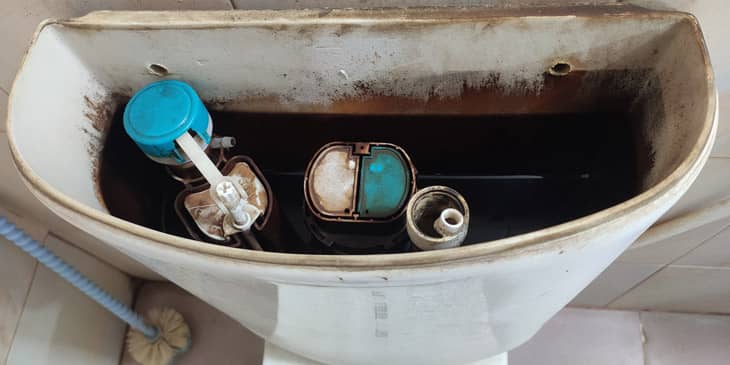
Your toilet tank hides more grime than you think — and that hidden buildup quietly wastes water, weakens flushes, and leads to $150+ repairs when parts fail. How to clean toilet tank the right way keeps everything working like new without scrubbing for hours.
This guide shows exactly how to empty, treat, and protect the tank so you stop dealing with weak flushes, running water, and surprise leaks. After reading it, you’ll know the exact tools, safe cleaners, and red flags that tell you when to stop and call a plumber instead.
Scope of This Guide
What it covers: Full tank draining, safe removal of rust / black mold / mineral buildup / limescale, and reassembly.
What it does NOT cover: Bowl cleaning, full toilet replacement, or septic-specific issues.
When to hire a pro instead: If you see cracked parts, constant running water, or water on the floor after cleaning.
Tools and Materials You Need
Gather these before you start — nothing fancy, just what every plumber keeps in the truck.
- Adjustable wrench or pliers (for shut-off valve)
- Old towels or rags
- Small bucket or plastic cup for bailing water
- Non-abrasive toilet brush or soft-bristle scrub brush
- Sponge or microfiber cloth
- White distilled vinegar (2–3 gallons) OR citric acid powder (1 cup)
- Safety gloves and glasses
- Optional: baking soda for light fizzing action
All these items cost under $15 at any hardware store and will last for years of cleanings.
Step-by-Step: How to Clean Toilet Tank
Start by turning the water shut-off valve clockwise (it’s the small knob on the pipe behind the toilet) until it stops turning. Then flush the toilet 2–3 times. You’ll hear the tank empty and see the water level drop. Use your small bucket or cup to scoop out the last bit of water at the bottom. Why this step matters: Draining the tank completely lets the cleaner work at full strength instead of getting watered down. If you skip this, the vinegar or citric acid won’t be strong enough to dissolve years of buildup, and you’ll waste time and product.
For everyday mineral buildup or light stains, pour 2–3 gallons of plain white vinegar right into the empty tank until it reaches the top of the overflow tube. For heavier rust, black mold, or hard limescale, mix 1 cup of citric acid powder with 2 cups of warm water and pour that in instead. Let it sit for at least 1 hour — overnight is even better if the tank looks really bad. Why this works so well: These natural acids gently dissolve the gunk without eating away at the rubber seals, flapper, or fill valve like bleach does. Most homeowners are surprised how much cleaner the tank looks after just one soak.
Now grab your soft brush and gently scrub the inside walls, around the fill valve, under the flush valve, and along the bottom where sediment likes to hide. Wipe the lid, overflow tube, and any other plastic or metal parts with a sponge. You don’t need to scrub hard — the cleaner has already loosened everything. Easy tip for beginners: Work from top to bottom so dirt falls into the cleaner instead of spreading around. This quick scrub takes only 5–10 minutes but makes a huge difference in how fresh the tank stays.
Turn the water shut-off valve back on slowly so the tank refills. Once it’s about half full, flush the toilet and let it refill again. Do this 3–4 times to rinse out every drop of cleaner. Check that the flapper drops and seals properly and that the fill valve stops filling when it should. Dry the outside with a towel before putting the lid back on. Why the extra rinses matter: Any leftover acid can cause a slight taste or smell in the bowl for a day or two, and thorough rinsing keeps your toilet parts working perfectly for months.
Red Flags — Stop and Call a Plumber
Why Most Guides Miss These Critical Details
Frequently Asked Questions
How to clean toilet tank with vinegar?
Drain the tank completely, pour in 2–3 gallons of white vinegar until it covers the parts, and let it sit 1–2 hours (or overnight for heavy buildup). Scrub gently, rinse by refilling and flushing 3–4 times. Vinegar’s mild acid safely breaks down mineral deposits without harming rubber seals or the vitreous china.
How to remove rust from toilet tank?
Use the citric acid method — 1 cup powder mixed with warm water. Let it sit 1 hour or more. The acid chelates iron deposits better than vinegar alone. For light rust, baking soda sprinkled on wet surfaces adds gentle abrasion. Never use abrasive pads that scratch the tank surface.
How to clean black mold from toilet tank?
Vinegar kills mold on contact. After draining, spray or pour undiluted vinegar on all moldy areas and let it sit 30 minutes before scrubbing. Citric acid works even better for deep mold in corners. Rinse thoroughly so no vinegar smell remains in the flush water.
How often should you clean your toilet tank?
Clean every 6 months in normal water conditions and every 3 months if you have hard water. You’ll know it’s time when flushes weaken or you see visible sediment when you lift the lid. Regular cleaning prevents $200 fill-valve replacements later.
Are toilet tank cleaning tablets safe?
No. Most manufacturers warn that continuous chemicals in the tank void the warranty and corrode rubber parts within months. The constant low-level disinfectant turns the standing water caustic and causes leaks and weak flushes. Stick to periodic vinegar or citric acid cleanings instead.
How to remove mineral buildup from toilet tank without scrubbing?
Citric acid is the plumber’s secret weapon. Mix 1 cup powder with warm water, pour into the drained tank, and walk away for an hour. The acid does the work. This method saves time and protects delicate internal components better than any abrasive brush.
Verdict / Summary — What You Should Do Next
Most homeowners with normal water only need a vinegar cleaning every 6 months.
In hard water areas or with heavy buildup, use citric acid every 3 months instead.
If you see brittle parts, constant running water, or leaks, stop and replace the fill valve or flapper first (see our best toilet fill valve guide).
How to Clean Toilet Tank with Vinegar (Safe & Effective Method)
Vinegar remains the most homeowner-friendly option because it’s cheap, non-toxic, and gentle on every part inside the tank. Use distilled white vinegar — never apple cider. After draining, fill the tank to the overflow tube and let it work. In 20 years of service calls, this single step prevents more fill-valve failures than any other maintenance habit. Pair it with monthly prevention by adding 1 cup of vinegar through the overflow tube once a month and letting it sit overnight. See why clean tanks deliver stronger flushes.
How to Remove Rust from Toilet Tank (And Prevent It Returning)
Rust usually comes from iron in your water supply or old galvanized pipes. Citric acid or a strong vinegar soak dissolves it without scratching the tank. After cleaning, check your fill valve and flapper for early corrosion — replace them if they feel soft. Many homeowners in hard-water areas cut rust problems in half by installing a simple point-of-use water filter on the toilet line. Our fill valve guide shows the exact models that last longest in rusty water conditions.
How to Clean Black Mold and Mineral Buildup from Toilet Tank
Black mold thrives in the dark, damp tank environment. Vinegar or citric acid kills it on contact and removes the minerals that feed it. Clean the tank every 3–4 months in humid climates. The payoff is immediate — stronger flushes, no musty smell, and parts that last years longer. Never ignore mold; it spreads to the bowl and creates bigger sanitation issues. A properly cleaned tank is the foundation of reliable flushing performance.
Clean your toilet tank today and you’ll notice stronger flushes and fewer repairs tomorrow. For more expert toilet maintenance, check our complete toilet fill valve replacement guide.
