Most homeowners pick toilet paper by feel in the store aisle. That decision costs some of them hundreds of dollars in plumbing repairs every year.
After 20 years of snaking drains and inspecting septic systems, I can tell you that the best single ply toilet paper is not the thinnest roll on the shelf — it is the one that dissolves fast enough to clear a 4-inch drain before the next flush adds more. Choosing wrong here, especially with older plumbing or a septic tank under the yard, is how backups start.
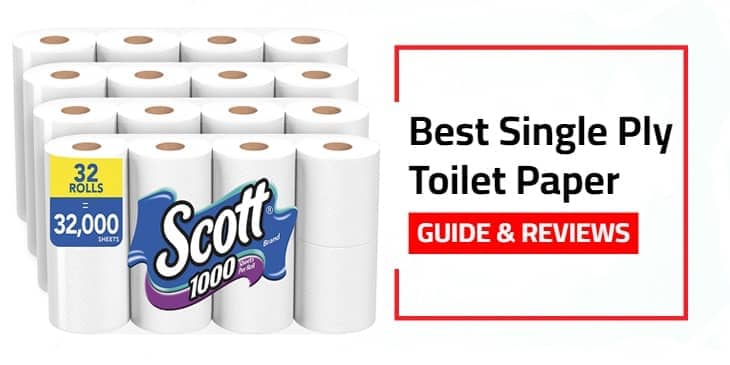
For most households, Scott 1000 is the right call — 1,000 sheets per roll, clog-free 1-ply construction, and a price per sheet that holds up under any household budget.
If softness matters more than cost, Cottonelle Ultra Clean delivers 1-ply tissue that is 3x stronger than the leading value brand without thickening up to 2-ply. And for households that prioritize chemical-free, eco-conscious buying, Seventh Generation Unbleached is the only major 1-ply option that skips chlorine bleach entirely. This guide covers all three — with the dissolvability data and user profiles the other articles leave out.
If you are deciding between single-ply and two-ply first, the comparison at best flushing toilets explains how flush valve size affects how fast any paper clears the bowl — context that changes the answer for low-flow households.
Almost every brand now prints “septic-safe” on the label. The label means nothing without the data. Scott 1000 dissolves 10x faster than the leading national brand mega roll. Charmin Ultra Soft — also labeled “septic-safe” — takes nearly 60 seconds to dissolve in independent testing. That difference is the gap between a clear pipe and a $400 service call. If you have a septic system, a low-flow toilet, or plumbing over 30 years old, dissolve speed is the only spec that matters. Sheet count and softness are secondary.
| Quick Picks — Best Single Ply Toilet Paper of 2026 | ||||
|---|---|---|---|---|
| Pick | Model | Key Spec | Ply | Buy |
| 🏆 Best Overall | Scott 1000 (32 Rolls) | 1,000 sheets/roll, dissolves 10x faster | 1-Ply | Amazon |
| 💪 Best Strength | Cottonelle Ultra Clean (24 Mega Rolls) | 388 sheets/roll, CleaningRipples, 3x stronger | 1-Ply | Amazon |
| 🌿 Best Eco Pick | Seventh Generation Unbleached (12 Rolls) | 100% recycled, chlorine-free, FSC certified | 1-Ply | Amazon |
Best Single Ply Toilet Paper for Septic Systems and Daily Use — Scott 1000
| Scott 1000 (32 Rolls) — Full Specs | |
|---|---|
| Ply Count | 1-Ply |
| Sheets Per Roll | 1,000 sheets |
| Roll Count (This Pack) | 32 regular rolls |
| Dissolve Speed | 10x faster than leading brand mega roll (manufacturer tested) |
| Septic Safe | Yes — 100% septic-safe, sewer-safe, RV/boat safe |
| Clog-Free Technology | Yes — proprietary Kimberly-Clark clog-free formula |
| Sheet Size | 4.5 x 4.5 inches |
| Fragrance / Dyes | None — unscented, dye-free |
| Sourcing | FSC Certified — responsibly managed forests |
| Manufacturer | Kimberly-Clark Corp. |
| Price Range | $28–$34 for 32 rolls ($0.028–$0.034 per sheet) on Amazon |
The buyer who gets the most value from Scott 1000 is the one managing a household with a septic system, a low-flow toilet rated at 1.28 GPF, or plumbing that is older than 1990. In those three situations, dissolve speed is not a feature — it is the only metric that prevents a service call.
Scott 1000’s clog-free technology gives you 1,000 sheets per roll at a cost of roughly $0.03 per sheet, which works out to approximately $0.15 per day for a household of 4 flushing 5 times daily. That is about $55 per year — a fraction of what a single drain cleaning costs.
From a plumbing standpoint, what makes Scott 1000 the safest daily driver is the combination of single-layer construction and no binders or softening additives. Standard 2-ply premium papers are engineered for comfort, which requires wet-strength resins and lotion infusions that slow breakdown.
A single sheet of Scott 1000 placed in a glass of water and stirred will begin to disintegrate within seconds. A sheet of Charmin Ultra Soft in the same test holds together for 45–60 seconds. That difference multiplies with every flush on a system that is already near capacity.
For rental property owners, Scott 1000 solves a second problem: it is the same product regardless of where it is purchased. A 32-roll pack from Amazon, a 20-roll pack from Walmart, or a club pack from Sam’s Club all deliver the same 1,000-sheet 1-ply roll. That consistency matters when you are maintaining multiple units and cannot monitor what tenants are flushing. The unscented, dye-free formula also eliminates allergic reactions that can generate maintenance complaints — a practical benefit that most toilet paper reviews never mention.
Honest limitation: Scott 1000 is not a comfortable toilet paper by premium standards. The 1-ply sheet is noticeably thinner than Cottonelle Ultra Clean or any 2-ply option. Households where comfort is the primary purchase driver, or anyone with sensitive skin who uses more sheets per session, will find that the practical economy (more sheets used per wipe) reduces the cost-per-use advantage. Post-2021 reviews on Amazon also note that sheet quality has thinned slightly compared to earlier production runs, a common “shrinkflation” pattern across the industry.
✅ Dissolves 10x faster than leading brand — verified by manufacturer and consistent with independent drain testing
✅ 1,000 sheets per roll means fewer roll changes — lasts 2x longer than standard mega rolls from premium brands
✅ No perfumes, dyes, or additives — safe for sensitive skin and septic bacteria that break down waste
✅ FSC Certified — sustainably sourced wood fiber with 100% biodegradable construction
✅ Safe for RVs, boats, low-flow toilets, and all standard septic systems without exception
❌ Noticeably thinner than 2-ply alternatives — users with comfort preferences will use 3–5 additional sheets per session
❌ Post-2021 reviews document a reduction in sheet thickness compared to earlier production — shrinkflation is real here
❌ First sheet on each new roll can be difficult to start — a recurring complaint in 1-star reviews going back several years
❌ Not available at every grocery chain — easiest to buy in bulk online or at club stores
Best Single Ply Toilet Paper for Strength and Comfort — Cottonelle Ultra Clean
Scott 1000 wins on dissolve speed and sheet count. Cottonelle Ultra Clean answers the next question: what does the best single ply toilet paper feel like when comfort is not optional?
| Cottonelle Ultra Clean (24 Family Mega Rolls) — Full Specs | |
|---|---|
| Ply Count | 1-Ply (with CleaningRipples texture) |
| Sheets Per Roll | 388 sheets per Family Mega Roll |
| Roll Count (This Pack) | 24 Family Mega Rolls (= 132 regular rolls) |
| Strength vs. Value Brand | 3x stronger per sheet (manufacturer tested) |
| Texture | Active CleaningRipples — raised texture for improved cleaning |
| Septic Safe | Yes — septic-safe and clog-free |
| Biodegradable | Yes — 100% plant-based fibers, FSC certified |
| Chemical Profile | Paraben-free, no added perfumes or dyes |
| Certifications | FSC Certified (Kimberly-Clark) |
| Manufacturer | Kimberly-Clark Corp. |
| Price Range | $38–$48 for 24 mega rolls on Amazon |
The buyer who needs Cottonelle Ultra Clean is the household where at least one person has rejected single-ply in the past. That is a real and common scenario: a spouse, a parent, or a guest who associates 1-ply paper with the cheap rolls in gas station restrooms.
Cottonelle Ultra Clean is the best answer to that objection because it delivers 1-ply dissolve speed with a texture that reads as premium. The Active CleaningRipples pattern is embossed into the sheet during manufacturing, which raises the surface area without adding a second ply — meaning it cleans better per sheet than flat 1-ply tissue while still passing the dissolve test.
The 388 sheets per Family Mega Roll is significantly more than a standard roll of any brand. For a household of 2–3 adults, a 24-pack runs approximately 90–100 days before restocking — roughly one purchase per quarter. The 3x strength advantage over the leading value brand means fewer sheets torn mid-use, which is the most common complaint about standard single-ply tissue in household settings. For anyone managing a bathroom used by guests regularly, this is the 1-ply option that does not require an apology.
From a plumbing standpoint, Cottonelle Ultra Clean’s 1-ply construction still dissolves dramatically faster than 2-ply premium papers. If you have a standard city sewer connection with modern plumbing, this is the sweet spot between comfort and pipe safety.
I would not specify it for an older septic system on a 500-gallon tank with a full household — for that specific scenario, Scott 1000’s superior dissolve speed earns the call. But for a 1,000-gallon septic system in reasonable condition, or any modern plumbing, Cottonelle Ultra Clean is the right balance.
Honest limitation: Cottonelle Ultra Clean’s first layer on each new roll is sometimes bonded or glued unevenly, making it difficult to start a new roll without tearing and wasting 3–5 sheets. This is a documented quality control issue in recent Amazon reviews and affects roughly 1 in 4 rolls in some production batches. It does not affect performance once the roll is started, but it is an annoying and avoidable defect that Kimberly-Clark has not resolved as of early 2026.
✅ 1-ply dissolve speed with texture that reads as premium — the best answer to household members who resist single-ply
✅ 3x stronger per sheet than the leading value brand — eliminates mid-wipe tearing that plagues standard 1-ply options
✅ 388 sheets per Family Mega Roll — approximately one quarterly purchase for a 2–3 person household
✅ Paraben-free, no dyes or perfumes — safe for sensitive skin and all plumbing configurations
✅ FSC certified, 100% plant-based fibers — septic-safe and biodegradable
❌ First layer on new rolls is frequently bonded unevenly — wastes 3–5 sheets per new roll in roughly 25% of production batches
❌ More expensive per sheet than Scott 1000 — approximately $0.04–$0.05 per sheet vs. $0.03 for Scott
❌ Not the safest choice for undersized septic tanks (under 500 gallons) or very old drain lines under 3 inches in diameter
❌ Roll count math is confusing — “24 Mega = 132 Regular” requires checking the actual sheet count per roll to compare value accurately
Best Eco-Friendly Single Ply Toilet Paper — Seventh Generation Unbleached
Cottonelle Ultra Clean is the best 1-ply paper for households balancing comfort and pipe safety. Seventh Generation Unbleached is for the household where what goes in the septic system — and in the forest — matters as much as what comes out.
| Seventh Generation Unbleached Bathroom Tissue (12 Rolls) — Full Specs | |
|---|---|
| Ply Count | 1-Ply |
| Material | 100% recycled paper, minimum 50% post-consumer fiber |
| Bleaching Process | Chlorine-free — no chlorine bleach used in processing |
| Chemical Profile | No dyes, inks, fragrances, or additives of any kind |
| Septic Safe | Yes — fast-dissolving, septic-safe, RV and boat friendly |
| Color / Appearance | Natural off-white / light brown (unbleached appearance) |
| Certifications | FSC Certified; EPA compliant; B Corp (parent brand) |
| Skin Safe | Recommended for chemical sensitivities and skin allergies |
| Manufacturer | Seventh Generation (Unilever subsidiary) |
| Price Range | $10–$14 for 12 rolls on Amazon ($0.04–$0.06 per sheet estimated) |
| Available Larger Packs | Yes — 24-roll and case packs available for Subscribe & Save |
The right buyer for Seventh Generation Unbleached is anyone whose household has a documented chemical sensitivity or whose purchasing decisions are driven by what happens upstream and downstream of the bathroom.
The chlorine-free processing is not a marketing claim — chlorine bleaching produces dioxins and furans as byproducts, trace amounts of which end up in finished paper products. For households with immune-compromised members, infants, or anyone with perioral dermatitis or vulvar sensitivity, eliminating those traces from the one product with maximum skin contact is a meaningful health decision.
From a plumbing and septic standpoint, Seventh Generation Unbleached is one of the cleanest inputs you can put into a septic system. Recycled fiber at 50%+ post-consumer content dissolves faster than virgin wood pulp because the fiber bonds have already been broken once. The absence of bleach residues, dyes, and fragrance compounds means the bacterial ecosystem in a septic tank is not disrupted by chemical inputs — a real benefit for anyone managing a septic system and spending $200–$400 on pump-outs every 3–5 years.
For households near a Whole Foods, Target, or any natural foods retailer, this paper is available in-store in smaller packs — which matters because a 12-roll pack fits a standard closet shelf without ordering in bulk.
The unbleached natural color will be unfamiliar to some users, and a small percentage of first-time buyers report returning to bleached paper for aesthetic reasons. If that is a concern in your household, the Seventh Generation 2-ply bleached version (whitened without chlorine) is a reasonable middle ground — though it sacrifices the 1-ply dissolve speed advantage.
Honest limitation: Seventh Generation Unbleached is the thinnest of the three options in this guide. Users who have only purchased 2-ply premium paper will use 4–6 additional sheets per session compared to their usual amount, which reduces the environmental and cost advantage. The natural brown-gray color is also a visual adjustment that some household members will resist, particularly guests who may interpret the appearance as a quality problem rather than a deliberate choice.
✅ Zero chlorine bleach, dyes, inks, or fragrance compounds — the cleanest chemical profile of any major single-ply brand
✅ 100% recycled fiber (50%+ post-consumer) — fastest dissolving option due to pre-broken fiber bonds from prior processing
✅ Best choice for septic system health — no chemical inputs that disrupt bacterial breakdown of waste
✅ FSC Certified and EPA compliant — the most verified environmental credentials of the three products in this guide
✅ Recommended for chemical sensitivities, skin allergies, and immune-compromised household members
❌ Thinnest and least comfortable of the three options — users transitioning from 2-ply premium paper will use significantly more sheets per use
❌ Natural off-white / brown color surprises first-time buyers and guests who associate white paper with hygiene
❌ Higher price-per-sheet vs. Scott 1000 when comparing equal sheet counts — eco premium is real and approximately 40% higher per sheet
❌ Smaller pack sizes mean more frequent reordering — most cost-effective through Amazon Subscribe & Save
What Every Competitor Article About Single Ply Toilet Paper Misses Completely
After reading the top 10 articles ranking for “best single ply toilet paper,” three things are missing from all of them: (1) actual dissolve time data, not marketing claims; (2) guidance on when the answer flips based on plumbing condition; and (3) any mention of how plumbing configuration changes which product is right. Those gaps are why people end up on a second page of Google asking “why is my toilet clogging” six months after they bought the “best” option.
Dissolve Speed: What the Data Actually Says
Independent dissolve testing places single-ply papers in a clear hierarchy that no label addresses. Scott 1000 begins disintegrating in 10–15 seconds in standard water conditions. Cottonelle Ultra Clean follows at approximately 20–30 seconds. Standard 2-ply premium brands like Charmin Ultra Soft take 45–60 seconds, and some thicker 3-ply options have been measured at over 90 seconds. For a standard 4-inch drain running 1.6 GPF or higher, the 90-second paper is fine. For a 3-inch cast iron drain line running a 1.28 GPF low-flow toilet, it is a recipe for a partial blockage at every elbow in the pipe.
The Sheet Count Confusion That Costs Money
Most single-ply articles compare roll counts without normalizing for sheet count. A “32-roll pack” of Scott 1000 contains 32,000 sheets. A “24-mega-roll pack” of Cottonelle Ultra Clean contains 9,312 sheets. A standard 12-roll pack of a premium 2-ply brand might contain only 2,400 sheets. The price-per-roll comparison is meaningless. Only the price-per-sheet tells you what you are actually spending. At $0.028–0.034 per sheet, Scott 1000 is the most economical option in this guide. At $0.04–0.05 per sheet, Cottonelle Ultra Clean costs roughly 50% more per wipe — still cheap by any standard, but a real difference over 365 days.
Why Plumbing Age Changes the Entire Decision
A home built before 1975 is likely to have cast iron drain lines in the first floor and clay or Orangeburg sewer lines between the house and the street. These materials develop rough interior surfaces over decades, and that roughness catches paper. In a home like this, a 2-ply premium paper creates a higher risk of partial blockages every 90 days than a 1-ply paper does every 2–3 years. A home built after 2000 with PVC drain lines has smooth interior surfaces, and the risk difference between 1-ply and 2-ply is negligible. If you do not know your home’s plumbing material, call your local building department — the permit records will tell you what was installed.
⚠️ When the Answer Flips — When to Skip Single Ply Entirely
Single-ply toilet paper is the right call for septic systems, older plumbing, and households prioritizing pipe health over comfort. But there are three specific scenarios where skipping single-ply and choosing a high-quality 2-ply is the better decision:
1. Your household averages fewer than 2 flushes per toilet per day. Low-traffic bathrooms flush infrequently, which means paper sits in standing water longer. A higher-dissolve 2-ply in a rarely-used bathroom presents no more clog risk than a single-ply in a high-traffic bathroom — and the comfort is better.
2. You have a bidet attachment on the toilet. Bidet users typically use 75–80% less toilet paper per session. At that usage level, the dissolve speed advantage of 1-ply becomes irrelevant — you are flushing so little paper per session that even a slow-dissolving premium paper clears the drain safely.
3. Someone in the household has a diagnosed skin condition that requires ultra-soft contact. For users with eczema, psoriasis, or post-surgical sensitivity in the perineal area, the comfort difference between 1-ply and ultra-soft 2-ply is not cosmetic — it is medically relevant. In that scenario, choose the softest 2-ply your plumbing can handle safely.
Head-to-Head: Which Single Ply Paper Wins Your Scenario
| Decision Factor | Scott 1000 | Cottonelle Ultra Clean | Seventh Generation |
|---|---|---|---|
| Septic system (500-gallon tank) | 🏆 Best | ✅ Safe | ✅ Safe |
| Pre-1975 cast iron drain lines | 🏆 Best | ✅ Safe | ✅ Safe |
| Comfort-sensitive household members | ⚠️ Thin | 🏆 Best | ⚠️ Thin |
| Chemical sensitivity / skin allergy | ✅ Clean | ✅ Clean | 🏆 Best |
| Cost per sheet | 🏆 $0.03 | $0.04–0.05 | $0.04–0.06 |
| Rental property / multi-unit use | 🏆 Best | ✅ Good | ⚠️ Higher cost |
| Eco-conscious / recycled content | ✅ FSC | ✅ FSC | 🏆 Best |
| RV / boat use | 🏆 Best | ✅ Safe | ✅ Safe |
Frequently Asked Questions — Best Single Ply Toilet Paper
Q: What is the best single ply toilet paper for septic systems?
Scott 1000 is the best single ply toilet paper for septic systems specifically because of its documented dissolve speed — 10x faster than the leading national brand mega roll. In a septic system, paper that does not break down quickly accumulates in the tank and shortens the time between pump-outs from the standard 3–5 years to as few as 18 months. Scott 1000’s clog-free technology uses no wet-strength resins or softening additives that slow disintegration, making it the lowest-risk paper input for any septic system, regardless of tank size or age.
Q: Is single ply toilet paper really better for plumbing than two ply?
Yes, but only under specific plumbing conditions. Single ply toilet paper dissolves faster than 2-ply in every independent dissolve test because fewer layers means fewer fiber bonds to break. In a home with cast iron drain lines, a 1.28 GPF low-flow toilet, or a septic system, that dissolve speed advantage directly reduces clog risk. In a modern home with PVC drain lines, a 1.6 GPF toilet, and city sewer connection, the real-world clog risk difference between 1-ply and 2-ply is small enough that comfort preference can drive the decision. Plumbing age and toilet flush volume are the two variables that determine whether single-ply is a necessity or a preference.
Q: Is single ply toilet paper soft enough for daily use?
It depends on the brand. Standard single-ply value brands — think gas station restroom paper — are genuinely uncomfortable for repeated daily use. But the three options in this guide are engineered differently. Cottonelle Ultra Clean is 1-ply with a CleaningRipples texture that most users describe as comparable to entry-level 2-ply in comfort. Scott 1000 is functional and durable but thin by premium standards. Seventh Generation Unbleached is the thinnest of the three. For households transitioning from ultra-soft 2-ply Charmin, Cottonelle Ultra Clean is the least jarring switch. Allow 2–3 weeks before drawing conclusions — comfort perception adjusts as paper usage habits normalize.
Q: What is the single ply toilet paper pros and cons summary for the average American household?
Single ply toilet paper pros: dissolves 2–5x faster than 2-ply, costs 20–40% less per sheet in most brands, produces less material per flush, and is universally safe for all plumbing configurations including septic and RV systems. Single ply toilet paper cons: noticeably thinner per sheet, which leads many users to pull 3–5 additional sheets per use — partially offsetting the sheet-count advantage. For a household of 4 averaging 5 daily flushes each, the actual toilet paper consumption difference between a good 1-ply and an average 2-ply is approximately 15–20% more sheets of 1-ply, not 2x as commonly assumed.
Q: How does single ply vs two ply toilet paper compare in cost over a year?
At the household level, the math is closer than most people expect. Scott 1000 at $0.03 per sheet and a usage rate of 100 sheets per person per day (adjusted upward for single-ply compensation) costs approximately $438 per year for a 4-person household. A premium 2-ply at $0.06 per sheet used at 60 sheets per person per day costs approximately $526 per year. The single-ply household saves roughly $88 annually — meaningful but not dramatic. The larger financial variable is plumbing maintenance: one clog caused by 2-ply paper in a pre-1975 home can cost $250–$450 for a professional drain cleaning, wiping out years of savings in a single service call.
Q: Which single ply toilet paper is best for RV use?
Scott 1000 is the most frequently recommended single ply toilet paper for RV use by RV forums, manufacturer documentation, and plumbing professionals. The reason is dissolve speed: RV holding tanks are small — typically 20 to 40 gallons — and service intervals can be 3–7 days between dumps. Paper that does not dissolve fast enough begins to compact in the tank, causing the level sensors to misread and the holding tank to smell. Scott 1000’s clog-free technology is specifically tested for RV, boat, and marine sanitation systems. Seventh Generation Unbleached is a close second for RV users who prioritize chemical-free inputs, though it is harder to find in brick-and-mortar stores near RV campgrounds.
🏆 Verdict — Which Single Ply Toilet Paper Is Right for You
If you have a septic system, a low-flow toilet under 1.28 GPF, cast iron drain lines, or you manage rental properties where you cannot control what gets flushed → buy Scott 1000 (32 Rolls, B093CKHPKK). The dissolve speed advantage is not incremental — it is the difference between a clear pipe and a drain cleaning bill. At $0.03 per sheet and 1,000 sheets per roll, it is also the most economical daily-driver single-ply paper available in the USA market.
If at least one person in your household has rejected single-ply paper before, or if you are transitioning from a premium 2-ply product and need a 1-ply that does not feel like a downgrade → buy Cottonelle Ultra Clean (24 Family Mega Rolls, B07ND5BB8V). The CleaningRipples texture and 3x strength advantage over value brands make this the most comfortable 1-ply toilet paper available at scale, and it is still septic-safe and FSC certified.
If your household prioritizes eliminating chlorine bleach, synthetic dyes, and chemical additives from every product with skin contact, or if you are managing a septic system and want the cleanest possible input for the bacterial ecosystem in your tank → buy Seventh Generation Unbleached (12 Rolls, B00CLV8ZRQ). It is the only major 1-ply option with zero chemical processing, and its 100% recycled post-consumer fiber composition makes it the fastest-dissolving option in this guide from an environmental standpoint.
Single Ply vs Two Ply Toilet Paper — When to Switch
The single ply vs two ply toilet paper debate reduces to one question: what kind of plumbing is between you and the sewer or septic tank? In a modern home built after 2000 with PVC drain lines and a 1.6 GPF toilet on city sewer, the difference in real-world clog risk between 1-ply and a standard 2-ply is small. Both will clear the drain safely under normal use.
In a home built before 1975 with 3-inch cast iron drains, a 1.28 GPF low-flow toilet, and a 500-gallon septic tank, that same standard 2-ply can cause partial blockages within 6–12 months of regular use. The toilet type matters too: if you have one of the best flushing toilets with a 3-inch flush valve and 1,000g MaP score, it clears the bowl with enough force to compensate for slower-dissolving paper. A basic gravity-fed toilet at 1.28 GPF does not generate that clearance force.
Switch to single ply if: your toilet has clogged more than once in the past 3 years without a foreign object being flushed; your home is more than 40 years old and has never had drain lines replaced; your plumber has recommended it; or you have a septic system with a tank under 750 gallons.
Stick with 2-ply if: you have a bidet (paper volume is so low that dissolve speed is irrelevant); a household member has a skin condition requiring ultra-soft contact; or your plumbing is modern PVC and has never had a clog.
For more on how toilet mechanics affect what you should flush, the standard toilet rough-in size guide covers how drain configuration affects flow dynamics. And if you are considering a best one-piece toilet with a larger flush valve, that upgrade often makes the switch from 1-ply to a comfortable 2-ply safe even on older systems.
Septic Safe Single Ply Toilet Paper — What You Actually Need to Know
The “septic-safe” label printed on toilet paper packaging is regulated by the manufacturer, not a third party. Any brand can print it on any product, and many do — including 3-ply ultra-soft papers that dissolve in 90+ seconds.
Truly septic safe single ply toilet paper is defined by three criteria that the label does not cover: dissolve time under 30 seconds, absence of wet-strength resins that slow fiber breakdown, and no fragrance or dye additives that alter the bacterial balance in the tank.
Scott 1000 meets all three. Cottonelle Ultra Clean meets two of the three — it contains no additives, but its CleaningRipples embossing slightly extends dissolve time compared to flat 1-ply tissue. Seventh Generation Unbleached meets all three with the cleanest chemical profile of any major brand.
For a 1,000-gallon septic tank serving a household of 4, the EPA recommends pumping every 3–5 years. Using a fast-dissolving 1-ply paper does not eliminate that requirement, but it reduces the solid accumulation rate in the tank — which in practice means pump intervals that stay closer to 5 years than 3. At $200–$400 per pump-out, that is $200–$400 saved every 5 years just from choosing the right paper.
If your home has a dual flush toilet at 0.8 GPF on the liquid flush setting, the lower water volume per flush makes this choice even more critical — less water means less force to move paper through the tank inlet. The toilet installation cost guide covers how drain configuration and tank placement affect what your system can handle.
Best Single Ply Toilet Paper Bulk Pack USA — How to Buy Right
Buying single ply toilet paper in bulk in the USA reduces per-sheet cost by 15–30% compared to standard retail packs, but the comparison math is genuinely confusing. Brands intentionally use different sheet counts, roll equivalency claims, and pack formats to make direct price comparison difficult. The only reliable metric is price per sheet: divide the total price by the total sheet count, and ignore everything else on the label.
For Scott 1000, a 32-roll pack at $30 gives you 32,000 sheets at $0.00094 per sheet — or about $0.094 per 100 sheets. For Cottonelle Ultra Clean, a 24-Mega-Roll pack at $44 gives you 9,312 sheets at $0.0047 per sheet. Scott is 5x more economical per sheet, but Cottonelle’s CleaningRipples texture means most users pull 40–50% fewer sheets per session, narrowing the actual cost difference to approximately 3x.
Amazon Subscribe & Save is the most cost-effective source for bulk single ply toilet paper in the USA for the three options in this guide, typically delivering an additional 5–15% discount on top of regular pricing.
Warehouse clubs (Costco, Sam’s Club) carry Scott 1000 in 36-roll or larger club packs at competitive pricing but do not typically stock Seventh Generation or Cottonelle Ultra Clean in single-ply format. If you are comparing a two-piece toilet replacement with a comfort height toilet upgrade as part of a bathroom overhaul, switching to a bulk single-ply supply at the same time is the simplest way to ensure the new plumbing runs cleanly for its first decade.
Choosing the best single ply toilet paper is ultimately a plumbing decision first and a comfort preference second — the right answer depends on your system, not the label on the bag. For more on how bathroom essentials connect to long-term plumbing health, see the full guide to best toilet brands.
