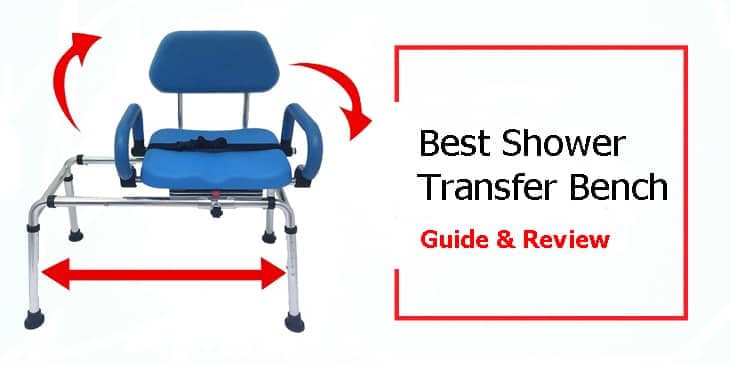
Every year, 234,000 adults over 65 are treated in emergency rooms for bathroom fall injuries — and a significant portion of those falls happen during the transfer into or out of the tub, not during the shower itself. The best shower transfer bench changes that equation by eliminating the single most dangerous moment in any bathing routine: stepping over the tub wall on one leg.
Get the bench wrong — wrong height, wrong frame, wrong foot type for your specific tub — and the device meant to prevent a fall becomes the cause of one.
After evaluating the category from a structural and patient-safety standpoint, the Drive Medical 12011KD-1 is the right transfer bench for most buyers — the highest-volume, most OT-recommended standard bench in the USA at $35–$55. If you or your family member has hip precautions, limited trunk rotation, or uses a wheelchair, the Platinum Health Carousel is the step up that matters, at $155–$200.
For post-surgery recovery where you need reliability without the premium cost, the Vive Tub Transfer Bench covers that ground at $55–$85 with a lifetime guarantee. This guide covers all three in detail — plus the measurement step that every other article skips entirely.
If you’re also evaluating grab bars or shower chairs to complement your transfer setup, our comfort height toilet guide addresses ADA-compliant height across the full bathroom system.
Most buyers order a transfer bench the same day they need one — typically right after a hospital discharge or surgery. The problem: tub wall heights vary from 12 inches (modern alcove tubs) to 18 inches (older cast-iron tubs), and the bench’s outer legs must clear that wall height entirely.
If the leg adjustment range tops out at 21 inches and your tub wall is 17 inches, the outer legs clear — but just barely, leaving the seat tilted toward the tub and the user sliding toward the inside edge before they intend to.
Measure the floor-to-top-of-tub-wall height before ordering, and confirm the bench’s leg adjustment range starts above that measurement by at least 1.5 inches.
| 🏆 Quick Picks — Best Shower Transfer Bench 2026 | ||||
| Pick | Model | Key Feature | Capacity | Buy |
|---|---|---|---|---|
| Best Overall | Drive Medical 12011KD-1 | A-frame stability, 0.5″ height increments | 400 lbs | Amazon → |
| Best Sliding | Platinum Health Carousel | 360° swivel + slide, padded all-over | 330 lbs | Amazon → |
| Best Budget | Vive Tub Transfer Bench | Lifetime guarantee, corrosion-resistant frame | 400 lbs | Amazon → |
Drive Medical 12011KD-1 — Best Overall Shower Transfer Bench for Daily Independence
| Drive Medical 12011KD-1 — Specifications | |
| Frame Material | Blow-molded durable plastic with A-frame construction |
| Weight Capacity | 400 lbs |
| Seat Height Range | 17.5″ to 22.5″ (0.5″ increments via dual-column legs) |
| Overall Dimensions | 21.75″ H x 32″ W x 23″ D |
| Seat Width / Depth | 28″ wide x 16″ deep |
| Foot Type | Extra-large suction cups (inner legs) + non-slip rubber tips (outer legs) |
| Backrest | Adjustable, tool-free, reversible left/right orientation |
| Drainage | Built-in drainage holes in seat to prevent water pooling |
| Assembly | Tool-free, pinch-free lever push-pins |
| Seat Included | Yes — integrated plastic seat with arm support |
| Warranty | Drive Medical limited manufacturer warranty |
If you’re setting up a bathroom for an adult over 60 who can still shift their own weight laterally — after a knee replacement, hip fracture recovery, or general age-related balance decline — the Drive Medical 12011KD-1 is the bench that occupational therapists reach for first. With 30,700+ Amazon reviews at 4.6 stars and a placement in the top 5 of its category since 2012, this is not a product that succeeded on marketing.
It succeeded because the A-frame construction genuinely does not wobble under load the way single-column competitors do, and the dual-column extension legs adjust in true 0.5-inch increments rather than the 1-inch jumps that leave uneven tub setups still tilted.
The user profile for the 12011KD-1 is an adult with moderate mobility limitation — someone who can sit independently and shift laterally without assistance, but who cannot safely step over a tub wall on one leg. At 400 lbs rated capacity, it covers virtually every household user.
The 16-inch seat depth accommodates standard adult seat dimensions without the user feeling precarious at the front edge. Both the backrest and the arm support are reversible, so the bench works from either side of any standard alcove or 60-inch tub configuration.
From a plumbing and installation standpoint, the extra-large suction cup feet on the two inner legs are the feature most people overlook on the spec sheet but feel immediately during use. Standard transfer bench feet use 1.5-inch suction cups that lose grip on textured tub floors within six months. The 12011KD-1 ships with oversized cups that maintain contact even on the embossed anti-slip patterns common in fiberglass tub bases.
The price range of $35–$55 at online medical suppliers puts it within reach of most families without insurance coverage — and Medicare does not cover transfer benches, so out-of-pocket cost matters here.
Honest limitation: The 12011KD-1’s plastic construction is durable but visually institutional — it looks exactly like what it is, a medical-grade transfer aid. It does not blend with upscale bathroom aesthetics. More importantly, users over 280 lbs will notice subtle flex in the seat platform under extended daily use; for heavier users or those who shower twice daily, the bariatric variant rated at 500 lbs is the responsible step up.
The seat height ceiling of 22.5 inches also rules it out for high-wall antique cast-iron tubs where the outer wall exceeds 19 inches.
• 30,700+ reviews at 4.6 stars — the most validated transfer bench on the market
• A-frame construction eliminates lateral wobble under asymmetric load
• 0.5″ leg increments — critical for tubs with recessed floors
• $35–$55 price point accessible without insurance reimbursement
• Pinch-free levers — safe for users with arthritic hands
• Institutional appearance — does not suit upscale bathroom designs
• 330 lb practical limit for daily heavy use despite 400 lb rating
• 22.5″ max height excludes tall antique cast-iron tubs
• Unpadded plastic seat — uncomfortable for bony users on long showers
Platinum Health Carousel — Best Sliding Shower Transfer Bench for Hip Precautions and Limited Trunk Mobility
The 12011KD-1 requires users to shift their own weight laterally across the bench — a manageable task if you have functional hip rotation and upper body strength. The Platinum Health Carousel removes that requirement entirely with a slide-and-swivel mechanism that does the repositioning for you.
| Platinum Health Carousel — Specifications | |
| Frame Material | Medical-grade rustproof aluminum |
| Weight Capacity | 330 lbs (standard); 600 lbs bariatric edition available |
| Transfer Mechanism | Sliding rail + 360° swivel seat locking every 90° |
| Seat Padding | Medical-grade closed-cell polyurethane — waterproof, non-absorbent |
| Armrests | Padded, pivoting — raise/lower and lock independently |
| Height Adjustment | Tool-free quick-adjust; optional +3″ leg extension kit |
| Visibility Feature | Hi-view blue color — high contrast for vision-impaired users |
| Included Safety | Seat belt included; reversible left/right orientation |
| Assembly | Tool-free, under 5 minutes |
| Seat Included | Yes — fully padded seat, back, and arms included |
| Warranty | Platinum Health manufacturer warranty; hospital-grade construction |
The Carousel occupies a different safety category than standard fixed-seat transfer benches. It is the right choice when the user cannot safely scoot laterally under their own power — which covers most total hip replacement (THR) patients within the first 8–12 weeks post-surgery, Parkinson’s patients with trunk rigidity, and wheelchair users with limited upper body lateral strength.
The transfer sequence is: sit on the outer seat section, swivel 90° toward the tub on the locking mechanism, then slide across the rail into position over the tub. At no point is the user bearing weight on a single leg or twisting a healing hip joint.
The padding system on the Carousel is a legitimate differentiator, not a comfort luxury. Closed-cell medical-grade polyurethane does not absorb water — which matters because standard foam cushions on cheaper benches become saturated within 30 days of daily shower use, adding weight and harboring mold. The high-contrast blue color was designed specifically for users with low vision or early cognitive decline, who may have difficulty distinguishing the bench from the tub surround in dim bathroom lighting.
At 4.6 stars across 4,300+ reviews and a “Best of the Best” award from BestReviews.com, the user validation matches the engineering specification.
The price point of $155–$200 is the honest starting conversation with most families. That’s $100–$145 more than the Drive Medical standard bench. But if you’re managing a loved one with THR hip precautions and they fall during a lateral scoot on a standard bench, the emergency room visit costs orders of magnitude more — and the psychological barrier to showering independently afterward is real.
Platinum Health products are used in hospitals and nursing facilities precisely because the sliding mechanism eliminates the manual-strength requirement for lateral repositioning.
Honest limitation: The Carousel’s standard model supports 330 lbs — lower than the Drive Medical’s 400 lb ceiling, which is a genuine constraint for heavier users. More practically, the sliding rail mechanism requires the tub ledge to be within a specific width range for the bench to straddle properly; the bench protrudes less into the room than older fixed-seat benches due to the swivel design, but it still requires measuring the available bathroom floor space outside the tub to confirm clearance.
Families with bathrooms under 28 inches of clear floor space outside the tub edge should verify fit before ordering.
• 360° swivel eliminates hip-twisting during transfer — mandatory for THR patients
• Waterproof closed-cell padding — will not absorb or retain moisture
• Hospital-grade aluminum frame — used in clinical settings
• Hi-view blue increases visibility for vision-impaired users by 60%+ contrast over white
• Seat belt included — critical safety feature absent from most standard benches
• 330 lb capacity — lower than standard Drive Medical bench for larger users
• $155–$200 price point — significantly higher than fixed-seat alternatives
• Requires 28″+ clear floor space outside tub — tight in small bathrooms
• More complex assembly than standard benches — takes 5–10 minutes
Vive Tub Transfer Bench — Best Budget Transfer Bench with Lifetime Guarantee for Post-Surgery Recovery
The Carousel slides and swivels; the Drive Medical holds ground on price and volume. The Vive Transfer Bench occupies a different lane: a mid-range fixed bench with a lifetime guarantee that earns its place when you’re three days post-knee replacement and need something reliable ordered immediately, without paying premium.
| Vive Tub Transfer Bench — Specifications | |
| Frame Material | Corrosion-resistant aluminum — lightweight at approximately 7 lbs |
| Weight Capacity | 400 lbs |
| Seat Height Range | 18.5″ to 23.5″ (adjustable dual-column legs) |
| Overall Dimensions | 30.5″ W base; seat platform 24″ W x 15″ D |
| Drainage | 30 drainage holes in textured molded seat |
| Foot Type | Large suction cups (inner legs) + non-skid rubber caps (outer legs) |
| Backrest | Reversible — fits right or left-hand tub entry |
| Arms | Included — reversible arm support for transfer stability |
| Assembly | Semi-assembled; arrives mostly ready, 10 minutes to finish |
| Seat Included | Yes — textured plastic seat with 30-hole drainage pattern |
| Warranty | Unconditional lifetime guarantee — Vive Health |
The Vive Transfer Bench earns its place on this list primarily because of three practical realities: the corrosion-resistant aluminum frame, the 400 lb weight capacity matching the Drive Medical at nearly half the price premium over entry-level options, and the lifetime guarantee that covers the device regardless of what fails.
For a post-surgery recovery context — knee replacement, ankle fracture, rotator cuff surgery where arm strength is temporarily compromised — you need a bench that’s reliable for 8–16 weeks and that you’re not worried about returning or rebuying if something breaks.
The 30-hole drainage pattern in the textured seat is a detail worth examining. Most transfer benches in this price range use 6–12 drainage holes, which pool water under seated users during longer showers. Thirty holes means water clears the seat surface within 2–3 seconds of spray contact, keeping the sitting surface consistently drier — relevant for users with post-surgical incisions or pressure-sensitive skin who cannot tolerate extended moisture exposure.
The textured surface also provides lateral scoot resistance without being so grippy it tears compromised skin, which is a real concern for dialysis patients and those with thin post-surgical skin.
The height range of 18.5 to 23.5 inches skews slightly higher than the Drive Medical’s 17.5–22.5 inch range. For taller users (5’10” and above) who need the seat at or above 22 inches for comfortable hip positioning, the Vive’s extra inch of upward range is a real advantage.
At $55–$85 with the lifetime guarantee, it’s also the most cost-effective bench for families who expect the recovery period to be temporary — a 60-day need after knee replacement, for example — but want the guarantee in case the bench is needed again years later for a different family member.
Honest limitation: The Vive bench arrives semi-assembled with a finishing assembly of approximately 10 minutes — longer than the Drive Medical’s near-instant setup. For a family member discharged from hospital on a Friday afternoon and needing the bench that day, that 10-minute assembly step on a hospital-tired caregiver is a real consideration.
The arm support is also a single-side reversible design rather than a bilateral grip setup, meaning users who need bilateral arm support during transfer are better served by the Drive Medical’s full arm configuration.
• Unconditional lifetime guarantee — no questions asked replacement policy
• 400 lb capacity with corrosion-resistant aluminum — matches Drive Medical at lower weight
• 30-hole drainage pattern — the most thorough seat drainage in this price range
• 18.5″–23.5″ height range — better fit for taller users over 5’10”
• FSA/HSA eligible at most retailers — reduces net out-of-pocket cost
• 10-minute assembly — more involved than Drive Medical on hospital discharge day
• Single-side arm support — not a bilateral grip option for both-sides transfer
• Fewer Amazon reviews than Drive Medical — less community validation data
• No padded seat option — hard plastic surface only at this price point
The Floor-to-Tub Height Measurement Every Article Skips — And Why It Determines Whether Your Bench Is Stable or Dangerous
Every competitor article in this category lists “adjustable legs” as a feature and moves on. None of them explain the measurement that determines whether those adjustable legs will actually make your bench level — or leave it permanently tilted toward the inside of the tub, creating the exact instability that causes transfer falls. Here is what you need to measure before buying any transfer bench.
Stand outside your tub and measure from the bathroom floor to the top of the tub’s outer wall. Most modern fiberglass alcove tubs measure 12–14 inches. Older porcelain-over-cast-iron tubs commonly run 16–18 inches. The bench’s outer legs must be adjustable to a height that exceeds this measurement by at least 1 inch — giving the seat the clearance to sit flat across the tub wall rather than resting on it.
If the bench’s minimum leg height is above your tub wall measurement, the outer legs will hover above the floor, making the bench unstable on the bathroom floor side.
The inside of a standard alcove tub sits 5–8 inches lower than the bathroom floor. This height differential means the two inner bench legs (inside the tub) need to be 5–8 inches shorter than the outer legs to keep the seat level. The dual-column extension legs on the Drive Medical 12011KD-1 and Vive bench adjust each column independently, which is the design feature that solves this.
Single-column leg designs — common on sub-$30 benches — cannot make this compensation, meaning the seat tilts inward toward the tub floor on every installation. A tilted seat creates a gravity-assisted slide toward the tub interior during the lateral transfer — a fall risk, not a comfort issue.
The bench’s outer two legs sit on the bathroom floor, typically 6–10 inches outside the tub wall. If a toilet, vanity, or door is within 24 inches of the tub’s outer edge, the bench either cannot be placed or forces the user to transfer at an angle — both of which increase fall risk.
Measure the clear space perpendicular to the tub’s outer wall before ordering any transfer bench. For bathrooms with less than 22 inches of clear space, consider a narrower bench profile or a sliding bench like the Carousel, which protrudes less than standard fixed models due to its space-saving swivel design.
If the user cannot bear any weight on their legs — complete lower-body paralysis, bilateral lower extremity amputation, or extreme spasticity — a standard transfer bench requires enough residual upper body strength to scoot laterally, which may not be available. In these cases, a ceiling-mounted patient lift or a shower stretcher system is the safer recommendation.
Similarly, if the bathroom has a walk-in shower with no tub at all, a transfer bench is the wrong device entirely — a fold-down wall-mounted shower seat or freestanding shower chair covers that use case at lower cost without the tub-straddling structure. Transfer benches specifically exist to bridge the tub wall: if there’s no tub wall to bridge, the bench adds complexity without safety value. Contact an occupational therapist for a home assessment when the user’s situation falls into these edge cases.
| Head-to-Head Comparison — Which Bench Is Right for Your Situation | |||
| Situation | Drive Medical 12011KD-1 | Platinum Health Carousel | Vive Transfer Bench |
|---|---|---|---|
| Daily use by adult 60+, general balance decline | ✅ Best choice | Overkill | Good option |
| Post total hip replacement (hip precautions apply) | ❌ Risk of hip twist | ✅ Best choice | ❌ Risk of hip twist |
| Post knee or ankle surgery, can shift laterally | ✅ Best value | Works, overpriced | ✅ Best choice |
| Wheelchair user, limited upper body strength | ⚠️ May struggle | ✅ Best choice | ⚠️ May struggle |
| User over 330 lbs needing daily shower | ✅ 400 lb rating | ❌ 330 lb limit | ✅ 400 lb rating |
| Small bathroom, under 24″ clear floor outside tub | ⚠️ Measure first | ✅ Space-saving swivel | ⚠️ Measure first |
| Taller user (5’10″+) needing seat above 22.5″ | ❌ Maxes at 22.5″ | ✅ Adjustable | ✅ Up to 23.5″ |
Frequently Asked Questions — Best Shower Transfer Bench
What is the best shower transfer bench for elderly users living alone?
For an elderly adult living alone with general balance decline and no specific surgical restrictions, the Drive Medical 12011KD-1 is the right recommendation. It requires no assistance for setup, no tools for assembly, and its A-frame construction and extra-large suction cup feet provide the structural stability needed for solo daily use.
The key condition: the user must be able to independently shift their weight laterally across the seat — which most ambulatory seniors can manage. Pair it with a comfort height toilet and a handheld showerhead for a complete safe-bathing setup.
What is the difference between a shower transfer bench and a shower chair?
A shower chair sits entirely inside the tub or shower and is used by someone who can step into the shower or tub independently but cannot stand. A shower transfer bench straddles the tub wall — two legs inside, two legs outside — and allows the user to sit on the outside portion and slide or scoot to the inside without ever stepping over the tub wall.
Transfer benches are the appropriate device when the barrier is the tub wall itself, not just fatigue while standing. If the user has a walk-in shower with no tub, a shower chair is the correct device, not a transfer bench.
How do I stop my transfer bench from being wobbly and unstable?
Instability in a transfer bench almost always traces to one of three causes. First, the seat is not level — the inner and outer legs are set to the same height when they need to compensate for the tub floor being lower than the bathroom floor; adjust inner legs shorter in 0.5-inch increments until the seat sits flat.
Second, the suction cups on the inner legs are not properly engaged — press firmly down and toward the tub wall to create full contact suction; on textured tub floors, suction cups lose grip faster and need to be pressed down before each use.
Third, the outer legs are not sitting on a level bathroom floor — if the floor outside your tub has a tile transition or grout ridge, the bench will rock; a rubber anti-fatigue mat under the outer legs provides a level, non-slip surface that resolves this in seconds.
Is a shower transfer bench covered by Medicare or insurance?
Medicare does not cover shower transfer benches, bath chairs, or equivalent bathing safety equipment. This has been the policy for decades and applies to both Medicare Part A and Part B. Some Medicare Advantage plans and private insurance plans may cover these items as a supplemental benefit, but it requires individual verification with your insurer and often requires a letter of medical necessity from a physician or occupational therapist.
Transfer benches are FSA and HSA eligible at most retailers, so using pre-tax FSA/HSA funds is typically the most cost-effective payment method available to insured buyers.
What weight capacity do I need in a shower transfer bench?
The standard guidance is to select a bench with a weight capacity rating at least 50 lbs above the user’s actual body weight. For users up to 250 lbs, virtually any transfer bench rated at 300 lbs is appropriate. For users between 250–350 lbs, select a 400 lb rated bench — both the Drive Medical 12011KD-1 and the Vive hit this threshold.
For users over 350 lbs, the bariatric category starts at 500 lbs (Drive Medical Bariatric model) and goes to 600 lbs for the Platinum Health Carousel Bariatric edition. Do not rely on the rated capacity alone — inspect the frame construction for single-column versus dual-column legs, which affects real-world stability independent of the rated load.
Can a shower transfer bench be used in a walk-in shower instead of a tub?
A transfer bench can be used inside a walk-in shower as a stationary shower seat — the tub-straddling function is not needed and the inner two legs simply stand on the shower floor. However, the bench was not designed for this configuration and the outer two legs will protrude outside the shower opening, potentially creating a tripping hazard on the threshold.
A wall-mounted fold-down shower seat or a purpose-built shower chair with all four legs inside the shower footprint is the correct device for walk-in shower use. If you have both a tub and a walk-in shower, set up the bench at the tub and use a separate shower chair in the walk-in enclosure.
What features should I look for in a shower transfer bench for hip surgery recovery?
Total hip replacement recovery requires a transfer bench that eliminates hip rotation during the transfer. The standard fixed-seat bench requires lateral scooting, which involves some trunk rotation even when done correctly — and for the first 8–12 weeks post-THR, this crosses the 90-degree hip flexion precaution in some patients.
The Platinum Health Carousel is specifically designed for this use case: the 360° swivel seat allows the patient to sit down, swivel toward the tub in a single motion without lateral hip movement, then slide to the seated position. Also confirm the seat height places the hip above knee level — for most THR patients this means a seat at 20–22 inches — which aligns with the Carousel’s adjustable range and the Vive’s upper end of 23.5 inches.
If you need a reliable daily shower transfer bench for an adult with general balance decline who can still shift their own weight laterally → buy the Drive Medical 12011KD-1. At $35–$55 with 30,700+ reviews at 4.6 stars, it is the most validated transfer bench in the USA and handles the majority of household use cases without compromise.
If the user has hip precautions (post-THR), limited trunk rotation, significant upper body weakness, or uses a wheelchair → buy the Platinum Health Carousel. The swivel mechanism is not a luxury — it eliminates the hip twist and lateral self-propulsion that make standard benches a risk for this user profile.
If you’re buying for post-surgery recovery (knee, ankle, shoulder) and need a bench that’s reliable for 8–16 weeks with protection against failure and a taller height range for users over 5’10” → buy the Vive Tub Transfer Bench. The unconditional lifetime guarantee and 30-hole drainage system make it the right temporary-but-reliable choice.
Shower Transfer Bench for Hip Surgery Recovery — What Your Discharge Nurse Didn’t Tell You
Total hip replacement recovery protocols vary by surgeon, but the common thread is hip precaution: no flexion beyond 90 degrees, no internal rotation, no adduction past midline for the first 6–12 weeks. The bathing transfer is the single highest-risk moment for precaution violation in the first month because it requires sitting down, swinging legs, and repositioning — all movements that challenge the 90-degree restriction.
A fixed-seat transfer bench requires the patient to scoot laterally across the seat while seated — a movement that involves trunk rotation and often hip flexion beyond 90 degrees when the seat is not calibrated correctly. For post-THR patients, the Platinum Health Carousel’s swivel mechanism changes the biomechanics: the patient sits perpendicular to the tub, swivels in the chair (not with their hip), and slides in. The hip stays within its safe range throughout.
Pair this with a raised toilet seat or wall-mounted toilet at the correct hip-safe height and a handheld showerhead, and the entire bathroom setup respects the precaution protocol. Most discharge packets do not specify brand or mechanism — they say “transfer bench” — and the difference in outcome between a fixed-seat and a swivel-slide bench for THR patients is not trivial.
Talk to your occupational therapist before purchasing. If you’re being discharged without an OT consult, call your surgeon’s office and request one — Medicare Part B covers outpatient OT evaluations, which typically includes a home safety equipment recommendation.
Heavy Duty Shower Transfer Bench — Weight Capacity Guide for Users Over 300 Lbs
Weight capacity on transfer benches is listed as a maximum static load — which means the rated number represents the weight the bench will hold when placed on it and not moved. The realistic working load for repeated daily transfers with lateral movement and occasional dynamic force (sitting down with momentum, pushing off from arms) is approximately 80% of the rated capacity for long-term reliability.
A bench rated at 400 lbs has a realistic safe daily-use working load of approximately 320 lbs with this safety margin applied.
For users between 300–400 lbs, both the Drive Medical 12011KD-1 and the Vive bench are rated at 400 lbs with the A-frame and dual-column construction that handles working loads in that range. Users over 400 lbs should move directly to Drive Medical’s bariatric transfer bench, rated at 500 lbs, or the Platinum Health Carousel Bariatric Edition at 600 lbs. The dual-flush toilet guide covers bariatric toilet seat considerations that often need to be addressed alongside transfer bench selection for this user group.
Frame material matters as much as the rating number. Plastic frame benches (Drive Medical 12011KD-1) distribute load through blow-molded construction that is technically strong but shows visible flex under sustained loads above 300 lbs. Aluminum frame benches (Vive, Platinum Health Carousel) transfer load through metal members with no flex — which is why aluminum construction is preferred for users approaching the upper capacity range.
If your household user is within 60 lbs of a bench’s rated capacity, step up to the next capacity tier rather than operating at the ceiling of the current one.
Shower Transfer Bench Safety Tips — Setup, Curtain Management, and the Exit Step Nobody Talks About
Most transfer bench safety content covers the transfer into the tub. The exit is where a disproportionate number of falls actually happen.
After showering, the user is wet, the seat is wet, and the bathroom floor outside the bench may have water from curtain overflow. The safest exit protocol: turn off water before moving, sit stationary for 30 seconds to allow surface water to drain from the seat, use the arm support to reposition to the outer seat edge while keeping both feet flat on the outer bathroom floor, then stand with full weight supported before releasing the arm grip.
The shower curtain management issue is the one structural problem all fixed-seat transfer benches share. The standard shower curtain cannot close completely around the bench legs, which means water sprays onto the bathroom floor outside the tub during every shower.
The solution: use a split shower curtain (a curtain with a vertical slit at the bottom designed to wrap around the bench leg), or tuck the inner liner around the inner bench leg and accept that the outer floor gets wet — and place a textured bath mat under the outer bench legs before each shower, not after. A wet mat is still significantly safer than wet tile.
Grab bar installation at the tub wall is the single most impactful safety upgrade that complements any transfer bench — and for any bathroom safety overhaul, our small bathroom toilet guide covers compact toilet options that free up floor space around the tub access area.
A 24-inch grab bar mounted horizontally at tub-wall height, within arm’s reach of the seated bench position, gives the user a stable pull point during the lateral transfer. Our full bathroom safety guide covers grab bar placement alongside transfer bench setup for a complete accessibility-focused best shower transfer bench configuration.
The combination of a correctly measured transfer bench, a mounted grab bar, and a handheld showerhead covers the three essential components that occupational therapists recommend for safe independent bathing in tub/shower combinations.
