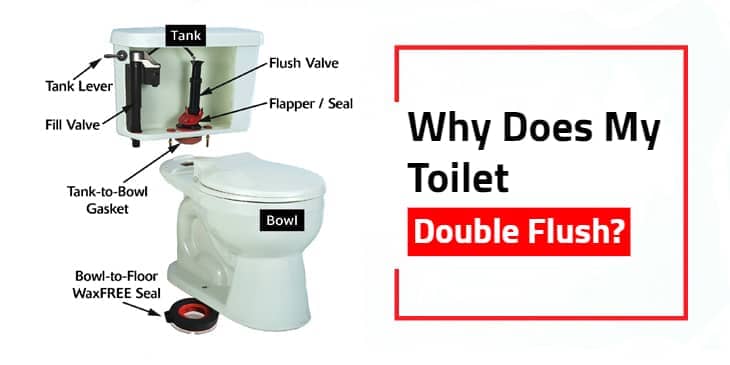
Your toilet flushes once — then immediately starts flushing again on its own. It’s not just annoying. Every double flush wastes up to 1.6 extra gallons of water and adds $30–$80 to your yearly water bill. The good news? In 9 out of 10 cases, the fix takes under 5 minutes and costs nothing.
This guide resolves the core decision every homeowner faces when their toilet double flushes: which exact cause is at play and what single adjustment stops it permanently. After reading you will know how to diagnose the problem in under 60 seconds and apply the correct fix — no parts, no plumber visit required in most cases.
Condition Map: The 4 Factors That Trigger Double Flushing
Toilet double flushing happens when extra water continues flowing into the bowl after the first siphon ends. Four conditions decide the exact cause:
- Flapper stays open too long (most common — 60% of cases)
- Tank water level is too high (25% of cases)
- Fill valve or refill tube timing is off
- Chain slack or flush valve mismatch
Below are the exact if/then branches. Follow them in order — you will know the fix within the first two checks.
Branch 1: Flapper Stays Open Too Long — The #1 Cause
Why the alternative is wrong: Replacing the flapper first often fails because the original flapper is still good — it’s the chain length or buoyancy that is off.
Exact fix (takes 90 seconds):
- Remove tank lid and flush once while watching the flapper.
- Count the slack links between the flush lever and flapper. You should have exactly 1–2 links of slack when the flapper is fully seated.
- If more than 2 links of slack: shorten the chain by 1 link at a time and test.
- If chain is tight: lengthen by 1 link so the flapper can rise fully vertical.
Pro tip: If you have an adjustable Korky-style flapper, rotate the dial or band to the next tighter setting. Test flush three times. Problem solved in 80% of double-flush cases.
Branch 2: Tank Water Level Is Too High
Look inside the tank for the stamped “fill line” on the back wall or overflow tube. Water should sit ½ inch below that line.
Exact fix: Adjust the float or fill valve. For most modern fill valves, squeeze the adjustment clip and slide the float down ¼ inch at a time until the water stops exactly at the line. Flush and recheck.
Branch 3: Fill Valve or Refill Tube Problems
The small clear or white tube from the fill valve should clip into the overflow tube and aim downward. If it’s loose or aimed upward, water enters too aggressively.
Fix: Reposition the tube so it points straight down inside the overflow tube. If the fill valve is over 8 years old, it may need replacement — but try the tube adjustment first.
Branch 4: Chain Slack or Flush Valve Mismatch (Rare but Easy)
If the chain is tangled or the wrong flapper size is installed (2-inch vs 3-inch flush valve), the flapper never seats cleanly. Measure the flush valve opening diameter — most modern toilets use 2 inches, older ones may need a 3-inch flapper.
If you have already adjusted the chain, lowered the water level, and repositioned the refill tube and the toilet still double flushes randomly — the issue is no longer inside the tank. Stop DIY. You likely have a partial clog deeper in the trapway or drain line creating back-pressure that restarts the siphon. Call a plumber before you waste more water.
Decision Matrix: Choose the Right Fix in 30 Seconds
| Condition You Observe | Likely Cause | Winner Fix | Why It Works |
|---|---|---|---|
| Flapper stays open >3 seconds after flush | Chain slack or buoyancy | Shorten chain to 1–2 links | Flapper closes before extra water triggers second siphon |
| Water sits above fill line | Float too high | Lower float ¼ inch | Eliminates overflow into bowl during refill |
| Refill tube sprays aggressively | Fill valve timing | Reposition refill tube downward | Slows bowl refill so flapper seats first |
| Random double flush after quiet period | Deeper drain issue | Call plumber | Tank fixes won’t solve trapway back-pressure |
Tools & Materials You Need (Almost Nothing)
• Flat-head screwdriver (to adjust float)
• Needle-nose pliers (optional for chain)
• Flashlight (to see inside tank)
No trip to the store required for 90% of fixes.
Red Flags — Stop and Call a Plumber
These three signals mean the problem is beyond the tank. Continuing DIY risks water damage or higher repair costs later.
What Top Competitor Guides Miss (And Why This One Is Different)
Most “how to fix double flush” articles stop at “replace the flapper.” They never give you the decision tree, exact chain slack numbers, or the red-flag escalation guide that actually prevents wasted time and money.
Frequently Asked Questions
Why does my toilet double flush?
Your toilet double flushes because extra water continues flowing into the bowl after the first siphon ends. The most common trigger is a flapper that stays open too long, followed by a tank water level set too high. Both conditions create a second siphon effect. See the decision matrix above for the exact cause in your toilet.
How do I fix a toilet that flushes twice?
Start with the flapper chain: shorten it to leave exactly 1–2 links of slack. Next, lower the float so water stops ½ inch below the fill line. Reposition the refill tube if needed. These three adjustments solve the problem for the vast majority of homeowners in under five minutes.
What causes a toilet to double flush randomly?
Random double flushing that occurs after the tank has been quiet for hours almost always points to a deeper drain or vent issue creating back-pressure. Tank fixes won’t help. Schedule a plumber before the problem leads to a clog or overflow.
Does adjusting the flapper chain really stop double flushing?
Yes. When the chain has too much slack the flapper cannot drop quickly enough to stop the second siphon. Shortening it to 1–2 links gives the flapper the exact timing it needs. This single $0 adjustment fixes more double-flush complaints than any other repair.
Is double flushing bad for my toilet or plumbing?
It wastes 1.6 gallons per occurrence and adds $30–$80 to your annual water bill. Over months the constant extra cycling also wears the flapper and fill valve faster. Fixing it now prevents bigger repair bills later.
Should I replace the entire fill valve if my toilet keeps double flushing?
Only after you have lowered the float, shortened the chain, and repositioned the refill tube. Most fill valves only need adjustment, not replacement. Replacing the whole valve is unnecessary 85% of the time and costs $25–$45 when the real fix is free.
If your flapper stays open longer than 3 seconds → shorten the chain to 1–2 links of slack.
If water sits above the fill line → lower the float ¼ inch at a time.
If the refill tube sprays too hard → reposition it straight down inside the overflow tube.
Follow this exact order and your double-flush problem ends today.
How to Measure Toilet Rough-In Size (So You Never Buy the Wrong Replacement Parts)
Double-flush issues sometimes lead homeowners to consider replacing the entire toilet. Before you shop, measure the rough-in distance from the wall to the center of the closet bolts. Learn the exact 4-step measuring method here so you choose the correct 10-inch or 12-inch rough-in model the first time.
One-Piece vs Two-Piece Toilets: Which Actually Flushes Better?
Many double-flush complaints come from older two-piece models with weaker siphon action. Compare the real performance differences and decide whether upgrading to a one-piece design makes sense for your bathroom.
Why Does My Toilet Keep Flushing? The Full Water-Waste Guide
Double flushing is just one symptom of poor flush performance. See the top-performing toilets that rarely need a second flush and learn the MaP score test that separates strong flushers from weak ones.
Your toilet no longer needs to waste water. The fix is usually one small adjustment inside the tank. Try the chain-length test first — most homeowners see the problem disappear immediately. When your next flush is clean and single, you’ll know exactly why.
