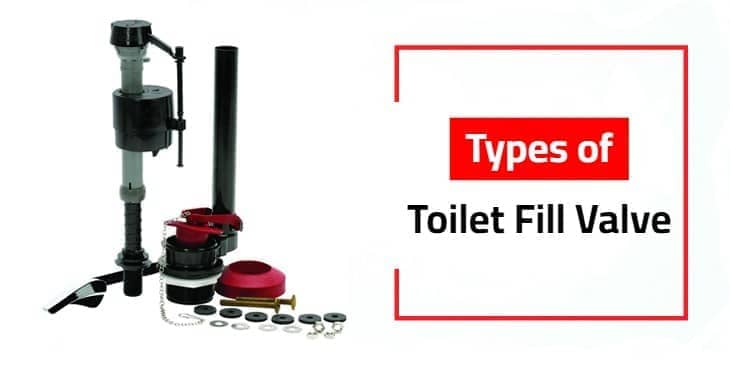
Most homeowners replace a toilet fill valve by grabbing whatever the hardware store stocks near the register. That approach works about 60 percent of the time — and creates a new problem the other 40 percent.
The valve you need depends on your toilet’s age, tank geometry, and flush system. Dropping in the wrong type can leave you with a valve that runs continuously, fills too slowly, or simply can’t shut off correctly because its float mechanism has nowhere to travel in a tank it wasn’t designed for.
This guide covers the four main toilet fill valve types currently found in US residential toilets, how each works, how to identify which type is already in your tank, and — critically — the decision branches that determine which type belongs in your specific toilet. The goal is to get the right valve in the tank the first time.
⚠️ Common Mistake: Buying “Universal” When Your Toilet Needs Specific
The single most common fill valve error is buying a universal float cup valve for a toilet that was built around a specific OEM mechanism — particularly older low-profile tanks, pressure-assisted models, and certain TOTO designs. “Universal” means compatible with most standard gravity tanks, not all tanks. Before purchasing any replacement valve, open the tank lid and look at what’s already in there. The type currently installed tells you more than any packaging claim.
📋 Who This Guide Is For
- Homeowners replacing a worn or noisy fill valve in a standard gravity-flush toilet
- DIYers who want to select the correct valve type before heading to the hardware store
- Anyone diagnosing a running toilet and trying to determine whether the fill valve or the flapper is the actual cause
What this guide does NOT cover: Pressure-assisted flush systems (Sloan Flushmate, American Standard ActiClean), tankless commercial flushometers, dual-flush canister valves requiring OEM parts, or whole-toilet replacement decisions. For full toilet selection, see the complete toilet buying guide or the best toilet fill valves roundup for specific product recommendations.
What a Toilet Fill Valve Actually Does (and Why Type Matters)
The fill valve has one job: open when the tank empties after a flush, allow fresh water to enter, and close precisely when the water level returns to the correct height. Every design — from the oldest brass plunger ballcock installed in 1952 to the newest floatless pressure-sensing valve — accomplishes this same task through a fundamentally different mechanical approach.
Why does the type matter for replacement? Because the shut-off mechanism depends on either a floating device that rises with the water or a pressure-sensing diaphragm submerged at the tank bottom. Each type requires a specific amount of vertical travel space and a specific tank geometry to function correctly.
A float cup valve installed in a low-profile tank where the float cup can only travel three inches before hitting the tank wall will ghost-flush continuously — not because the valve is defective, but because it physically cannot reach the shut-off point the design requires.
The distinction also matters for code compliance. Both the International Plumbing Code (IPC) and the Uniform Plumbing Code (UPC) — the two model codes governing plumbing installations across the US — require that all toilet fill valves be of the anti-siphon type, conforming to ASSE 1002.
This means a non-anti-siphon plunger ballcock cannot legally be reinstalled once removed; it must be replaced with a compliant design. The critical level mark on any replacement valve must sit at least one inch above the full opening of the overflow pipe.
Understanding which of the four main types suits your toilet is the decision that determines whether the replacement takes 20 minutes or turns into an afternoon of adjustments and return trips to the store.
The 4 Main Types of Toilet Fill Valves — Identified and Explained
These four types represent the full range of mechanisms currently found in US residential toilets, spanning roughly 80 years of design evolution.
Type 1 — Plunger / Piston Ballcock (Pre-1960s to 1980s)
The oldest design still found in American tanks. Identifiable by its brass or chrome vertical shaft, a horizontal brass rod extending from near the top, and a large hollow copper or plastic ball at the end of that rod — the float ball.
When the tank drains, the float ball drops, pivoting the rod downward and lifting a plunger or piston inside the valve body. This opens the water inlet, which floods the tank from below (bottom-fill design). As water rises, the float ball rises with it, pushing the rod back up and driving the plunger closed.
Critical limitation: Non-anti-siphon plunger ballcocks do not meet current IPC/UPC requirements and cannot be legally reinstalled. If this is what’s in your tank and you’re replacing it, you cannot buy an identical unit — you must upgrade to an anti-siphon design. Some brass anti-siphon plunger ballcocks (Prier brand, for example) are still manufactured for restoration work, but standard replacement calls for a float cup valve instead.
Type 2 — Diaphragm Ballcock (1960s to 2000s)
A direct evolution of the plunger ballcock, the diaphragm type keeps the brass rod and float ball arrangement but replaces the plunger mechanism inside the valve body with a flexible rubber or plastic diaphragm. Instead of a piston sealing against a washer, the diaphragm deflects to open and close the water port.
Two versions exist: brass-body diaphragm valves (heavier, more durable, found in commercial and high-end residential work from the 1970s and 1980s) and plastic-body diaphragm valves (lighter, less expensive, still in production and widely stocked as service parts today).
Key advantage over the plunger type: The diaphragm design is inherently more resistant to mineral deposit clogging and provides a tighter seal against water leakage. It also generates a gentler pressure spike when shutting off, reducing water hammer in the supply line. The diaphragm is the quietest of the ballcock designs — though both float cup and Korky QuietFill valves are quieter still in side-by-side testing.
Type 3 — Float Cup Fill Valve (1990s to Present)
The dominant design in modern residential toilets and the most common replacement valve on store shelves. Instead of a float ball on a horizontal rod, the float cup valve uses a cylindrical plastic cup (shaped like a wide O-ring) that slides up and down a vertical shaft.
The cup rises with the water level, and when it reaches the preset shut-off point, it closes a diaphragm seal inside the shaft. Water enters the tank from a port above the float cup level (top-fill design), which eliminates the splashing noise associated with bottom-fill plunger valves.
The Fluidmaster 400A — the best-selling toilet repair part in the world — is a float cup valve. Water level adjustment is done by turning a threaded shank or sliding a spring clip, depending on the exact model. Height is adjustable from approximately 9 inches to 14 inches on standard models.
All modern float cup valves include anti-siphon protection built into the valve head design, meeting ASSE 1002 requirements. This is the correct replacement type for the majority of toilets installed after 1994.
Type 4 — Floatless / Pressure-Sensing Fill Valve (2000s to Present)
The floatless valve eliminates all floating components entirely. Instead, a pressure-sensing diaphragm sits at the bottom of the tank, fully submerged. When the tank drains, water pressure at the diaphragm drops, signaling the valve to open. When the tank refills and pressure rises to a preset threshold, the diaphragm closes the valve. The result is a compact unit with no visible cup or ball rising and falling — just a stubby valve body extending up from the tank floor.
Designed for specific applications: Floatless valves were originally engineered for low-profile toilet tanks introduced in the 1990s — models where tank height restrictions make it impossible for a float cup to travel far enough to generate a reliable shut-off.
They are also used in some specialty designs where a pressure-based shut-off provides more consistent results across variable water supply pressures. Water level adjustment is done via a screw on the valve top. Anti-siphon protection is integrated into the design through an air gap within the valve body.
How to Identify Which Fill Valve Type Is in Your Toilet Right Now
Before purchasing any replacement valve, open the tank lid and spend 30 seconds identifying exactly what’s in there. This single step eliminates most of the compatibility problems that send people back to the hardware store for a second trip.
Step 1 — Look for a horizontal rod and a ball. If you see a brass or chrome rod extending horizontally from the top of the valve, with a large copper or round plastic ball at the far end, you have either a plunger ballcock (Type 1) or a diaphragm ballcock (Type 2).
To distinguish between the two: look at the valve body itself. If you see a round domed top (sometimes rubber, sometimes plastic) rather than a simple threaded shaft, you have a diaphragm type. If the body is a straight brass cylinder with no dome, it’s a plunger type.
Step 2 — Look for a cup or cylinder on a vertical shaft. If the valve body is a vertical plastic shaft with a cylindrical cup or float riding along its length — no horizontal rod, no ball — you have a float cup valve (Type 3). This is the most common finding in toilets installed since the mid-1990s.
The Fluidmaster 400A has a grey cup on a black shaft; Korky QuietFill valves have an internal float concealed within the valve column, so the shaft appears more uniform in diameter.
Step 3 — Look for a stubby body with no float visible at all. If the valve appears very short (4–6 inches total height), sits low in the tank, and has no floating device of any kind visible, you have a floatless pressure-sensing valve (Type 4). These are almost always found in low-profile tanks — if the tank depth from inside bottom to lid is less than 7 inches, a floatless valve is a strong candidate.
Step 4 — Check the toilet’s manufacture date. Lift the tank lid. Most porcelain lids have a date stamped on the underside — the month and year of manufacture. Toilets dated before 1960: plunger ballcock. 1960–1993: likely diaphragm or late plunger. 1994–present: almost certainly float cup (Type 3). Low-profile models from 1993–2010: possibly floatless. When in doubt, photograph what’s in the tank before heading to the store — any hardware store associate can match the type in seconds from a photo.
Decision Tree: Which Toilet Fill Valve Type Is Right for You
Work through these branches in order. Stop at the first branch that applies to your situation.
Branch 1 — Is your toilet pressure-assisted?
Pressure-assisted toilets have a sealed vessel inside the tank that uses line water pressure to power the flush. If the inside of your tank contains a sealed plastic canister (it will look like a smaller tank inside the tank), do NOT use any of the four types described in this guide. Pressure-assisted systems require OEM-specific components from the manufacturer (Sloan Flushmate, American Standard ActiClean). Using a standard fill valve on a pressure-assisted system will result in flooding and component damage.
Branch 2 — Is your tank low-profile (inside height under 7 inches)?
If your tank’s interior height measures less than 7 inches from inside bottom to the underside of the lid, a standard float cup valve cannot operate correctly — the float cup cannot travel far enough to generate reliable shut-off. In this scenario: install a floatless pressure-sensing valve (Type 4). A Keeney Universal Floatless Fill Valve is the most widely stocked option and fits most low-profile designs. If the original valve was a floatless type, replace with floatless.
Branch 3 — Is your toilet a TOTO with an OEM fill tube requirement?
Certain TOTO gravity-flush models — particularly the Drake, Drake II, and Ultramax — require a specific bowl refill ratio that affects the water level in the bowl after each flush. The standard Fluidmaster 400A delivers a refill ratio that works in most toilets but underperforms in TOTO designs, leaving the bowl with less water than the manufacturer’s specification.
For TOTO toilets specifically: use a Korky 528MP QuietFill, which has an adjustable refill tube that provides the bowl water level TOTO’s design calls for. This is not a marketing claim — it’s a documented difference in bowl refill volume between the two brands on TOTO-style flush valves.
Branch 4 — Is your toilet a standard gravity-flush model installed after 1994?
If Branches 1–3 do not apply, you are replacing a fill valve in a standard residential gravity-flush toilet. Install a float cup valve (Type 3).
The Fluidmaster 400A at approximately $10–12 is the correct choice if you want the most universally available parts, a 7-year warranty on the PerforMAX version, and the widest compatibility with tank configurations. The Korky 528MP QuietFill at approximately $12–15 is the correct choice if the toilet is near a bedroom, sleeping area, or living space where refill noise is a priority — Korky’s internal float design produces measurably less noise during the fill cycle than the 400A’s external float cup design.
Branch 5 — Is your toilet more than 40 years old with an original brass plunger ballcock?
If the existing valve is a non-anti-siphon brass plunger type (identifiable by solid brass body, no plastic components, horizontal rod, large copper float ball), it cannot be legally reinstalled under IPC/UPC. Replace it with a float cup valve (Type 3).
The standard height range of 9–14 inches on float cup valves accommodates the majority of pre-1994 tank dimensions. Confirm the shank diameter is 7/8 inch before purchase — virtually all residential toilets use this size, but some commercial or older designs use 1/2 inch, requiring an adapter.
Float Ball vs. Float Cup Fill Valves: Key Differences by Application
Float ball and float cup valves represent the clearest generational divide in fill valve design, and the differences between them affect more than just appearance. If you are weighing whether to match the original float ball type (for an older toilet) or upgrade to a float cup, these distinctions determine the outcome in practical use.
Space requirements: A float ball valve requires a horizontal arc of travel for the float ball — roughly 8–10 inches of unobstructed horizontal space at the water line. In older larger tanks this was never a problem.
In modern compact tanks, a float ball valve will physically contact the tank wall before the ball can rise high enough to shut off the water, creating a continuous slow run. A float cup valve requires only vertical travel space along its shaft — 3–5 inches minimum — and works correctly in any tank deep enough to accommodate its height adjustment range.
Adjustment precision: To adjust the water level on a float ball valve, the brass arm must be bent — an imprecise operation that results in approximate adjustments. Bending the arm too far in either direction can cause overflow into the refill tube or an insufficient tank volume for flushing. A float cup valve adjusts via a screw mechanism or spring clip, allowing water level settings accurate to within a fraction of an inch without removing any components from the tank.
Parts availability: Float ball valves — particularly the older brass diaphragm type — are increasingly difficult to source outside of specialty plumbing supply houses. The rubber diaphragm inside a brass ballcock typically has a working life of 8–15 years, and when it fails, finding a matching replacement seal requires knowing the manufacturer and model. Float cup valves from Fluidmaster and Korky use standardized repair seals available at any hardware store, big box retailer, or online in 24 hours.
Noise during fill: Both plunger and diaphragm ballcocks fill from the bottom of the tank, creating a turbulent splash as water enters below the waterline. Float cup valves fill from above through a refill tube into the overflow pipe, eliminating most of that splash noise.
Korky’s QuietFill designs route water through a diffuser that further reduces sound. If a running or noisy fill valve is why you’re reading this guide, a Korky 528MP QuietFill will produce the most noticeable improvement regardless of what ballcock type you’re replacing.
Anti-Siphon Fill Valves: What US Code Requires and What to Look For
Anti-siphon protection is not a premium feature — it is a code requirement for every toilet fill valve installed in the US. The mechanism prevents a condition called backflow: if the municipal water supply experiences a sudden pressure drop (a water main break, heavy simultaneous draw, or system shutdown), negative pressure in the supply line can pull water back from the toilet tank into the potable water supply.
Without anti-siphon protection, this means the water in your toilet tank — which may contain cleaning chemicals — can be drawn into the lines that feed your kitchen faucet.
Both the IPC and the UPC (the two model codes covering plumbing installations across all 50 states, either directly or through state-specific adoptions) require toilet fill valves to comply with ASSE 1002 — the standard for anti-siphon fill valves. The critical level mark (CL) stamped on the valve must be positioned at least one inch above the top opening of the overflow pipe when installed. This ensures that even during a backflow event, contaminated water cannot be drawn up into the supply line.
What this means in practice when purchasing a replacement valve:
Every float cup valve currently sold for residential use in the US — Fluidmaster 400A, Korky 528MP, American Standard 400A, and equivalent models — includes anti-siphon protection and meets ASSE 1002. The anti-siphon feature is integrated into the valve head design, not an add-on. Floatless valves comply via an internal air gap within the valve body. Modern plastic diaphragm ballcocks are manufactured to meet ASSE 1002 as well.
The only common scenario where you might encounter a non-compliant valve is replacing a very old brass plunger ballcock — particularly pre-1980 brass units installed before anti-siphon requirements became universal. These valves are not anti-siphon. They cannot be reinstalled once removed. If your inspection reveals an old brass ballcock, the correct action is to replace it with a float cup valve — not to source an identical replacement.
Why Your Fill Valve Keeps Running — and Which Type to Replace It With
A running toilet is the most common reason homeowners start looking at fill valve types. Before purchasing a replacement, confirm that the fill valve is actually the cause — because in the majority of running toilet cases I see, the culprit is the flapper, not the fill valve.
Here is how to confirm which component is failing: Put a few drops of food coloring in the tank and wait 15 minutes without flushing. If color appears in the bowl, the flapper is leaking — replace the flapper, not the fill valve.
If no color appears in the bowl but the toilet continues to run, look at the overflow tube in the center of the tank. If water is trickling into the overflow tube, the fill valve is not shutting off — the fill valve is the problem.
If the existing valve is a float ball or diaphragm ballcock and it’s running: The diaphragm seal or plunger washer inside has failed. Repair kits exist, but given the age of toilets that typically have these valves (25–60 years), replacing the entire valve with a float cup type (Fluidmaster 400A or Korky 528MP) is more cost-effective and eliminates the recurrence problem.
If the existing valve is a float cup type and it’s running: The most common causes are a worn diaphragm seal inside the valve cap (replaceable on Fluidmaster — the cap and seal assembly is a $3–5 part), mineral buildup on the diaphragm surface preventing a clean shut-off, or a float cup that’s stuck in the down position due to debris.
Remove the valve cap, inspect the seal, clean or replace as needed. If the valve is more than 7–10 years old or shows cracking in the plastic body, full replacement is the right call — float cup valves run $8–15 at retail and a full replacement takes 20 minutes.
If the existing valve is a floatless pressure type and it’s running: Floatless valves most commonly fail due to debris blocking the pressure-sensing diaphragm port. Shut off the supply, disconnect the line, remove the valve cap, and clean the diaphragm port with a small brush. If cleaning doesn’t resolve it, replace the valve — floatless replacements run $10–18 depending on the model.
Red Flags: When a Fill Valve Problem Is Actually Something Else
Not every problem presenting as a fill valve issue is actually a fill valve issue. These scenarios require stopping work and calling a licensed plumber.
🔴 Red Flag 1 — Water on the floor around the toilet base after replacement
Water pooling at the base of the toilet after a fill valve replacement is not caused by the fill valve. It indicates either a failed wax ring seal between the toilet and the flange, a cracked porcelain base, or a cracked toilet horn. These require toilet removal to diagnose and repair. Do not continue operating the toilet — water under the base causes subfloor damage and mold within days.
🔴 Red Flag 2 — The tank refills but the bowl never clears correctly
If replacing a fill valve has not resolved weak flushing or incomplete bowl clearing, the fill valve was not the root cause. Possible issues include a deteriorated flush valve flapper allowing too-slow water release, a partially clogged trapway, a calcium-blocked rim jet system, or (in older pressure-assisted toilets) a failing pressure vessel. These require diagnosis beyond fill valve replacement — a licensed plumber can identify the cause in under 30 minutes.
🔴 Red Flag 3 — The water supply valve under the toilet will not turn off fully
Shutting off the supply valve before fill valve replacement is standard procedure. If the supply valve (the angle stop valve on the wall behind the toilet) does not close fully — still allowing water to trickle into the tank after fully tightened — do not proceed.
A failing supply valve requires replacement before any work continues. A supply valve failure during fill valve replacement can result in an uncontrolled flow into the tank. See a plumber for supply valve replacement, especially in homes with copper supply lines over 30 years old.
🔴 Red Flag 4 — The tank itself shows hairline cracks or sweating is actually seeping water
Toilet tanks develop stress fractures over time, particularly where the lid rests on the tank rim. What appears to be condensation (tank sweating) may actually be water seeping through a hairline crack under pressure. Run your finger along the exterior of the tank around any damp spots.
If you can feel a crack ridge, or if the moisture persists in low-humidity conditions, the tank is compromised. Replacing fill valve components in a cracked tank is temporary at best. A professional can confirm whether the tank can be sealed or whether the toilet requires replacement.
What Most Expert Miss: Noise/Speed Trade-Off and Brand-Specific Compatibility
Most fill valve guides cover the four types and stop there, leaving readers with no framework for choosing between the two market-dominant brands — Fluidmaster and Korky — once the type decision is made. The trade-offs between them are real and depend on specific conditions in your bathroom.
The noise vs. speed trade-off: The Fluidmaster 400A refills faster than the Korky 528MP QuietFill in side-by-side testing. The 400A is engineered for maximum flow rate — it gets the tank ready for the next flush faster, a genuine advantage in high-use bathrooms shared by multiple people. The Korky’s internal float and diffusion chamber slow the fill slightly to achieve its noise reduction.
In a bathroom used by 4+ people, a slower fill creates a practical inconvenience during peak morning use. In a bathroom adjacent to a bedroom or living room, the noise difference outweighs the fill speed difference every time. Choose 400A for speed in high-traffic bathrooms. Choose Korky for noise reduction in bathrooms near occupied living spaces.
Brand-specific compatibility: Several toilet manufacturers — TOTO in particular, but also select Kohler and American Standard models — use bowl refill systems that are sensitive to the volume of water sent through the refill tube during the fill cycle. The standard Fluidmaster 400A delivers a fixed refill tube flow that works in most standard designs but is insufficient for TOTO Drake and Drake II models, leaving less water in the bowl than the design specifies.
This produces a bowl that appears low between flushes and may not provide enough water for the siphon jet to function correctly on the next flush. The Korky 528MP has an adjustable refill tube flow rate, allowing the volume to be dialed in to match TOTO’s OEM specification. For TOTO toilets, Korky 528MP is the professional’s first choice — not because of brand preference but because of this mechanical compatibility advantage.
When the Answer Flips — When NOT to Install a Float Cup Valve
- If your tank’s interior height is under 7 inches → the float cup cannot travel far enough to reach shut-off → use a floatless pressure valve instead
- If your toilet is pressure-assisted (sealed canister visible inside tank) → standard fill valves are incompatible → requires OEM pressure vessel components
- If you have a dual-flush toilet with a canister-style flush valve (cylindrical tower instead of a flapper at the bottom) → the fill valve timing must be matched to the canister’s faster drain rate → verify OEM compatibility before installing a universal float cup valve
- If your supply line water pressure is consistently below 20 PSI → float cup valves may fail to fully open or close reliably → floatless pressure-sensing valves perform more consistently at low supply pressure
Frequently Asked Questions — Toilet Fill Valve Types
What are the different types of toilet fill valves?
The four main types found in US residential toilets are: the plunger/piston ballcock (oldest design, brass body, float ball on horizontal rod), the diaphragm ballcock (similar rod-and-ball design but uses a rubber diaphragm instead of a plunger — available in brass and plastic body versions), the float cup fill valve (modern standard, cylindrical cup slides up and down a vertical shaft), and the floatless/pressure-sensing fill valve (no float at all, uses a submerged pressure diaphragm).
The float cup type is the most common replacement valve available today and fits the majority of toilets made after 1994.
How do I identify which toilet fill valve type I have?
Remove the tank lid and look inside. If you see a large ball attached to a horizontal brass rod, you have a ballcock type (plunger or diaphragm). If you see a vertical plastic shaft with a cylindrical cup or float ring sliding along it and no horizontal rod, you have a float cup valve.
If the valve is compact and short with no visible float of any kind, you have a floatless pressure-sensing valve. Most toilets manufactured after 1994 have float cup valves installed from the factory.
What is the difference between a float cup and float ball toilet fill valve?
A float ball valve uses a large hollow ball on a horizontal rod to sense water level — as the ball rises, the rod pushes a plunger or diaphragm closed. A float cup valve uses a small cylindrical cup that travels vertically along the valve shaft.
Float cup valves are more compact (no horizontal arm), adjust more precisely, are quieter, meet current anti-siphon requirements by design, and have universally available repair parts. Float ball valves are typically found in older toilets and require more horizontal clearance to operate correctly.
Why does my toilet fill valve keep running?
First, confirm the fill valve is actually the cause: add food coloring to the tank and wait 15 minutes without flushing. If color appears in the bowl, the flapper (not the fill valve) is leaking. If no color reaches the bowl but the toilet still runs, look at the overflow tube — if water is trickling into it, the fill valve is not shutting off and needs repair or replacement.
Common fill valve causes include a worn diaphragm seal, mineral debris on the sealing surface, or a float that can’t reach the shut-off height due to water level set too high.
What is the best universal toilet fill valve?
For most standard gravity-flush toilets, the Fluidmaster 400A or its PerforMAX version (400AH) is the best universal choice — it fits virtually all tanks with a standard 7/8-inch shank, has an adjustable height range of 9–14 inches, carries a 5–7 year warranty depending on model, and replacement seals are available everywhere.
For TOTO toilets specifically, the Korky 528MP QuietFill provides better bowl refill performance. For low-profile tanks under 7 inches interior height, a Keeney or equivalent floatless valve is the correct universal option. See the best toilet fill valve guide for full product comparisons and current pricing.
What is an anti-siphon toilet fill valve and is it required?
An anti-siphon fill valve includes a mechanical air gap or check mechanism that prevents water from being drawn back from the toilet tank into the municipal water supply during pressure drops. Both the IPC and UPC plumbing codes require all toilet fill valves to be anti-siphon type, conforming to ASSE 1002.
All modern float cup and floatless valves sold for residential use in the US include anti-siphon protection built into the valve design. If you are replacing an old brass plunger ballcock that predates anti-siphon requirements, you cannot reinstall it — replace it with a compliant float cup valve.
Can I replace a ballcock with a float cup fill valve?
Yes, in the vast majority of cases. Float cup valves use the same 7/8-inch shank that passes through the tank bottom as the ballcock they replace, and the threaded mounting nut and supply line connection remain identical.
The only limitation is tank interior height — the float cup valve must be able to adjust down to fit within your tank depth. Most adjustable float cup valves work in tanks from approximately 9 inches to 14 inches of interior height. Measure your tank interior before purchase if you have any uncertainty.
Verdict: Which Toilet Fill Valve Type Belongs in Your Tank
- If your toilet is pressure-assisted (sealed vessel inside the tank) → do not use any fill valve from this guide — source OEM pressure system components from the manufacturer
- If your tank interior height is under 7 inches → install a floatless pressure-sensing valve; float cup travel distance is insufficient for reliable shut-off in these tanks
- If your toilet is a TOTO Drake, Drake II, or Ultramax → install a Korky 528MP QuietFill; its adjustable refill tube matches TOTO’s bowl water level specification where the standard Fluidmaster 400A falls short
- If your toilet is a standard gravity-flush model made after 1994, the bathroom is near sleeping or living spaces, and noise is a priority → install a Korky 528MP QuietFill at $12–15
- If your toilet is a standard gravity-flush model made after 1994 and fast refill in a high-traffic bathroom matters more than noise → install a Fluidmaster 400AH PerforMAX at $12–15 for its 7-year warranty and faster fill rate
- If you have an old brass plunger ballcock that needs replacement → it cannot legally be reinstalled; replace with a float cup valve confirming 7/8-inch shank and appropriate height range
Decision Matrix — Fill Valve Type by Condition
| Condition | Option A | Option B | Winner | Why |
|---|---|---|---|---|
| Standard gravity toilet, post-1994, high-traffic bathroom | Fluidmaster 400AH | Korky 528MP | Fluidmaster 400AH | Faster fill rate; 7-year warranty; most universally available parts |
| Standard gravity toilet, bedroom/living-adjacent bathroom | Fluidmaster 400AH | Korky 528MP QuietFill | Korky 528MP | Measurably quieter internal float design; noise difference is significant at night |
| TOTO Drake, Drake II, Ultramax | Fluidmaster 400A | Korky 528MP | Korky 528MP | Adjustable refill tube matches TOTO’s bowl water volume specification; 400A underfills |
| Low-profile tank (interior height under 7 inches) | Float cup valve | Floatless pressure valve | Floatless | Float cup travel insufficient for reliable shut-off in low-profile tanks |
| Pre-1980 toilet with brass plunger ballcock | Restore original ballcock | Replace with float cup valve | Float cup valve | Non-anti-siphon plunger ballcock does not meet IPC/UPC; cannot be legally reinstalled |
| Pressure-assisted toilet (canister inside tank) | Any standard fill valve | OEM pressure vessel components | OEM only | Standard fill valves are incompatible with pressure-assisted systems; will cause flooding |
| Hard water area with mineral buildup history | Fluidmaster 400A | Korky 528MP | Korky 528MP | Enclosed internal float less exposed to mineral accumulation; Chlorazone rubber seals more resistant to chemical degradation |
How to Identify Toilet Fill Valve Type in Any Tank
Identifying the fill valve type in your tank takes less than two minutes and requires no tools — just removing the tank lid. Start by looking for a horizontal arm. If a brass or chrome rod runs sideways from the top of the valve toward the far tank wall, with a large round ball at the end, you have a ballcock type (either plunger or diaphragm).
The distinction between the two: diaphragm ballcocks have a round dome or cap at the valve head, while plunger ballcocks have a straight brass cylinder with a threaded cap. Both are old-style designs typically found in toilets manufactured before 1990.
If there is no horizontal arm, look for a vertical shaft with a cylindrical cup or float ring riding along it. This is the float cup valve — the standard design in virtually all toilets installed since the mid-1990s. Fluidmaster’s is typically a black shaft with a grey cup; Korky’s internal float is enclosed within the valve column so the shaft appears more uniform.
If the valve is very short (4–6 inches) with no floating device visible at all, you have a floatless pressure-sensing valve, typically found in low-profile compact tank designs.
When photographing the tank for store assistance, take the photo with the tank at its normal full water level and also with the tank drained — the float position at low water is the clearest indicator of valve type.
For any toilet installed in the US after 2000, the existing valve is almost certainly a float cup type, and a Fluidmaster 400A or Korky 528MP will be the direct replacement. For older toilets where the type is unclear, a photograph plus the toilet’s manufacture date (stamped on the underside of the tank lid) is all any plumbing supply counter needs to confirm the correct valve. See the best toilet fill valve roundup for current product pricing and verified compatibility information.
Float Cup vs Float Ball Toilet Fill Valve: Which Lasts Longer
The durability comparison between float cup and float ball fill valves comes down to materials, repair economics, and parts availability. The original brass plunger and diaphragm ballcocks — the float ball designs — were built to last decades.
A quality brass ballcock installed in the 1960s might still be operational today, 60 years later. The rubber diaphragm or plunger washer inside would have been replaced every 10–15 years, but the brass body itself is essentially permanent. In that narrow longevity metric, old-style brass ballcocks outperform modern plastic float cup valves.
In practical terms, however, modern float cup valves win the durability argument for most homeowners. The Fluidmaster 400AH PerforMAX carries a 7-year warranty; Korky’s premium QuietFill models offer warranties up to 10 years on some versions.
More importantly, when a float cup valve fails, a complete replacement runs $10–15 and takes 20 minutes. When a brass ballcock fails, sourcing the correct replacement diaphragm for a 40-year-old valve can require a specialty plumbing supply house visit and $15–25 for a part — assuming the correct seal is still manufactured. For most homeowners, the repair economics favor keeping a float cup valve in service and replacing the entire unit every 10–15 years rather than restoring an old ballcock design.
The float ball valve’s one remaining advantage is in certain commercial applications where brass body durability and high water pressure tolerance matter. In residential use, the float ball design’s only compelling case is replacing a like-for-like in an older toilet whose tank geometry is too shallow for a float cup valve — and in that scenario, a floatless pressure-sensing valve is a better modern alternative anyway.
For full guidance on the best-performing float cup valves currently available, see the best toilet fill valve roundup. For complete toilet replacement considerations, the best flushing toilets guide covers the full hardware decision.
Best Universal Toilet Fill Valve: Fluidmaster 400A vs Korky 528MP
If the goal is a single valve that fits the widest range of residential toilets without special compatibility considerations, the Fluidmaster 400A and the Korky 528MP QuietFill split the market between two different priority sets. The 400A is the standard recommendation for maximum parts availability and fill speed. The 528MP is the standard recommendation for noise reduction and TOTO compatibility.
Both are float cup designs meeting ASSE 1002 anti-siphon requirements, both adjust from approximately 9–14 inches, and both use a standard 7/8-inch shank for the tank bottom connection.
The Fluidmaster 400A at $8–12 retail has one clear advantage most competitor guides overlook: field serviceability. The cap and seal assembly on the 400A is a standard repair part — stock number 400AKR — available at every hardware store and big box retailer. A Fluidmaster 400A that starts running after 8 years doesn’t require full replacement; a $4 cap seal repair extends its service life.
The 400A’s external float cup is also visible from above, allowing a quick visual check of float position without removing the lid. The Fluidmaster PerforMAX 400AH upgrades the standard 400A with a 7-year warranty and slightly faster fill rate at $12–15.
The Korky 528MP at $12–15 earns its recommendation in three specific situations: bathrooms near occupied sleeping areas (measurably quieter internal float design), TOTO toilet installations (adjustable refill tube matches TOTO bowl water volume specification), and hard water installations (Korky’s Chlorazone rubber seals are formulated to resist chlorine and chloramine degradation that shortens standard rubber seal life in municipally treated water).
Korky manufactures in the USA, a consideration for buyers who weight sourcing. For the average bathroom in a standard toilet, either valve performs reliably — the decision comes down to noise priority and whether the toilet is a TOTO design. See the complete fill valve guide and the best TOTO toilets guide for specific model compatibility details.
