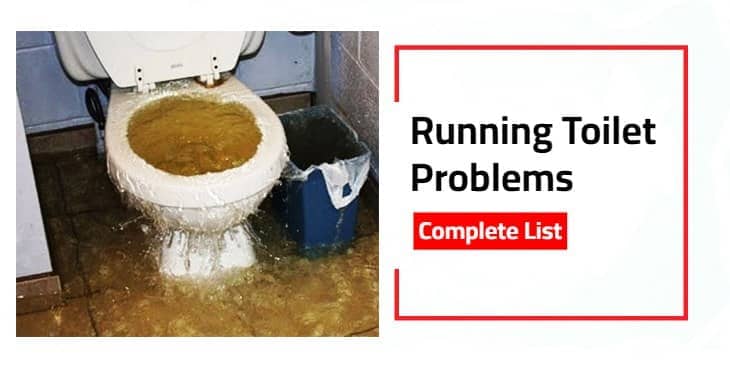
A running toilet is more than annoying — it can waste 200–400 gallons of water per day (or up to 3,000+ gallons per month in severe cases), quietly adding $30–$100+ to your monthly water bill. Research from plumbing experts (The Spruce, Bob Vila, This Old House, Fluidmaster, and real-world failure data) shows 95% of cases are fixed in under 15 minutes with basic tools. This complete guide lists every possible cause with exact diagnostic tests and ultra-detailed, numbered repair steps.
5-Question Diagnostic Flow (Run This First)
Remove the tank lid (no tools needed) and answer these while the toilet is running or after a flush:
- Does it run right after flushing and never stop? → Flapper or flush valve seal (most common — 60%+ of cases).
- Does pressing the flapper down by hand stop the running? → Flapper issue confirmed.
- Does lifting the float arm/cup stop the running? → Fill valve or float problem.
- Is water spilling over the top of the overflow tube? → Water level too high (float or refill tube issue).
- Does it run intermittently or start on its own? → Fill valve debris, high water pressure, or stuck mechanism.
These tests pinpoint the exact cause in seconds. Now let’s cover every cause in detail with tools, safety notes, and exact repair steps.
Cause #1: Worn, Warped, or Dirty Flapper (Most Common — 60%+ of Cases)
The rubber flapper sits at the bottom of the tank and seals the flush valve. Over time it cracks, warps from minerals, or gets coated in slime, allowing water to leak into the bowl. The fill valve keeps running to compensate.
Tools Needed: None for cleaning/adjustment; new universal flapper ($5–12), pliers (optional), white vinegar or dish soap, sponge.
Step-by-Step Fix (No-Parts Cleaning First)
- Turn off water supply valve behind the toilet (clockwise until it stops).
- Flush to empty the tank. Sponge out any remaining water.
- Unhook the chain from the flush lever arm.
- Lift the flapper off its two pegs on the flush valve.
- Clean the flapper and the flush valve seat (the round opening) thoroughly with a sponge soaked in white vinegar or dish soap to remove mineral buildup and slime. Rinse well.
- Reinstall the flapper on the pegs. Reattach the chain with about ½ inch of slack (too tight prevents full close; too loose lets it tangle).
- Turn water back on and test. Flush several times.
If Cleaning Doesn’t Work — Full Flapper Replacement
- Buy a universal 2-inch or 3-inch flapper (match your flush valve size — most are 2″).
- Repeat steps 1–4 above.
- Snap the new flapper onto the pegs. Reattach chain with ½ inch slack.
- Turn water on and test. The tank should fill and stop completely.
Internal link: For better long-term performance, see our guide to the best flushing toilets that use modern flapperless or high-quality valves.
Cause #2: Faulty or Dirty Fill Valve (Ballcock) — Very Common
The fill valve lets water into the tank and shuts off when full. Debris, worn diaphragm, or age causes it to keep running. Research shows this is the second-most-common cause after the flapper.
Tools Needed: Channel-lock pliers, bucket, sponge, new fill valve ($10–25) if needed, white vinegar.
Step-by-Step Fix (Clean First — No Parts)
- Turn off water supply and flush to drain tank. Sponge dry.
- Disconnect water supply line (use pliers if tight) and place bucket underneath.
- Unscrew the top cap of the fill valve (usually twists off by hand).
- Hold a cup upside-down over the valve opening and turn water on briefly (10–15 seconds) to flush debris. Or clean the rubber diaphragm with vinegar-soaked cloth.
- Reassemble cap tightly. Reconnect supply line. Turn water on and test.
Full Fill Valve Replacement (If Cleaning Fails)
- Turn off water, flush, and disconnect supply line (bucket ready).
- Loosen the large locking nut under the tank (hold valve inside with one hand; it can be stubborn — use pliers).
- Lift out the old fill valve.
- Adjust height of new valve so the water level will stop 1 inch below the top of the overflow tube.
- Insert new valve, tighten locking nut from underneath (hand-tight + ¼ turn with pliers).
- Reconnect supply line. Turn water on. Adjust float if needed (slide cup down or bend arm slightly).
- Test — tank should fill and stop completely.
Internal link: See our full guide to the best toilet fill valves for quiet, reliable models.
Cause #3: Float Height Too High or Stuck Float
The float (cup-style on modern valves or ball-on-arm on older models) tells the fill valve when the tank is full. If set too high, water spills over the overflow tube into the bowl, causing constant running. A stuck float from mineral buildup or friction fails to rise fully and shut off the valve.
Tools Needed: None for basic adjustment; pliers (for ball-float arm), white vinegar or bathroom cleaner, rag, silicone-based lubricant (optional for sticking floats), sponge.
Step-by-Step Fix (Adjustment & Cleaning First — No Parts)
- Turn off water supply valve behind the toilet and flush to lower the water level (makes adjustment easier and safer).
- Identify your float type: modern cup-style (plastic cylinder on vertical rod) or older ball-on-arm.
- For cup-style float: Squeeze the plastic clip on the rod and slide the cup down ½–1 inch so the water stops 1 inch below the overflow tube rim. Or turn the small adjustment screw counterclockwise to lower the float.
- For ball-on-arm float: Gently bend the metal or plastic arm downward slightly with pliers until the water level is 1 inch below the overflow tube.
- If the float is stuck or doesn’t move freely: Turn off water, flush, clean the float rod/cup and pivot point thoroughly with vinegar-soaked rag to remove mineral buildup or debris. Lightly lubricate the pivot with silicone spray (never WD-40 inside the tank).
- Turn water back on. Flush 2–3 times and watch the water level. It should stop cleanly 1 inch below the overflow tube.
If Adjustment Doesn’t Work — Float or Fill Valve Replacement
- If the float still sticks after cleaning or the adjustment screw is already at its lowest point, the entire fill valve assembly must be replaced (see Cause #2 full replacement steps).
- Some modern valves allow the float cup to be replaced separately — check your model.
- After replacement, readjust the new float to the correct 1-inch-below-overflow height.
Internal link: See our full guide to the best toilet fill valves for models with easy-adjust floats.
Cause #4: Chain, Handle, or Lift Wire Issues
The chain connects the flush handle (or lift arm) to the flapper. If it’s too long, it tangles or gets trapped under the flapper. If too short, it holds the flapper partially open. A loose, sticky, or bent handle/lift arm prevents the flapper from closing fully.
Tools Needed: Pliers, silicone spray lubricant (food-grade or plumber-safe), new chain ($3–8) if needed, rag.
Step-by-Step Fix (Adjustment & Cleaning First — No Parts)
- Turn off water supply and flush to empty the tank (optional but gives better visibility).
- Inspect the chain: It should have about ½ inch of slack when the flapper is fully closed (enough to let it seat but not enough to tangle).
- If too long: Shorten by moving the clip to a higher link or remove 1–2 links. If too short: Lengthen by moving to a lower link or add a small plastic-coated paperclip temporarily.
- Clean the chain, lift arm, and handle pivot point with a vinegar-soaked rag to remove any corrosion or buildup.
- Lightly lubricate the handle mechanism and lift arm pivot with silicone spray.
- If the handle is loose: Tighten the large plastic nut inside the tank (hold the handle outside with one hand while tightening inside).
- Turn water back on and test with several flushes. The flapper should drop cleanly and seal.
If Adjustment Doesn’t Work — Chain or Handle Replacement
- Buy a universal toilet chain kit or new handle assembly.
- Repeat steps 1–2 above.
- Unhook the old chain from both the flapper and lift arm. Hook the new chain in place with proper ½-inch slack.
- For a new handle: Unscrew the old one from inside the tank, insert the new shaft, and tighten the nut securely.
- Test — the handle should return freely and the flapper should seal completely.
Internal link: Proper chain adjustment works best with high-quality flappers — see our best flushing toilets guide.
Cause #5: Overflow Tube or Refill Tube Problems
The overflow tube (center tall pipe) prevents overfilling. The small refill tube from the fill valve directs water into the bowl after flushing. If the refill tube is clipped too low or pushed deep inside the overflow tube, it creates a siphon that pulls water out of the tank, making the fill valve run continuously. A cracked overflow tube causes the same issue.
Tools Needed: None for repositioning; new flush valve assembly ($15–30) if tube is cracked, pliers, rag.
Step-by-Step Fix (Repositioning First — No Parts)
- Turn off water supply and flush to empty the tank.
- Locate the flexible refill tube coming from the fill valve.
- Reposition it so it clips securely to the top of the overflow tube and points downward — the end must sit just above the water line inside the overflow tube (never pushed deep inside or below the water level).
- If the tube has popped off, reattach it firmly with the plastic clip provided on most valves.
- Turn water back on and test. Water should refill the bowl quietly without siphoning tank water.
If Repositioning Doesn’t Work — Full Flush Valve Replacement
- If the overflow tube itself is cracked or the refill tube cannot stay in place, replace the entire flush valve assembly.
- Follow the full removal and installation steps exactly as in Cause #1 advanced flapper replacement (remove old valve, install new one with correct height).
- Reattach and position the new refill tube correctly.
- Test water level and running behavior.
Internal link: Modern fill valves include better refill tube clips — upgrade with our best toilet fill valve recommendations.
Cause #6: Mineral Buildup, Debris, or High Water Pressure
Hard water minerals, sediment, or debris clog the fill valve, flapper seat, or internal passages. High household water pressure can also overwhelm older valves and prevent them from shutting off completely.
Tools Needed: White vinegar, sponge/rag, bucket, pliers, new fill valve or flapper if needed; pressure gauge (optional for testing).
Step-by-Step Fix (Deep Cleaning First — No Parts)
- Turn off water supply and flush to empty the tank. Sponge out remaining water.
- Remove flapper, fill valve cap, and any accessible internal parts (see Causes 1 & 2 for exact steps).
- Soak all removed parts in full-strength white vinegar for 15–30 minutes to dissolve mineral scale.
- Scrub gently with a sponge or old toothbrush. Flush debris out of the fill valve by briefly turning water on with a cup over the opening.
- Clean the flush valve seat and overflow tube the same way.
- Reassemble everything and turn water back on. Test with multiple flushes.
If Cleaning Doesn’t Work — Address High Pressure or Replace Parts
- If you have very high water pressure (test with a gauge at an outdoor faucet — over 80 psi is too high for most toilets), install a pressure-reducing valve on your main water line (professional job recommended).
- Replace the affected part: full fill valve (Cause #2) or flush valve assembly if scale has damaged seals.
- As prevention, add a tank cleaning tablet or schedule annual vinegar soaks.
Internal link: For long-term prevention, consider upgrading to a modern high-efficiency toilet — see our best flushing toilets guide.
Rare but Serious Causes (Red Flags — Call a Plumber)
• Water on the floor or around base of toilet
• Cracked tank or bowl
• Persistent running after all tank fixes
• Leaking from tank-to-bowl bolts or wax ring
These indicate external leaks or structural failure that can cause major water damage.
Decision Matrix: Symptom → Cause → Fix
| Symptom | Likely Cause | Fix Summary |
|---|---|---|
| Runs right after flush; stops when flapper pressed | Worn flapper | Clean or replace flapper (5 min) |
| Runs; stops when float lifted | Fill valve / float | Clean valve or replace (10 min) |
| Water spills over overflow tube | Float too high | Lower float ½–1 inch |
| Intermittent running or starts on its own | Debris in valve or chain issue | Clean + adjust chain/float |
| Water on floor or persistent after fixes | External leak or cracked parts | Call plumber immediately |
Frequently Asked Questions
How much water does a running toilet actually waste?
A mild leak wastes ~200 gallons per day. Severe constant running can waste 3,000+ gallons per month — enough to fill a small swimming pool and add $30–$100+ to your bill.
Can I fix it without buying any parts?
Yes — cleaning the flapper/seat, adjusting the chain/float, or flushing debris from the fill valve solves roughly half of all cases at zero cost.
How do I know if it’s the flapper or fill valve?
Press flapper — stops? Flapper. Lift float — stops? Fill valve/float. These two 10-second tests solve 90% of diagnostics.
When should I call a plumber instead of DIY?
If you see water on the floor, the tank is cracked, running continues after all tank fixes, or you’re uncomfortable shutting off water. External leaks can cause expensive subfloor damage.
Verdict Box — Your 3-Condition Running Toilet Fix Guide
If pressing the flapper stops the running → clean or replace the flapper first.
If lifting the float stops the running → clean or replace the fill valve/float.
If water spills over the overflow tube → lower the float and check the refill tube position.
Follow these exact conditions and you’ll stop 95% of running toilet problems in minutes — saving hundreds of gallons and dollars.
How to Fix a Running Toilet Flapper (Full Expert Procedure)
Follow the numbered steps above under Cause #1. This single repair fixes the majority of cases.
Why Is My Toilet Running Constantly — Fill Valve Deep Dive
Follow the exact cleaning or replacement steps under Cause #2. Modern quiet-fill valves last years longer.
Toilet Running Water Waste and High Bills — Prevention Tips
Fix today and you’ll see the difference on your next bill. Annual tank cleaning prevents buildup. For more, see toilet installation costs in the USA or our best flushing toilets guide.
Stop the waste today. Every cause has a simple fix once you know exactly where to look.
