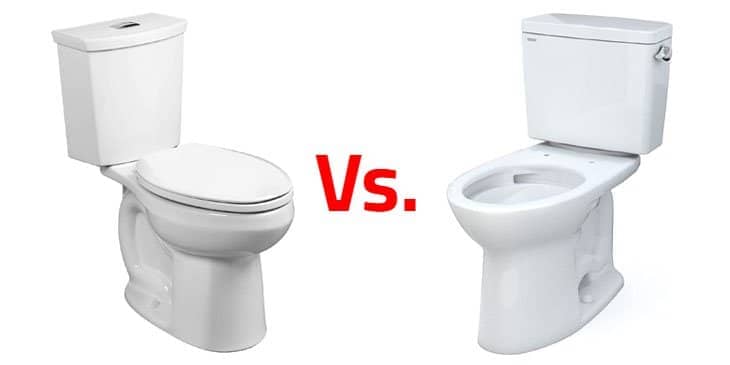
Most homeowners assume the dual flush toilet is the obvious winner — it uses less water, it’s more modern, and every eco-conscious product guide seems to recommend it. But after two decades of installing and servicing both types, the answer depends entirely on conditions that most comparison articles never mention.
A dual flush toilet in the wrong household doesn’t save water — it wastes it. A modern single flush toilet in the right situation can be more water-efficient than a poorly used dual flush model, at lower upfront cost and with fewer repair calls over its lifespan.
This guide breaks the dual flush vs. single flush toilet decision into the five conditions that actually determine which type is right for your home. By the end, you’ll know exactly which flush system fits your household size, your water rate, your maintenance tolerance, and your budget.
⚠️ The Most Common Mistake: Choosing Dual Flush and Then Using It Wrong
The most expensive mistake I see repeatedly is a homeowner who buys a dual flush toilet to save water, then presses the full flush button for every use out of habit — or assumes the half-flush is “not enough.” When that happens, you’re using 1.6 GPF for every flush on a toilet that should be averaging 0.96–1.1 GPF. You’ve paid $80–$150 more upfront and gained nothing.
The water savings in a dual flush toilet are only real if household members consistently use the correct flush for the waste type. If that behavioral change isn’t realistic in your home, a quality single flush WaterSense model at 1.28 GPF will outperform a dual flush system used on full-flush every time.
The 5 Conditions That Determine Which Flush System Is Right for You
This isn’t a one-size-fits-all answer. The right flush system depends on five specific conditions. Each one can flip the recommendation. Read every condition before making your decision.
Condition 1 — Household Size and Daily Flush Volume
The more people using a toilet daily, the more the half-flush option pays off. A single-person household may see negligible savings. A family of four or more will.
Condition 2 — Your Local Water Rate
Water costs vary enormously across the U.S. At $0.004/gallon (low-cost markets), dual flush savings are minimal. At $0.012/gallon or higher (California, Northeast, Southwest), the math changes dramatically.
Condition 3 — Upfront Budget and Payback Tolerance
Dual flush models typically cost $50–$150 more than comparable single flush options at the same quality tier. The question is how long you’re willing to wait for that premium to pay back in water savings.
Condition 4 — Maintenance Willingness and DIY Skill Level
Dual flush mechanisms are more complex than a standard flapper system. Their cartridge seals wear out differently, replacement parts aren’t always at your local hardware store, and ghost flushing (tank-to-bowl leaks) is more common with dual flush valves than with well-maintained single flush units.
Condition 5 — Who Uses the Toilet
Young children, elderly users, and guests may not correctly operate a two-button system. If the primary users of a toilet cannot or will not select the correct flush button, the behavioral advantage of dual flush disappears entirely.
How Each System Works — And Why the Difference Matters
A single flush toilet operates through a simple gravity-fed mechanism: press the lever, the flapper lifts, the tank empties into the bowl, waste is pushed through the trapway and into the drain. Every flush releases the same volume of water — typically 1.28 GPF on modern WaterSense-certified models, or 1.6 GPF on older units.
The system has no ability to differentiate between waste types. It uses the same water volume to handle liquid waste as it does solid waste, which is where the inefficiency occurs. For the six or seven times a day the average adult urinates, this toilet is sending a full 1.28 or 1.6 gallons down the drain every single time.
A dual flush toilet replaces the flapper mechanism with a tower-style cartridge valve that can release two different volumes of water. Pressing the small button (typically marked with a single wave or half-circle) activates the reduced flush, releasing 0.8–1.1 GPF — enough hydraulic force to clear liquid waste and paper. Pressing the large button triggers a full flush at 1.28–1.6 GPF to handle solid waste.
The tower cartridge seals differently than a flapper — instead of a rubber lid that lifts and drops, it uses a rubber lip seal that engages and releases on a cylindrical piston. This design is why dual flush repairs require different parts than standard flapper replacements.
If your household uses the correct flush button consistently — half flush for liquids, full flush for solids — the EPA estimates an average of 5.05 flushes per person per day, with roughly 80% of those being liquid-only. That ratio is where the water math in favor of dual flush originates.
If that 80% usage rate applies in your home and everyone uses the half button, the numbers genuinely favor dual flush. If half the household defaults to the full flush button regardless of waste type, the advantage shrinks substantially.
Water Usage and Cost: The Real Numbers Side by Side
Using the EPA’s benchmark of 5.05 flushes per person per day with an 80/20 liquid-to-solid ratio, a family of four generates roughly 20.2 flushes per day — about 16 liquid-only and 4 solid. Here’s how that plays out annually for a standard dual flush model at 0.8/1.28 GPF versus a WaterSense single flush model at 1.28 GPF:
| Metric | Single Flush (1.28 GPF) | Dual Flush (0.8 / 1.28 GPF) |
|---|---|---|
| Daily gallons (4-person household) | 25.9 gallons | 17.9 gallons |
| Annual gallons used | 9,454 gallons | 6,534 gallons |
| Annual water savings (dual flush) | — | ~2,920 gallons/year |
| Annual savings at $0.004/gal (low-cost) | — | ~$11.70/year |
| Annual savings at $0.008/gal (average) | — | ~$23.36/year |
| Annual savings at $0.012/gal (high-cost) | — | ~$35/year |
| Payback on $100 price premium | — | 4–9 years depending on water rate |
These numbers assume 100% correct button usage. If only 60% of flushes use the correct button — a realistic figure for households with mixed-age users — the annual savings drop to roughly $14–$21 at average water rates, pushing the payback period to 5–12 years. In low water-cost markets, that payback may never come if any repair costs arise with the dual flush mechanism during that period.
If you are replacing a pre-1994 toilet that uses 3.5 GPF or an older 1.6 GPF model, both dual flush and single flush WaterSense toilets will deliver major water savings. The EPA estimates up to 13,000 gallons of annual savings when replacing a pre-1994 toilet with any WaterSense model. In that scenario, both flush systems dramatically outperform your current fixture — and the choice between single and dual flush becomes secondary to the replacement itself.
Upfront Cost: What You’ll Actually Pay
At the entry level, a basic single flush WaterSense toilet runs $100–$200 at major retailers. A comparable dual flush model typically falls in the $180–$320 range — a premium of $50–$120 for the dual flush mechanism and the more complex tank assembly. Mid-range single flush models like the TOTO Drake II run $330–$400 for bowl and tank.
Mid-range dual flush models like the TOTO Aquia IV come in at $380–$450. At premium levels, both systems converge in price, with one-piece dual flush designs like the HOROW series around $280–$350 and one-piece single flush options in the same tier.
If you already own a working toilet and want the water savings without full replacement, a dual flush conversion kit is a legitimate third option. These retrofit kits replace the internal flapper mechanism with a two-button cartridge system. Quality mid-range kits (Fluidmaster, Korky) run $30–$50 at home improvement stores and can be installed by most homeowners in under an hour.
The savings calculations above still apply, at a much lower entry cost. The trade-off is that retrofit cartridges have a shorter service life than factory-installed dual flush valves — typically 3–5 years versus 8–12 years on a quality factory unit.
Installation cost is comparable for both types — $150–$350 for professional installation depending on your region and whether a wax ring, water supply line, or shutoff valve replacement is needed. Neither system requires specialty plumbing knowledge at the installation stage. The difference in installation time is negligible.
Maintenance and Repairs: What the Brochure Doesn’t Tell You
This is where dual flush toilets carry a real disadvantage that few buyers consider before purchase. A single flush toilet uses a rubber flapper — one of the most-replaced plumbing components in residential use. Flappers cost $3–$12, are stocked at every hardware store in the country, and can be replaced in 15 minutes.
If a single flush toilet develops a ghost flush — the fill valve cycling on and off because the flapper is seeping — the fix is almost always under $15 and 20 minutes of time.
A dual flush toilet uses a cartridge-style tower valve with a rubber lip seal instead of a flapper. When this seal wears out — which it will, typically within 5–8 years on a mid-range model — the toilet ghost-flushes continuously. Replacement seals exist (Fluidmaster’s 83SGB is a common fix at around $5.50), but finding the correct part for your specific brand’s tower valve is a different challenge than grabbing a universal flapper at the hardware store.
Not all dual flush cartridges are cross-compatible. Some brands require ordering online, which can mean 3–5 days with a running toilet if you’re not prepared.
There’s also the double-flushing problem — covered in detail in the Unique Section below — where a weak half-flush prompts users to flush twice, erasing the water savings entirely. Hard water scale buildup on the rim holes of a dual flush bowl accelerates this problem over time.
Regular rim cleaning with a diluted white vinegar solution every 3–6 months in hard water areas is maintenance that dual flush users should expect but that single flush users rarely need to perform for flushing performance reasons.
If you live in a hard water region — parts of the Midwest, Southwest, and mountain states where calcium and magnesium content runs high — the tower valve in a dual flush toilet is more susceptible to mineral buildup than a standard flapper. Scale deposits on the valve seat can prevent the cartridge from sealing properly, causing a slow leak even before the rubber seal is worn out.
Annual descaling of the flush valve is recommended in these regions. In a single flush toilet, scale buildup on the flapper seat is also a concern — but the universal availability of replacement flappers makes remediation much simpler.
Flush Performance: Which System Actually Clears Waste More Reliably?
On the full flush setting, a quality dual flush toilet performs identically to a quality single flush toilet of the same GPF rating. MaP (Maximum Performance) testing does not differentiate between flush systems — it tests clearing performance on each toilet’s full flush. Top-rated models from both categories achieve MaP scores of 800g–1,000g.
The flush system is not the primary driver of solid waste clearing performance. Trapway diameter, bowl geometry, and flush valve size matter more than whether the toilet has one button or two.
Where performance concerns legitimately arise is on the half-flush setting. At 0.8–1.0 GPF, the hydraulic force available is lower. In a clean, properly maintained dual flush toilet with unobstructed rim holes, the half-flush clears liquid waste and standard toilet paper reliably.
But in a toilet with partial scale buildup on the rim — or in a home where toilet paper use is heavier than average — users sometimes find the half-flush doesn’t fully clear the bowl. That perception, even when inaccurate, often leads to the double-flush habit that destroys the water savings advantage.
If flushing performance is the primary concern — particularly for households with higher solid waste volume, or in homes where partial clogs are a recurring problem — a single flush toilet with a 3-inch flush valve and a MaP score of 1,000g delivers the most consistent performance.
The American Standard Champion 4 and Cadet 3 are benchmark examples. Both are covered in our best flushing toilets guide and best American Standard toilet review. These models effectively eliminate double-flush scenarios and minimize plunger calls.
Who Should Choose a Dual Flush Toilet
If your household has 3 or more people and everyone over age 10 is willing to use the correct button → dual flush will deliver real water savings in the $20–$35 per toilet per year range at average U.S. water rates, and more in high-rate markets. Over a 10–15 year toilet lifespan, that accumulates to $200–$500 in water savings per toilet — enough to justify the $50–$120 premium in most cases.
If you live in a state with mandatory WaterSense requirements or drought restrictions → California, Colorado, Texas, New York, and Georgia have restricted the sale of non-WaterSense toilets. In these markets, dual flush WaterSense models (0.8/1.28 GPF) represent the highest efficiency option available and are the logical choice for buyers in regulated markets. Some utilities in these states also offer rebates of $50–$150 specifically for dual flush WaterSense toilets, which can eliminate the price premium entirely.
If you are remodeling a primary bathroom and prioritize modern aesthetics → dual flush toilets are more commonly found in one-piece skirted designs with push-button actuation, which skews toward the contemporary design language of current bathroom renovations. If design cohesion is a priority alongside water savings, the dual flush format is the correct choice. Our best dual flush toilet guide covers the top-performing models at each price tier.
If you have some DIY plumbing comfort and are willing to learn the cartridge valve repair process → the maintenance gap between dual flush and single flush is manageable for anyone comfortable doing basic toilet repairs. The lip seal replacement on most tower valves is a 20-minute job once you know the process. For households with this comfort level, the water savings argument in favor of dual flush is valid.
Who Should Choose a Single Flush Toilet
If the toilet will be used primarily by young children (under 8) or elderly adults → the two-button system on a dual flush toilet is more difficult to reach, interpret, and operate correctly for these users. A lever-flush single flush toilet is universally intuitive. Forcing a dual flush choice on primary users who cannot or will not operate it correctly delivers no water savings and adds maintenance complexity without benefit.
If you live in a low water-cost market ($0.003–$0.005 per gallon) → at these rates, the annual savings from dual flush on a family of four amount to $9–$15 per toilet. Against a $100 premium, that’s a 7–11 year payback period — before accounting for any additional repair costs on the more complex mechanism. A modern WaterSense single flush toilet at 1.28 GPF is the better financial decision in this scenario.
If flushing performance is a consistent concern in your home → if your household generates heavy waste volume or if drainline conditions in an older home make marginal hydraulics a problem, the full-flush-every-time reliability of a high-MaP single flush toilet eliminates the double-flush risk entirely. See our best one-piece toilet guide for high-performance single flush options in a compact footprint.
If the toilet is for a guest bathroom or secondary bathroom with low daily usage → a toilet used 3–5 times per day by occasional guests will not generate meaningful water savings regardless of flush type. The simpler, lower-cost single flush option is the correct choice for low-traffic bathrooms where the payback math is weakest.
If you prefer to avoid specialty repair parts and want maximum repairability → single flush flapper systems are the most widely serviced, most universally stocked, and least likely to require brand-specific parts. For rental properties, vacation homes, or any situation where ease of repair by any available plumber is important, single flush is the correct choice. You can find reliable single flush models across all price tiers in our best two-piece toilet review.
The Double-Flush Problem: Why Some Dual Flush Toilets Waste More Water Than a Single Flush
This is the gap that virtually no dual flush comparison guide addresses directly — and it is the most practically important piece of information in this article. When a household consistently double-flushes a dual flush toilet, pressing the half button and then pressing it again, that toilet is using 1.6 GPF per event.
That is equal to or greater than a standard single flush 1.6 GPF toilet — at higher upfront cost and with more maintenance complexity. Two half flushes of 0.8 GPF each erases the water savings advantage entirely.
Double flushing happens for three distinct reasons. The first is perception — the half-flush sounds weaker and users assume it hasn’t cleared properly even when it has. The second is actual performance failure — a half-flush on a toilet with scale-blocked rim holes genuinely doesn’t clear the bowl completely. The third is habit — users raised on lever-flush single flush toilets instinctively flush twice when uncertain. All three causes produce the same outcome: the water efficiency advantage of dual flush is erased.
How to Prevent Double-Flushing in a Dual Flush Toilet
If you already own a dual flush toilet and notice double-flushing becoming habitual, the fix is almost always rim maintenance. Turn off the water supply, flush the tank empty, and pour 1–2 cups of white vinegar into the overflow tube inside the tank. Leave it for 30 minutes, then flush. Repeat monthly in hard water areas. This descales the rim holes under the bowl lip, restoring the half-flush’s hydraulic coverage across the entire bowl surface.
If descaling doesn’t resolve weak half-flush performance, check that the half-flush water level is set correctly on the tower cartridge. Most dual flush tower valves have a green adjustment dial that controls the half-flush volume. Increasing this by one setting often resolves marginal half-flush performance without increasing full-flush consumption.
The Ghost-Flush Risk in Dual Flush Toilets
Ghost flushing — the fill valve cycling on and off without anyone pressing the flush button — affects both toilet types but is a more complex repair in dual flush models. In a single flush toilet, a ghost flush almost always means a worn flapper: $5 part, 15 minutes. In a dual flush toilet, it means the lip seal on the tower cartridge is no longer seating correctly. Sediment, mineral scale, or rubber deterioration can all cause this.
If the ghost flush is wasting 200 gallons per day — a common figure for a running toilet — it negates months of half-flush savings in a matter of weeks. Annual inspection of the tower cartridge seal is good practice for all dual flush owners.
⚠️ When the Answer Flips — When to Skip Dual Flush Even If You Want Water Savings
If your home has a septic system with a drainfield that struggles with slow-moving waste transport, the reduced hydraulic volume of a half-flush can create solids buildup in the drainline over time. Septic system performance depends on adequate water flow to push solid waste through the drain lateral to the tank.
If your septic professional has mentioned slow transport or partial blockage in your lateral lines, a full-flush single flush toilet is the safer long-term choice — even if your water rate is high and your household size is large.
Similarly, if the toilet serves a room that will be used as a rental unit managed by a property management company (not you personally), the behavioral requirement of correct button usage cannot be enforced. In that specific scenario, a reliable single flush at 1.28 GPF eliminates the double-flush waste risk entirely and reduces the likelihood of repair calls from unfamiliar users.
Decision Matrix: Which Flush System Wins Under Each Condition
| Condition | Single Flush | Dual Flush | Winner | Why |
|---|---|---|---|---|
| Household of 1–2 adults, low water rate | 1.28 GPF every flush | ~$9–$15/yr savings | Single Flush | Payback exceeds 8+ years at low usage and low water rates |
| Family of 4+, high water rate ($0.010+/gal) | Fixed 1.28 GPF | $30–$45/yr savings | Dual Flush | Payback in 3–4 years; long-term savings clear the premium |
| Primary users: children under 8 or elderly | Single lever — universal | Two buttons — confusing | Single Flush | Savings can’t be realized if users default to full flush |
| Regulated state (CA, CO, TX, NY, GA) | 1.28 GPF WaterSense OK | 0.8/1.28 GPF — maximum efficiency | Dual Flush | Utility rebates available; highest efficiency tier; aligns with state mandates |
| Rental property or guest bathroom | Simple, universal, repairable anywhere | Button confusion leads to double flushing | Single Flush | Can’t enforce correct usage; simpler repairs for any plumber |
| Septic system with slow drainline | Full hydraulic volume every flush | Half-flush may not transport solids adequately | Single Flush | Septic transport requires adequate flow; half-flush creates risk |
| Modern bathroom remodel, eco-priority | Efficient but less modern look | Sleek design + water savings + WaterSense | Dual Flush | Aligns aesthetics and values; best available efficiency in new construction |
| Replacing pre-1994 toilet (3.5+ GPF) | 13,000+ gal/yr savings vs old toilet | 13,000+ gal/yr + additional half-flush savings | Either — Both Win | Any modern WaterSense replacement is a major upgrade; difference between flush types is secondary |
Frequently Asked Questions — Dual Flush vs. Single Flush Toilet
Is a dual flush vs. single flush toilet actually worth the extra cost?
It depends on your household conditions. For a family of four or more with consistent button discipline living in a mid-to-high water cost market, the payback period on the $50–$120 premium runs 3–5 years, making dual flush a sound investment over a standard 10–15 year toilet lifespan. For a one-to-two person household in a low water rate market, the annual savings may never justify the upfront premium — especially after accounting for the added maintenance complexity of the cartridge valve system.
How much water does a dual flush toilet actually save compared to a single flush?
On paper, the difference between a dual flush 0.8/1.28 GPF model and a single flush 1.28 GPF model is approximately 2,900–4,400 gallons per year for a family of four — assuming correct usage. At average U.S. water rates, that equates to $23–$35 per toilet per year.
Those numbers drop significantly if double-flushing occurs regularly, or if the household is smaller. If you’re replacing a pre-1994 toilet at 3.5 GPF, both types will save 10,000–13,000 gallons per year — the difference between single and dual flush becomes less significant by comparison.
Why does my dual flush toilet keep running after I flush it?
A dual flush toilet that keeps running — also called ghost flushing — is almost always caused by a worn or fouled lip seal on the tower cartridge valve. Unlike a single flush toilet where the fix is a $3–$8 universal flapper, a dual flush repair requires identifying your tower cartridge brand and sourcing the correct replacement seal.
Remove the tank lid, locate the cylindrical tower valve, and check whether the seal at its base is visibly deteriorated or has mineral scale deposits. A 20-minute cleaning of the cartridge seat often resolves the issue before a seal replacement is needed.
Can I convert my existing single flush toilet to dual flush without replacing it?
Yes. Dual flush conversion kits from Fluidmaster and Korky are available for $30–$50 at home improvement stores and replace the internal flapper mechanism with a two-button tower cartridge system. Most standard two-piece toilet tanks accept a retrofit kit in under an hour without professional help.
The water savings are real, but retrofit cartridges have a shorter service life than factory-installed systems — 3–5 years before the seal needs attention versus 8–12 years on a factory unit. A conversion kit is the right option if your toilet’s porcelain is sound and you want savings without full replacement cost.
Which flush type is better for septic systems?
For most properly functioning septic systems, either flush type works without concern. The issue arises specifically when the drainline lateral has a slow slope, partial blockage, or roots reducing the pipe’s effective diameter. In those conditions, the lower hydraulic volume of a half-flush (0.8 GPF) may not provide enough flow velocity to transport solid waste the full length of the drainline.
If your septic professional has ever flagged slow transport in your lateral line, stick with a full-volume single flush at 1.28 GPF to maintain adequate flow for every event.
Does the 2025 EPA WaterSense v2.0 update change anything about dual flush toilets?
Yes — and this is worth knowing before you buy. EPA’s WaterSense Version 2.0 specification (published May 2024, effective July 2025) eliminated the previous “effective flush volume” averaging calculation and now requires both the full flush mode and single flush toilets to meet the same maximum of 1.28 GPF.
Some older dual flush WaterSense models certified under v1 that used a 1.6 GPF full flush may no longer qualify. When shopping for a WaterSense dual flush toilet in 2025–2026, verify the certification is under the current v2.0 specification.
Are dual flush toilets harder to repair than single flush models?
Yes, for most homeowners. A single flush toilet uses a rubber flapper — a universal part stocked at every hardware store in the country, costing $3–$12, replaceable by anyone in 15 minutes. A dual flush toilet uses a tower cartridge with a brand-specific lip seal that may require ordering online.
For households in areas with limited hardware access, or for rental properties where any plumber may respond to a call, this parts availability difference is meaningful. The repair itself isn’t more complex, but the sourcing process is.
Verdict: Which Flush System Is Right for Your Home?
If your household has 3 or more people, you live in a mid-to-high water rate market, and all primary users are adults aged 10 or older who will consistently use the correct button → choose a dual flush toilet. The 2,900–4,400 gallons of annual savings per toilet, combined with a WaterSense dual flush certification and modern design, make this the right choice for your conditions. Budget $280–$450 for a quality unit, and plan for cartridge seal inspection every 3–4 years.
If your household has 1–2 people, your water rate is under $0.006 per gallon, your toilet serves elderly or young users, you’re equipping a rental or guest bathroom, or your home has a septic system with a slow drainline → choose a single flush WaterSense toilet at 1.28 GPF. The lower upfront cost, universal repairability, and consistent full-flush performance will serve you better than the behavioral requirements of a dual flush system under these conditions.
If you own a functioning toilet already and want dual flush savings without replacement cost → a $30–$50 retrofit conversion kit is the most cost-effective path. Expect a 3–5 year service life on the cartridge before the lip seal needs attention.
Dual Flush Toilet Water Savings vs. Single Flush: A Realistic Annual Breakdown
Understanding dual flush toilet water savings vs. single flush requires looking past the marketing number and into the real variables. The EPA’s figure of up to 13,000 gallons of annual savings per household refers to replacing a pre-1994 toilet — not comparing a modern dual flush to a modern single flush.
When comparing apples to apples — a dual flush 0.8/1.28 GPF model against a current WaterSense 1.28 GPF single flush model — the annual savings per toilet are approximately 2,900–4,400 gallons for a four-person household using correct button discipline.
At the EPA’s average national water rate of $6.06 per thousand gallons (kilogallon), that equates to roughly $17.60–$26.70 per toilet per year. Multiply by two or three toilets in a home, and the number becomes more meaningful over a decade. In high-rate markets like San Francisco ($15–$20 per kilogallon) or parts of Texas, the same savings generate $43–$88 per toilet per year — a compelling case for the dual flush premium.
These calculations assume the half-flush is used for approximately 80% of flushes — the EPA’s benchmark based on typical adult flush distribution. If your household is closer to 60% half-flush usage, expect savings in the $12–$17 range at average rates.
One practical step before committing: track how your household actually flushes for a week. That behavioral reality should drive your calculation. For the best performing dual flush options on the market, see our best dual flush toilet guide.
Converting Single Flush to Dual Flush Kit: What It Costs and How It Works
Converting single flush to dual flush with a retrofit kit is one of the most underutilized water-saving upgrades in residential plumbing. If your toilet’s porcelain is in good condition and it’s a standard two-piece model with a 12-inch rough-in, you don’t need a full replacement to gain the benefits of dual flush operation. The retrofit process takes 45–60 minutes for most homeowners with basic plumbing comfort.
The kit replaces your toilet’s fill valve and flapper with a tower-style cartridge valve that operates two different flush volumes. The two most reliable retrofit brands are Fluidmaster (the DuoFlush Converter) and Korky (the QuantumFill system). Quality mid-range kits run $30–$50 at Home Depot and Lowe’s.
Installation involves draining the tank, removing the old fill valve and flapper, installing the new cartridge valve on the flush seat, connecting the push-button activator to the tank lid, and testing both flush volumes. Most homeowners complete this in under an hour.
The practical trade-offs are worth knowing. Retrofit cartridge valves have a 3–5 year service life before the lip seal typically needs replacement — shorter than the 8–12 years on a factory-installed dual flush system. If your existing toilet has an unusually large or oddly shaped tank, confirm the kit dimensions are compatible before purchasing. Not all retrofit kits work in every tank geometry.
The push-button assembly mounts through the tank lid — if your existing lid has an unusual shape or material (common with one-piece designs), a retrofit may not be compatible. For completely new toilet recommendations across all categories, our comprehensive toilet buying guide covers every major product category.
Common Problems With Dual Flush Toilets — And How to Fix Them
Despite their advantages, dual flush toilets have a specific set of recurring failure points worth understanding before purchasing. Ghost flushing is the most common — the fill valve cycles on and off periodically because the tower cartridge’s lip seal isn’t seating correctly.
The fix is usually cleaning mineral scale off the valve seat with white vinegar and inspecting the rubber lip seal. If cleaning doesn’t resolve it, the seal itself is typically a $5–$8 replacement part once you identify your cartridge model.
Weak half-flush performance is the second-most common complaint, and it’s almost always a maintenance issue rather than a design failure. Scale buildup on the under-rim holes restricts water distribution around the bowl, making the half-flush feel inadequate even when the valve is releasing the correct volume.
Monthly descaling in hard water areas — pouring diluted white vinegar into the overflow tube — keeps the rim holes clear and maintains half-flush performance for the toilet’s full service life. Ignoring this leads to the double-flush habit described earlier.
Button failure is the third common issue — the push-button actuator on top of the tank lid either sticks in the depressed position or fails to trigger the flush mechanism at all. In most cases, the actuator cable connecting the button to the tower valve has stretched or disconnected. Adjusting the cable tension or replacing the actuator assembly (usually $10–$20) resolves it. If the buttons are spring-loaded and sticking, disassembly and lubrication with silicone grease is sufficient.
Understanding these common problems with dual flush toilets before buying helps you choose between a full new dual flush toilet and a simpler single flush option — a decision that comes down to the same conditions outlined throughout this dual flush vs. single flush toilet guide. For toilet fill valve repair guidance across both flush types, see our toilet fill valve guide.
