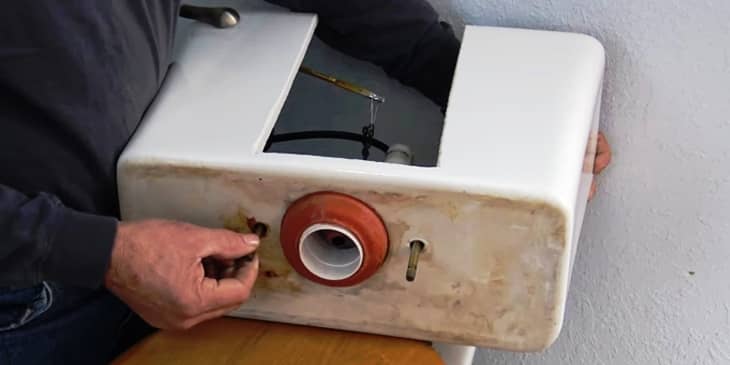
A running toilet wastes hundreds of gallons every day — but the real danger is what most homeowners miss: the constant water flow can wear seals, stress the tank, and eventually cause external leaks that rot subfloors and spawn mold. In my 20+ years as a plumber, I’ve seen running toilets turn into $8,000+ water-damage claims when ignored. Here’s exactly how it happens and how to stop it before your floors pay the price.
This guide shows you how to diagnose whether your running toilet is causing a leak, the precise DIY repairs that fix 90% of cases, and the red flags that mean you must call a professional immediately. After reading, you’ll know exactly what to check, what to replace, and when DIY ends.
They hear the constant hiss or gurgle and think “it’s just running — I’ll fix it later.” That “later” often becomes a hidden leak under the toilet base or inside the tank wall that destroys flooring and drywall before anyone notices. A running toilet is rarely just noisy; it is a slow-motion leak that compounds every hour.
This expert procedural is written for homeowners with basic hand tools who want to stop water waste and prevent damage. It covers diagnosis, common internal fixes, and external leak checks. It does NOT cover full toilet replacement or slab leaks. If you see standing water around the base or hear gurgling from walls, stop and call a licensed plumber.
Tools and Materials You’ll Need
Gather these before you start — everything is available at any hardware store for under $25:
- Food coloring (for the 5-minute leak test)
- Adjustable pliers and screwdriver
- New flapper (universal or exact match to your flush valve)
- New fill valve kit (if yours is over 5 years old)
- Flashlight and paper towels
- Optional: moisture meter or toilet wax ring if base leak is suspected
Step-by-Step: Diagnose and Fix a Running Toilet Before It Causes a Leak
Lift the tank lid. Add 10–15 drops of food coloring to the tank water. Do not flush. Wait 5–10 minutes. If colored water appears in the bowl without flushing, your flapper or flush valve is leaking internally — this is the #1 cause of a running toilet. This internal “leak” forces the fill valve to run constantly and wastes 200–4,000 gallons per day depending on severity.
Turn off the water supply valve behind the toilet. Flush to empty the tank. Unhook the flapper chain from the flush lever. Remove the old flapper (it lifts off the flush valve pegs). Install the new flapper, reattach the chain (leave ½ inch slack), and turn water back on. Test. The flapper must seat perfectly — any gap keeps the toilet running and stresses the entire system.
With the tank refilling, check the float level. Water should stop 1 inch below the top of the overflow tube. If the fill valve keeps running, bend the float arm down slightly or replace the entire fill valve assembly. Hand-tighten the new valve, then give it a ¼-turn with pliers. Over-tightening cracks the tank — a common mistake that creates an instant leak.
Wipe the floor around the toilet base completely dry. Run the dye test again and watch for any water appearing on the floor within 30 minutes. Also inspect the tank-to-bowl bolts and rubber gaskets. If water is present, the wax ring or closet bolts have failed — this is a true leak that a running toilet can accelerate through constant pressure and vibration.
Flush several times over the next hour. Listen for any running sound after the tank fills. Recheck the floor for moisture. If everything is quiet and dry, your repair is complete. Mark your calendar to inspect the flapper every 12 months — rubber degrades and repeats the cycle.
Red Flags — Stop and Call a Plumber Immediately
Unique Insights Most Guides Miss: Running Toilet vs Real Leak
Most online articles stop at “replace the flapper.” They miss the bigger picture: a running toilet is an internal leak (tank → bowl) that can create external leaks over time through constant cycling pressure on the wax ring, tank bolts, and vitreous china. In humid climates, tank sweating (condensation) mimics a leak — wipe the tank dry and wait 30 minutes; if water reappears without the toilet running, it’s condensation, not a leak.
If you see water around the base but the dye test shows no color in the bowl and the tank is not running, the problem is NOT the running mechanism — it is a failed wax ring or cracked flange. Stop DIY and call a plumber; attempting to tighten bolts on a failed wax ring usually makes the leak worse.
| Running Toilet vs Actual Leak Decision Matrix | ||||
|---|---|---|---|---|
| Symptom | Running Toilet (Internal) | External Leak | Winner Action | Why |
| Water in bowl after dye test | Yes — colored water appears | No color change | Replace flapper/fill valve | Internal seal failure only |
| Water on floor around base | Rare unless constant running wears wax ring | Yes — dry tank test still shows water | Call plumber for wax ring | Structural seal failure |
| Tank sweating in summer | No — tank stays dry | Water appears on outside of tank | Insulate tank or run dehumidifier | Condensation, not leak |
Frequently Asked Questions
Can a running toilet cause a leak?
Yes. While the primary “running” is an internal leak from tank to bowl, the constant cycling of water and pressure eventually loosens the wax ring and tank bolts, leading to external floor leaks. In severe cases it has caused over 100,000 gallons of waste and hidden subfloor damage before discovery.
Does a running toilet cause water damage?
Absolutely. Even a slow-running toilet can waste 200 gallons per day. Over weeks this adds constant moisture that seeps under the base, rots subflooring, and promotes mold. One case I handled involved a running toilet that went unnoticed for 3 weeks and caused $12,000 in flooring and drywall repairs.
How do I know if my toilet is leaking or just running?
Perform the food-coloring test in the tank. If color appears in the bowl, it’s running internally. If you see water on the floor with no color in the bowl, it’s an external leak at the base or tank connection. Running toilets and external leaks can occur together when the internal issue has worn the seals.
How much water does a running toilet waste?
A typical running toilet wastes between 200 and 4,000 gallons per day depending on how badly the flapper or fill valve leaks. At average U.S. water rates, that adds $50–$300 to your monthly bill — and the hidden floor damage can multiply costs by 10x.
Why is my toilet running and leaking at the same time?
Constant running puts vibration and pressure on the wax ring and closet bolts. Over time the seal fails and water escapes to the floor. This is why fixing the internal running issue quickly prevents the secondary external leak.
Should I repair a running toilet or replace the whole unit?
If the tank and bowl are in good condition and less than 10 years old, replace the flapper and fill valve first — it costs under $25 and takes 20 minutes. If you see cracks, constant external leaks, or the toilet is over 15 years old, full replacement is cheaper long-term and prevents future damage. See our guide to toilet installation costs in the USA.
• If the dye test shows color in the bowl → replace flapper or fill valve immediately.
• If water appears on the floor with no bowl color → stop DIY and call a plumber for wax ring or flange repair.
• If the toilet still runs after both fixes → professional inspection required before hidden damage spreads.
How Much Water Does a Running Toilet Actually Waste?
The average running toilet wastes 200 gallons per day — enough to fill a standard bathtub twice. Severe cases reach 4,000 gallons daily. At current U.S. municipal rates this adds $15–$100 per month to your water bill alone. Over a year that’s $180–$1,200 wasted, plus the risk of structural damage that dwarfs the repair cost. Fixing it early is one of the highest-ROI plumbing jobs you can do yourself. For more details on efficient flushing performance, see our best flushing toilets guide.
Signs Your Running Toilet Is Causing Hidden Leaks
Beyond the obvious running sound, watch for musty odors in the bathroom, warped baseboards, or dark spots on ceilings below the bathroom. A moisture meter reading above 15% around the toilet base confirms hidden water. These signs often appear weeks after the running started because water travels along the subfloor before becoming visible. Addressing the running toilet at the first sign prevents this progression.
How to Prevent Leaks Caused by a Running Toilet
Prevention is simple: inspect the flapper and fill valve every 12 months, keep the water level 1 inch below the overflow tube, and never ignore the running sound. If you live in a hard-water area, mineral buildup accelerates wear — consider a water softener or annual valve cleaning. Regular maintenance keeps your toilet quiet and your floors dry. For the right replacement parts, check our best toilet fill valve guide.
A running toilet is never “just annoying.” It is a preventable cause of leaks, water waste, and expensive damage. Fix it today with the steps above and you’ll protect your home and your wallet. Need more help choosing the right parts? Explore our complete toilet brands comparison.
