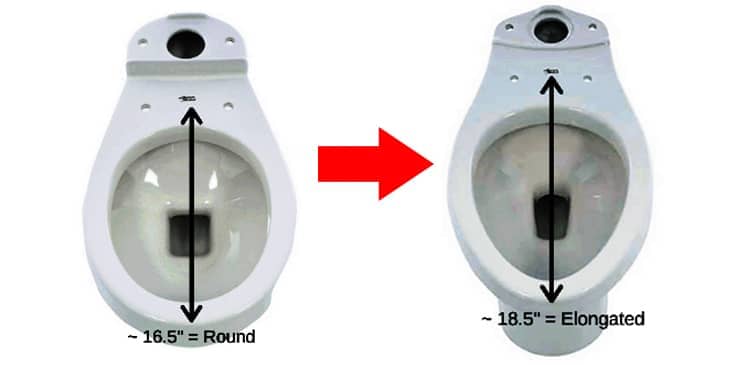
Many homeowners assume swapping a round toilet for an elongated one is as simple as buying a new bowl and dropping it in place. In reality, converting round toilet to elongated only succeeds when four precise conditions line up perfectly. Get even one of them wrong and you risk the new elongated bowl protruding 2 full inches farther into the room, blocking the bathroom door, forcing your knees against the vanity, or creating a permanent leak at the floor flange.
This complete decision-tree guide explains every measurement you must take, the exact tools needed, the real 2026 costs, and the professional judgment that determines whether the upgrade is worth doing at all. After reading you will know exactly whether your bathroom layout supports the switch, how to measure rough-in accurately, the step-by-step replacement process, and the clear scenarios where keeping your existing round toilet is actually the smarter choice.
The biggest error is believing you can somehow “convert” the existing round bowl into an elongated shape. There is no kit, adapter, or elongated seat that magically changes the molded vitreous china bowl. An elongated seat on a round bowl will overhang the edges, create splash issues, look mismatched, and trap waste underneath. The only correct way is full toilet replacement — but that replacement only works if your front clearance, rough-in, bathroom size, and household needs all align.
The 4 Conditions That Decide If You Can Successfully Convert Round Toilet to Elongated
Converting round toilet to elongated is not a one-size-fits-all project. Four specific conditions create clear branching decisions. Each condition changes the recommended path dramatically, which is why this topic fits the Decision Tree content type perfectly.
Condition 1: Front Clearance Space — The Most Common Deal-Breaker
Round bowls typically project 16–17 inches from the seat-bolt line to the front rim. Standard elongated bowls project 18–19 inches — a consistent 2-inch difference that feels much larger once installed. Measure this distance today with the old toilet still in place. Anything under 19 inches total front clearance means the new elongated toilet will either hit an object, prevent the door from opening fully, or force an awkward seated position where your knees touch whatever is in front.
Condition 2: Rough-In Distance — Measure Accurately or Risk Costly Mistakes
The rough-in distance never changes with bowl shape — both round and elongated toilets use the same standard sizes of 10 inches, 12 inches, or 14 inches. Here is exactly how to measure rough-in accurately in 2026:
1. Remove the old toilet seat and tank lid for clear access.
2. Use a standard tape measure. Place the zero end flat against the finished back wall (not the baseboard, not the tile edge — the actual drywall or finished surface).
3. Extend the tape straight across the floor to the exact center of the closet flange opening or the center line between the two closet bolts.
4. Record the measurement. It must land within ½ inch of 10″, 12″, or 14″ for standard toilets to fit without offset flanges.
5. Measure twice and photograph your result. Baseboards or thick tile can make it look ½–1 inch shorter than reality.
Mismatched rough-in requires either an offset flange adapter (adds $25–$60 and potential leak risk) or professional rerouting of the drain pipe — significantly increasing cost and complexity.
Condition 3: Bathroom Type and Overall Layout
Powder rooms, half-baths under 25 square feet, apartments, or any layout where the toilet sits within 24 inches of side walls usually perform better with round bowls. Elongated models need that extra front depth to feel spacious rather than cramped. In tight spaces the longer bowl can make the entire room feel smaller and create accessibility problems for elderly users or children.
Condition 4: Household Needs and Budget Reality
Households with young children, extremely tight budgets, or very limited storage space often keep the round bowl. Elongated toilets cost 10–20% more than equivalent round models in 2026, elongated seats are slightly pricier to replace, and the overall footprint is larger. Weigh these factors against the daily comfort gain.
Tools and Materials Needed for Replacing Round Toilet with Elongated Toilet
Before you begin any toilet replacement, gather everything below. Having the right tools and materials ready prevents 90% of mid-project trips to the hardware store and reduces the chance of leaks or damage.
| Category | Items |
|---|---|
| Tools | Adjustable wrench (or basin wrench), Phillips & flathead screwdriver, putty knife or plastic scraper, torpedo level, small bucket or cup, rags & old towels, safety glasses, work gloves |
| Materials | New premium wax ring (with plastic horn), new closet bolts with nuts & caps, new flexible braided supply line (if old one is corroded), optional flange repair ring if flange is low or damaged |
| Optional but Recommended | New elongated toilet seat (must match bowl shape), plumber’s putty (for base if needed), penetrating oil (for stuck bolts) |
How to Replace Round Toilet with Elongated Toilet — Complete Step-by-Step Procedure (When All Conditions Are Met)
When your four conditions (front clearance ≥19 inches, exact rough-in match, suitable bathroom size, and household needs) are all confirmed, follow this exact professional workflow. Each step includes the precise actions, safety notes, and common mistakes to avoid so you get a leak-free, rock-solid installation that lasts for decades.
Turn the water supply valve (usually behind the toilet on the wall or floor) fully clockwise until it stops. Flush the toilet once to empty the tank. Use a small cup or sponge to remove the last inch of water left in the bowl trap. Place old towels and rags around the base of the toilet and under the tank to catch any drips. Wear safety glasses and gloves. This step prevents flooding and gives you a clean, dry work area.
Place a small bucket under the supply line connection at the bottom of the tank. Use an adjustable wrench to loosen the supply line nut (turn counter-clockwise). Do not force it if it is stuck — apply penetrating oil and wait 10 minutes. Remove the tank lid and set it aside safely. Disconnect the supply line completely and drain any remaining water into the bucket.
Remove the two plastic bolt caps at the base of the toilet. Use the wrench to loosen and remove the closet bolt nuts. If the bolts are rusted, spray penetrating oil and let it sit. Gently rock the entire toilet (bowl and tank together if one-piece) side-to-side to break the old wax seal. Lift straight up and carry the old toilet outside immediately. Never tilt it sideways or you risk spilling residual water.
Scrape every trace of old wax, putty, and debris from the flange and surrounding floor using a putty knife. Wipe the area completely dry with rags. Inspect the flange for cracks, rust, or if it sits more than ½ inch below floor level. If the flange is damaged, install a flange repair ring now. This step is critical — any leftover wax will prevent a perfect seal with the new elongated toilet and cause slow leaks.
Insert two new closet bolts into the flange slots so the threaded ends point straight up. Slide the bolts to the center of the slots if needed. Place a premium wax ring (with built-in plastic horn) centered directly on the flange opening. Do not press it down yet — the weight of the new toilet will seat it properly. Keep the area clean and dry.
With a helper if possible, lift the new elongated toilet (bowl + tank if two-piece) and align the two base holes directly over the closet bolts. Lower it straight down in one smooth motion so both bolts pass cleanly through the holes. Do not twist or shift the toilet once it touches the wax ring. Press down firmly with your full body weight to compress the wax ring completely and create a watertight seal. Use a torpedo level to check that the toilet sits perfectly level front-to-back and side-to-side.
Slide the washers and nuts onto the closet bolts. Hand-tighten the nuts, then give each a ¼ turn with the wrench — do not overtighten or you can crack the porcelain base. If your new toilet is two-piece, bolt the tank to the bowl following the manufacturer’s torque specification (usually 8–10 ft-lbs). Reconnect the flexible supply line — hand-tighten the nut at the tank, then add ¼ turn with the wrench. Turn the water supply valve back on slowly and check all connections for leaks.
Place the new elongated seat on the bowl and tighten the seat bolts from underneath (do not overtighten). Flush the toilet several times and check for leaks at the base, supply line, and tank connections. Let the toilet sit for 30 minutes and re-check the level. Wipe up any water and remove all protective tape or film from the new toilet.
Red Flags — Stop Immediately and Call a Licensed Plumber
When the Answer Flips — When You Should Skip the Elongated Upgrade Entirely
Elongated vs Round Toilet — Detailed Pros and Cons Head-to-Head Comparison
| Factor | Elongated Toilet | Round Toilet |
|---|---|---|
| Adult comfort & hygiene | Superior legroom and easier cleaning | Adequate but less comfortable for taller adults |
| Front space required | 18–19 inches projection (+2 inches vs round) | 16–17 inches projection |
| Average cost 2026 | $250–$550 (10–20% higher) | $180–$420 |
| Best bathroom type | Master baths, larger layouts | Powder rooms, small spaces, kids’ baths |
| ADA / accessibility | Often available in comfort height | Same height options available |
Decision Matrix — Should You Convert Round Toilet to Elongated?
| Condition | Keep Round Toilet | Replace with Elongated | Winner | Why This Wins |
|---|---|---|---|---|
| Front clearance under 19″ | Fits perfectly, no crowding | Protrudes into room | Round | Extra 2 inches causes door/knee interference |
| Front clearance 19″ or more | Works but less comfortable | Better ergonomics & hygiene | Elongated | Adult comfort advantage is clear |
| Small powder room or apartment | Ideal compact footprint | Feels cramped | Round | Space savings outweigh bowl shape |
| Primarily adult household | Adequate but dated feel | Modern comfort & easier cleaning | Elongated | Daily use benefits are significant |
Frequently Asked Questions About Converting Round Toilet to Elongated
Can you convert round toilet to elongated without replacing the entire toilet?
No — there is no legitimate conversion kit or adapter that changes the shape of an existing round bowl into an elongated one. The bowl and internal trapway are manufactured as a single piece of vitreous china. Any attempt to modify the bowl would void the warranty and almost certainly create leaks or structural weakness. The only correct and code-compliant way to upgrade the bowl shape is to remove the old toilet completely and install a new elongated model that matches your measured rough-in distance. This is why accurate rough-in measurement (detailed above) is so critical before purchasing.
Does an elongated toilet require a different rough-in measurement than a round toilet?
No — both round and elongated toilets use identical rough-in standards of 10 inches, 12 inches, or 14 inches. The bowl shape has zero effect on how the toilet connects to the drain pipe in the floor. The rough-in distance is measured from the finished back wall to the center of the closet flange, and that measurement stays the same regardless of whether you choose round or elongated. Always match the new elongated toilet’s listed rough-in size to the exact measurement you took following the step-by-step instructions earlier in this guide. Using the wrong rough-in is one of the most common and expensive mistakes homeowners make during replacement.
How much does it really cost to convert round toilet to elongated in 2026?
A quality elongated toilet suitable for residential use typically ranges from $250 to $550 depending on brand, flush performance (1.28 GPF or dual-flush), and features such as comfort height or WaterSense certification. Professional installation, including removal of the old toilet, disposal, new wax ring, supply line, and basic flange inspection, usually adds $300 to $450. DIY homeowners who already own basic tools can complete the project for the cost of the toilet plus $40–$80 in supplies. Total realistic project cost therefore lands between $400 and $950 in most U.S. markets in 2026. Factor in any minor flange repair or offset adapter if your rough-in measurement is non-standard.
Will an elongated toilet actually fit where my current round toilet is installed?
It will fit only if you have at least 19 inches of clear space measured from the front rim of your existing round bowl to the nearest obstacle. Because elongated bowls extend roughly 2 inches farther forward than round bowls, that extra depth must already exist in your layout. Measure this distance carefully before ordering. If your bathroom is a master suite or larger than 30 square feet the upgrade is usually seamless. In powder rooms or apartments under 25 square feet the elongated bowl often makes the space feel noticeably tighter and can interfere with door swing or walking clearance. Always verify side-to-side clearance as well — elongated bowls are slightly wider at the front.
Is upgrading from round to elongated toilet actually worth it for most homeowners?
For adult users in larger bathrooms the upgrade is almost always worth it. The extra bowl length provides noticeably better legroom, improved hygiene, and a more modern appearance that many families prefer. The 2-inch difference may seem small on paper, but users consistently report greater comfort once installed. The upgrade is usually not worth the cost or effort in very small powder rooms, homes with only young children, or when budget is extremely limited. The deciding factors remain the same four conditions outlined at the beginning of this guide: front clearance, accurate rough-in match, bathroom size, and household composition. Measure first — those measurements give you the definitive answer.
Can I simply install an elongated toilet seat on my existing round toilet instead of replacing the whole unit?
Technically you can buy an elongated-shaped seat and bolt it onto a round bowl, but manufacturers and plumbers strongly advise against it. The seat will overhang the bowl edges on both sides, creating an unstable sitting surface, increased splash risk, and an unattractive mismatched appearance. Waste can become trapped in the gap between seat and bowl, leading to hygiene and odor issues over time. Elongated seats are engineered to match the exact contour of an elongated bowl. For a proper, long-lasting upgrade that looks professional and functions correctly, replace the entire toilet rather than trying to modify the seat alone.
If front clearance ≥19 inches and rough-in matches exactly → replace with elongated toilet for better comfort.
If front clearance <19 inches or bathroom is very small → keep the round toilet or choose a compact model.
If adults are the primary users and space allows → elongated wins for daily ergonomics and modern hygiene every single time.
How to Convert Round Toilet to Elongated — Complete Replacement Guide with Expert Tips
When your measurements confirm the upgrade is feasible, follow the detailed five-step procedure above. For more background on standard rough-in sizes and why they matter, read our complete toilet rough-in size guide. Proper preparation prevents 90% of common installation failures.
Round vs Elongated Toilet Space Requirements — What Actually Fits in Your Bathroom
Space is the single biggest reason many attempted conversions fail. Round toilets save approximately 2 inches of front-to-back depth compared with elongated models — a critical difference in half-baths, apartments, or any layout where every inch counts. Elongated bowls deliver superior adult comfort but demand that extra room to avoid feeling cramped. If your bathroom is tight, explore compact elongated options now available from major brands in 2026. Full details and model recommendations are in our best small toilet guide.
Round Toilet to Elongated Conversion Cost Breakdown and Budget Planning for 2026
Toilet prices stabilized after recent supply-chain recovery. A reliable elongated model (1.28 GPF, comfort height, strong flush performance) averages $250–$550 at major retailers. Add $40–$80 for supplies (wax ring, bolts, supply line) if you DIY. Professional installation including removal and haul-away typically runs $300–$450 depending on your location. Total project cost therefore falls between $400 and $950 in most cases. Compare current comfort-height options and read real-user experiences in our best comfort height toilet guide before finalizing your purchase.
Measure your front clearance and rough-in first — those two numbers will tell you whether converting round toilet to elongated makes sense for your specific bathroom. Still unsure after reading this guide? Leave your measurements in the comments or explore our one-piece vs two-piece toilet comparison for additional decision-making help.
