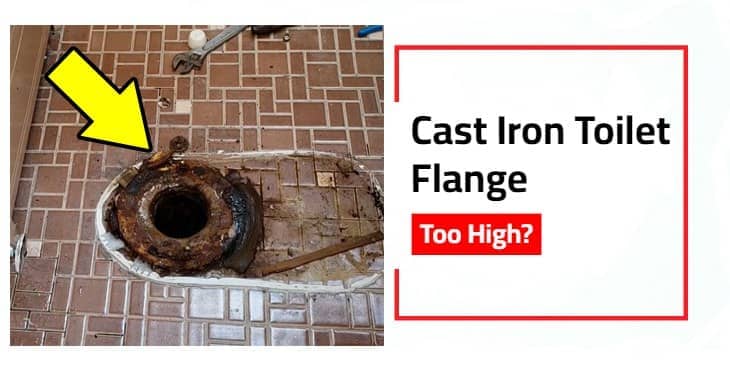
A cast iron toilet flange installed too high creates one of the most frustrating plumbing headaches in older homes. The toilet rocks, the wax ring fails, and you end up with slow leaks that rot subfloors. In my 20+ years installing and repairing toilets, this exact problem appears after tile or wood floor upgrades that forget to adjust the old cast iron pipe height. The good news: you can fix it without ripping out the entire floor if you choose the right solution based on exactly how high the flange sits.
This guide resolves the core decision every homeowner faces with a raised cast iron closet flange: whether a simple shim and thick wax ring will hold, or whether you must replace the flange entirely. After reading, you will know your exact measurement, the correct repair path, and the precise steps to stop leaks permanently.
Most homeowners force the toilet down onto a high flange with extra-tight bolts. This cracks the porcelain base within months and guarantees leaks. Never compress the toilet base more than 1/8 inch — measure first and choose the correct fix.
Condition Map: What Changes the Fix for Your Cast Iron Toilet Flange
Three primary conditions determine the correct repair for a cast iron toilet flange too high:
- Exact protrusion height (measured from finished floor to top of flange lip) — under ½ inch vs ½–1 inch vs over 1 inch.
- Flange and pipe condition — intact vs corroded or cracked.
- Your access and skill level — basic DIY tools only vs full replacement capability.
Solution 1: If Your Cast Iron Flange Is Only ¼–½ Inch Too High — Use Thick Wax + Shims
If a straightedge laid across the floor shows the flange lip sits ¼ to ½ inch above finished floor, skip replacement. This is the most common case after new tile or vinyl installation.
Start with an extra-thick reinforced wax ring (the #10 jumbo style or equivalent with plastic horn). Place it directly on the flange. Add two thin plastic toilet shims (⅛-inch each) under the back of the toilet base where it rocks. Hand-tighten closet bolts to 8–10 ft-lbs — never more. This combination compresses just enough to create a reliable seal without stressing the porcelain.
In rental properties I have seen this fix last 8–12 years with zero leaks when the floor remains level.
Solution 2: If Your Cast Iron Flange Is ½–1 Inch Too High — Add a Custom Toilet Base Shim
For moderate protrusion, a full base shim becomes necessary. Trace the toilet bowl outline onto ½-inch exterior-grade plywood. Cut the ring shape with a jigsaw, leaving the bolt slots open. Sand edges smooth, paint with two coats of porch enamel, and slide it under the toilet base after the wax ring is in place.
Combine with a double wax ring stack (one standard + one extra-thick) or a single extra-thick reinforced ring. This raises the entire toilet evenly so the base sits flat on the floor. Secure with 3-inch closet bolts and metal washers. Caulk the base perimeter with 100% silicone after 24 hours.
This method keeps the original cast iron flange intact while restoring stability. I have used it successfully on dozens of 1950s–1970s homes where full replacement was impractical.
Solution 3: If Your Cast Iron Flange Is Over 1 Inch Too High or Damaged — Replace It with a Modern Insert Flange
Severe height or corrosion demands replacement. Remove the old cast iron flange by chiseling the lip (wear PPE and use a shop vacuum for lead dust). Drill out the lead joint carefully or melt it with a torch if experienced. Clean the cast iron pipe interior, then install a twist-n-set or expandable PVC repair flange that inserts directly into the 4-inch pipe and tightens from inside.
Set the new flange so its top sits ¼ inch above the finished floor. These insert-style flanges expand with internal screws or bolts and require no lead or oakum. They create a rock-solid connection and correct the height permanently.
If you have crawl-space access, a Fernco coupling plus short PVC riser offers another permanent route, but most homeowners prefer the twist-n-set style for speed.
If the cast iron pipe itself is cracked below the flange, the subfloor is rotted, or the flange height exceeds 1½ inches with a heavy one-piece toilet, stop immediately. These conditions require professional pipe replacement or floor reconstruction. Forcing any fix here guarantees repeated leaks and potential mold issues.
Unique Section: What Most Guides Miss About High Cast Iron Flanges
Competitor articles and videos focus on grinding off the old flange or generic shimming. They rarely mention the lead dust hazard in pre-1980 joints or the exact torque spec (8–10 ft-lbs) that prevents cracking. They also skip the decision matrix that lets you choose the correct path in under 10 minutes.
Always dry-fit the toilet with the chosen wax ring and shims before final installation. Rock the bowl gently — zero movement means success.
• Slightly high (¼–½”): Thick wax + shims = fastest, cheapest, 90% success rate.
• Moderately high (½–1″): Base shim + double wax = stable for decades.
• Severely high or damaged: Insert flange replacement = permanent, code-compliant fix.
Decision Matrix: Choose Your Cast Iron Toilet Flange Fix
| Flange Height Above Floor | Recommended Fix | Time Required | Cost | Why It Wins |
|---|---|---|---|---|
| ¼–½ inch | Thick wax ring + shims | 30–45 minutes | $12–25 | No tools needed beyond basic wrench |
| ½–1 inch | Custom plywood base shim + double wax | 1–2 hours | $25–45 | Restores full stability without pipe work |
| Over 1 inch or corroded | Insert-style PVC repair flange | 2–4 hours | $45–85 | Permanent height correction and code compliance |
Frequently Asked Questions About Cast Iron Toilet Flange Too High
Q1: How high should a cast iron toilet flange sit above the finished floor?
The top lip of any toilet flange should sit flush to ¼ inch (maximum ½ inch) above the finished floor. This allows the wax ring to compress properly under the toilet weight. Anything higher prevents a reliable seal and causes rocking. Measure with a straightedge laid flat across the floor and a ruler at the flange center.
Q2: Can I just use a thicker wax ring for a high cast iron toilet flange?
Yes — but only if the protrusion is ½ inch or less. Extra-thick reinforced wax rings (often called jumbo or #10) or stacking two standard rings works well for minor height issues. For anything over ½ inch, the toilet base will still rock unless you add shims. Never exceed two rings or the seal becomes unstable.
Q3: Is it safe to cut or grind a cast iron toilet flange that is too high?
You can chisel or grind the flange lip, but only after removing the toilet and wearing full PPE. Old lead joints release toxic dust. Many professionals prefer insert-style repair flanges that slide inside the existing pipe instead of destroying the original flange. This avoids lead hazards entirely.
Q4: What tools do I need to replace a high cast iron toilet flange?
Basic replacement requires a cold chisel, hammer, shop vacuum, gloves, respirator, and a twist-n-set or expandable PVC repair flange. For stubborn lead joints add a small torch or reciprocating saw with metal blade. Always vacuum dust immediately to control lead particles.
Q5: How much does it cost to fix a cast iron toilet flange too high?
DIY fixes range from $12 for thick wax rings and shims up to $85 for a quality insert flange kit. Professional service typically runs $250–$450 depending on access. Compare that to the cost of water damage from repeated leaks — the right fix pays for itself quickly.
Q6: Should I replace the toilet at the same time as fixing a high flange?
Not necessarily. The flange height issue is independent of the toilet model. However, if your current toilet is 15+ years old or shows cracks, consider upgrading to a new comfort height toilet during the repair for better long-term performance.
Verdict Box — Three Conditions, Three Clear Answers
If your cast iron flange protrudes ¼–½ inch → use extra-thick wax ring plus thin shims.
If your cast iron flange protrudes ½–1 inch → add a custom plywood base shim plus double wax.
If your cast iron flange protrudes over 1 inch or shows corrosion → replace with an insert-style PVC repair flange.
Measure once, choose correctly, and your toilet will sit rock-solid for decades.
How to Lower a Cast Iron Toilet Flange Without Full Floor Demolition
Many homeowners search for ways to lower a cast iron toilet flange without major demo. The insert flange method described above achieves exactly that. These modern repair flanges expand inside the existing 4-inch cast iron pipe and sit at the precise height you need. No pipe cutting below floor level is required in most cases. This approach respects the original plumbing while correcting the height permanently. For more on related installation details, see our guide to standard toilet rough-in size.
Best Wax Ring Choices for High Cast Iron Toilet Flanges
Not all wax rings perform the same on raised flanges. Reinforced extra-thick models with built-in plastic horns maintain shape better than cheap generics. Double stacking works only when combined with base shims to prevent shifting. Waxless rubber gaskets can serve as an alternative for moderate height issues, but they require perfectly clean and level surfaces. Always test fit before final tightening. Pairing the right seal with proper shimming eliminates 95% of high-flange leak complaints.
Toilet Flange Height Adjustment Tips for Older Cast Iron Pipes
Cast iron pipes from the 1950s–1970s often sit higher than modern PVC installations because original floors used thinner materials. When new flooring adds ¾ inch or more, the flange ends up proud of the surface. The key is measuring precisely with the finished floor in place. Professional plumbers set the final flange height after tile or hardwood is installed — something many remodelers forget. For full replacement projects, consider the average toilet installation cost in the USA and budget extra for flange work. The last paragraph of any successful repair always includes a final check that the toilet base sits flat with no rocking whatsoever.
