Most people assume any toilet will work in a campervan or small RV — until the first time they face a full black tank at a remote campsite or wrestle with heavy waste on a boondocking trip. A cassette toilet changes that equation completely.
This guide resolves the core decision every van lifer and small-RV owner eventually faces: is a cassette toilet the right system for your rig? It is written for owners of Class B campervans, converted vans under 20 feet, and compact motorhomes who want freedom without the plumbing headaches of a traditional black tank. After reading, you will know exactly when a cassette toilet wins, how it actually works in real use, and the exact steps to empty, clean, and maintain one so it never becomes a problem on the road.
Common Mistake Most Buyers Make
They pick a cassette toilet thinking it will be “set it and forget it” like a house toilet. In reality, the smaller 4.5–5 gallon capacity means emptying every 2–3 days for two people — not once a week like a 15-gallon black tank. Skipping this reality leads to odors, leaks, and frustration that could have been avoided with the right expectations.
Condition Map: 4 Factors That Decide If a Cassette Toilet Is Right for You
Four measurable conditions determine whether a cassette toilet is the best choice for your van or small RV. These are not theoretical — they are practical factors based on real-world use by thousands of van lifers and small-RV owners. Each factor below includes the exact conditions that make a cassette toilet the clear winner or the point where you should consider a different system instead.
1. Vehicle Size & Interior Space Available
If your rig is under 20 feet long or you have a tight van conversion with limited floor space or underfloor storage, a cassette toilet is usually the winner. The removable waste tank slides out from an exterior access door, so you completely eliminate the need for a large fixed black water tank that typically eats up 2–3 cubic feet (or more) of valuable interior or underfloor space. The entire toilet unit itself is also very compact — often fitting into bathrooms as small as 24 inches wide. This gives you far more layout flexibility in micro-campers, Class B motorhomes, or DIY van builds where every inch counts. If your vehicle already has generous space and a pre-installed large black tank, the space-saving benefit is much smaller.
2. Trip Length & Dumping Access Frequency
A standard cassette holds only 4.5–5 gallons. For two adults with normal use (including toilet paper), you will typically need to empty it every 2–3 days, sometimes stretching to 4 days if you are very conservative with flush water and number of users. This system excels on weekend trips, short road loops, or any route where you pass restrooms, campgrounds, or dump stations regularly. If you frequently do 7+ day boondocking trips far from any services, a larger black tank (10–40+ gallons) or a composting toilet will likely serve you better because you can go much longer between emptying stops.
3. Your Tolerance for Hands-On Maintenance
Cassette toilets require direct interaction with the waste tank. Every few days you will remove the 40–50 lb full cassette, transport it (most have wheels and a telescopic handle), empty it, rinse it thoroughly, add fresh water and chemicals, and slide it back in. If you are comfortable with this level of hands-on work (wearing gloves makes it cleaner), the system is very manageable and actually simpler than dealing with black tank hoses, clogs, or macerator pumps. Many owners prefer it precisely because there is no risk of a messy overflow inside the vehicle and no long sewer hose to clean or store. If you absolutely hate any direct contact with waste, a composting toilet or larger black tank system is the better path.
4. Water Usage & Conservation Needs
Cassette toilets are extremely water-efficient, typically using only 0.5–1 gallon per flush (some manual-pump models use even less). This is a major advantage compared to traditional RV flush toilets that can use 1.5–3+ gallons per flush. If you boondock for extended periods and need to stretch your onboard freshwater supply as long as possible, the cassette system helps significantly with conservation. The lower water use also means less weight to carry and easier gray-water management on long off-grid trips. If water is not a concern (you have large freshwater tanks and frequent refill access), this factor matters less.
Branch 1: How a Cassette Toilet Works — The Mechanics That Make It Different
If your rig has limited space or you want flexible dumping options, then a cassette toilet is the right path. Here is exactly how it operates: the fixed bowl sits above a removable waste tank (the cassette) that holds 4.5–5 gallons. When you flush, a trap door or flapper in the bowl opens and waste drops straight into the sealed cassette below. A small electric or manual pump draws fresh water from your RV’s freshwater tank to rinse the bowl.
Before first use and after every emptying, you add 1–2 liters of water plus the manufacturer-recommended dose of RV toilet chemical (such as Thetford Aqua Kem) into the cassette. The chemical breaks down solids, controls odor, and keeps the waste liquefied for easy dumping. The entire system stays compact and odor-free when maintained correctly.
Branch 2: When Easy Dumping Access Makes a Cassette Toilet the Winner
If you frequently camp where full hookups are unavailable but restrooms or dump stations are within walking distance, then choose a cassette toilet. The big advantage over a black tank: you slide the cassette out through an exterior locker, roll it (most have wheels and a handle) to any standard toilet or designated waste point, empty it, rinse, and slide it back. No sewer hose, no macerator pump, and no risk of a clogged black tank line.
Many European-style campervans and Class B RVs come factory-equipped with this system precisely because it gives you more freedom on the road.
Branch 3: How to Empty and Clean a Cassette Toilet — Complete Step-by-Step Procedure
If you have chosen a cassette system, then follow this exact procedure every 2–3 days (or when the full indicator lights up). The process takes 5–10 minutes once you are used to it. Tools and materials needed: gloves, Thetford Aqua Kem or equivalent RV toilet chemical, 1–2 liters of fresh water, hose with spray nozzle (at dump station), optional Thetford Duo Tank Cleaner or dishwasher powder for deep cleaning, and paper towels.
Close the toilet’s blade/flapper valve completely by sliding the handle on the front of the bowl all the way to the closed position. This prevents any spills when you remove the cassette. Confirm the valve is fully closed before proceeding.
Go outside your van or RV and open the exterior access door to the cassette compartment. Locate the blue release lever or tab at the bottom or side of the cassette. Lift it up fully — this releases the locking mechanism.
Slide the cassette straight out toward you. It will weigh 40–50 lb when full, so use both hands and keep it level. Most models have built-in wheels and a telescopic handle — extend the handle and wheel it if available. Never tilt or shake it during removal.
Wheel or carry the cassette to the nearest dump station, restroom toilet, or designated waste disposal point. Keep it level at all times to avoid spills. Wear gloves for hygiene.
Hold the cassette over the dump opening. Unscrew the large cap on the emptying spout. Press and hold the vent button (usually orange or black) to release built-up pressure and allow smooth flow. Tilt the cassette and pour out the entire contents completely.
If your model has a built-in rinse nozzle, connect the freshwater hose and rinse the inside of the tank while it is still at the dump point. Otherwise, use a hose with a spray nozzle to thoroughly rinse all interior surfaces until the water runs clear.
For thorough cleaning, add hot water and ¼ cup of dishwasher powder (or Thetford Duo Tank Cleaner) to the cassette. Shake vigorously for 1–2 minutes, then empty and rinse again. This removes stubborn residue and prevents odors. Never use bleach or household cleaners — they damage the seals.
Add 1–2 liters of clean fresh water to the empty cassette (enough to cover the bottom). Add the exact dose of RV toilet chemical recommended by the manufacturer (usually 2–4 ounces of Thetford Aqua Kem). Screw the spout cap back on tightly.
Wheel or carry the refreshed cassette back to your vehicle. Slide it straight into the compartment until it clicks and locks securely. Close the exterior access door.
Go back inside and confirm the blade/flapper valve opens and closes smoothly. Test the flush to make sure everything is seated correctly.
Unique Section: What Top Expert Miss About Cassette Toilets
Most online guides stop at the basic definition and a quick emptying video. They skip the real-world plumbing trade-offs, exact failure points, and the precise conditions where the recommendation flips.
When the Answer Flips — Skip the Cassette Toilet If…
Your trips regularly exceed 5 days without dump access, or you absolutely hate any direct contact with waste. In those cases, a larger black tank or a urine-diverting composting toilet becomes the clear winner — even if it costs more upfront.
Real Failure Data Most Guides Ignore
The two most common problems are worn slide seals (causing leaks into the compartment) and using the wrong chemicals (leading to clogs and persistent odors). Replace seals every 2–3 years and stick to RV-specific formulas — generic household cleaners destroy the rubber components.
| Cassette Toilet vs Black Tank vs Composting Toilet | ||||
|---|---|---|---|---|
| Condition | Cassette | Black Tank | Composting | Winner for Most Vans |
| Space Required | Minimal (exterior access only) | Large underfloor tank | Moderate (separate tanks) | Cassette |
| Emptying Frequency | Every 2–3 days | Every 7–10 days | Solids every 2–4 weeks | Black Tank |
| Odor Control | Excellent if maintained | Variable | Best long-term | Composting |
| Water Usage | Very low | High | Zero flush | Cassette / Composting |
FAQ — What Is a Cassette Toilet?
What is a cassette toilet exactly?
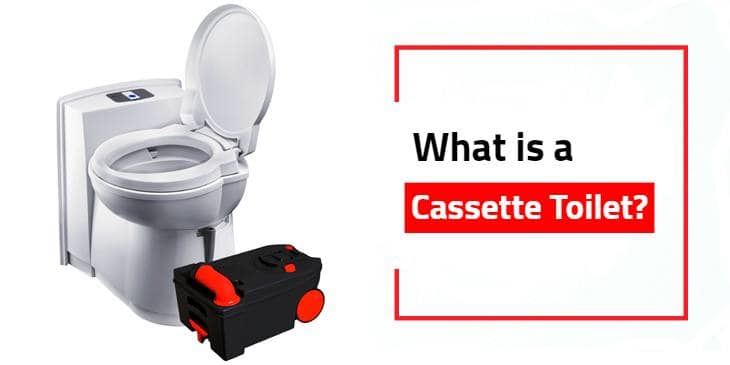
A cassette toilet is a compact RV and campervan toilet system with a fixed bowl and a removable waste-holding tank (the “cassette”) that slides out from an exterior access door. Waste drops through a trap door into the sealed 4.5–5 gallon cassette, which you empty manually at dump stations or restrooms. It uses minimal fresh water and RV-specific chemicals for odor control and breakdown.
How does a cassette toilet work in a campervan?
You flush, the bowl’s trap door opens, and waste falls directly into the cassette below. A pump sends fresh water to rinse the bowl. The cassette holds everything until you remove it. Chemicals added to the cassette keep odors down and liquefy solids so emptying is clean and simple.
How often do you empty a cassette toilet?
For two people on normal use, empty every 2–3 days. The 4.5–5 gallon capacity fills quickly compared with a traditional 15-gallon black tank, but the trade-off is far easier dumping access and no risk of a clogged fixed tank.
Cassette toilet vs black tank — which is better for a small RV?
A cassette toilet is better for most small RVs and vans because it saves space, weighs less when empty, and lets you dump at regular restrooms instead of only designated stations. A black tank wins only on long trips where you want fewer emptying stops.
Cassette toilet vs composting toilet — key differences?
Cassette toilets use water and chemicals to mix and liquefy waste; composting toilets separate urine and solids with no water and rely on natural decomposition. Cassettes are simpler to empty at any facility; composting needs more patience but produces no liquid waste and often has less odor long-term.
How do you clean and maintain a cassette toilet?
After every emptying, rinse the tank thoroughly and add fresh chemicals. Clean the bowl with RV-safe toilet cleaner weekly. Inspect the slide seals and rubber gaskets every 6 months and replace them before they crack. Never use household cleaners — they destroy the seals and create leaks.
Verdict — Your 3-Condition Decision Matrix
If your rig is under 20 feet and you camp 2–4 days at a time with easy dump access → choose a cassette toilet.
If you do week-long boondocking trips and hate handling waste → go with a larger black tank or composting system instead.
If water conservation and minimal plumbing are your top priorities → a cassette toilet is the clear winner for most van lifers and small-RV owners.
Cassette Toilet Pros and Cons for Campervans and Small RVs
The biggest pros are space savings, flexible dumping locations, and simple installation in tight vans. You can often add a cassette toilet without major modifications. The main cons are the smaller capacity and the need to empty more often. When maintained correctly, odors stay minimal and the system stays reliable for years. Many owners report they would never go back to a fixed black tank after switching to cassette. See our guide to the best small toilets for more compact options.
Cassette Toilet vs Composting Toilet — Which Should You Choose?
Composting toilets eliminate flush water and separate waste for natural breakdown, making them popular for full-time off-grid living. Cassette toilets remain easier for weekend campers because emptying is quick and familiar at any dump station. If you hate the idea of any liquid waste, composting wins. If you want a simple flush and don’t mind occasional emptying, the cassette toilet is usually the practical choice. Explore more toilet categories here.
Cassette Toilet Maintenance Tips That Prevent 90% of Problems
Always use the exact chemical dosage recommended by the manufacturer. Rinse the cassette thoroughly after every emptying — leftover solids are the main cause of odors. Check the slide seals every six months and replace them proactively. Never overfill the cassette past the full indicator line. With these habits, a cassette toilet will give you years of trouble-free service in your campervan or RV. Learn about typical installation costs if you are planning a conversion.
A cassette toilet is one of the smartest toilet choices for small RVs and campervans when you match the system to your actual travel style. Check our small toilet recommendations for more ideas that fit tight spaces.
